Key performance
Technical specifications
Engine
- Displacement
- 599 cc
- Power
- 78.0 ch @ 10500 tr/min (57.4 kW)
- Torque
- 58.8 Nm @ 9500 tr/min
- Engine type
- 4 cylindres en ligne, 4 temps
- Cooling
- combiné air / huile
- Compression ratio
- 11.3 : 1
- Bore × stroke
- 62.6 x 48.7 mm
- Valves/cylinder
- 4
- Camshafts
- 2 ACT
Chassis
- Frame
- Double berceau tubulaire en acier
- Gearbox
- boîte à 6 rapports
- Final drive
- Chaîne
- Front suspension
- Fourche téléhydraulique Ø 41 mm, déb : 130 mm
- Rear suspension
- Mono-amortisseur, déb : 130 mm
Brakes
- Front brakes
- Freinage 2 disques Ø 290 mm, étrier 2 pistons
- Rear brakes
- Freinage 1 disque Ø 240 mm, étrier 2 pistons
- Front tyre
- 120/60-17
- Front tyre pressure
- 2.25 bar
- Rear tyre
- 160/60-17
- Rear tyre pressure
- 2.50 bar
Dimensions
- Seat height
- 790.00 mm
- Fuel capacity
- 20.00 L
- Dry weight
- 204.00 kg
- New price
- 5 899 €
Overview
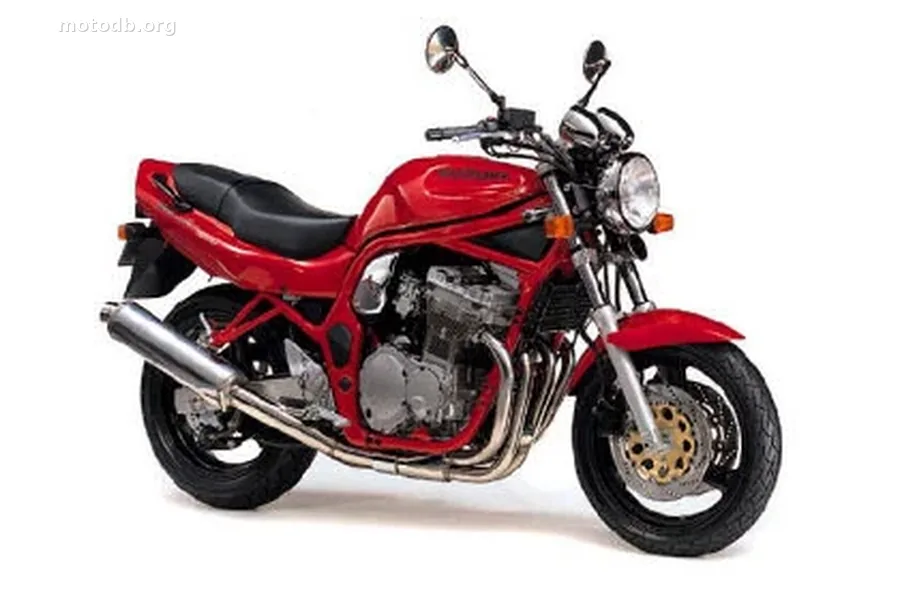
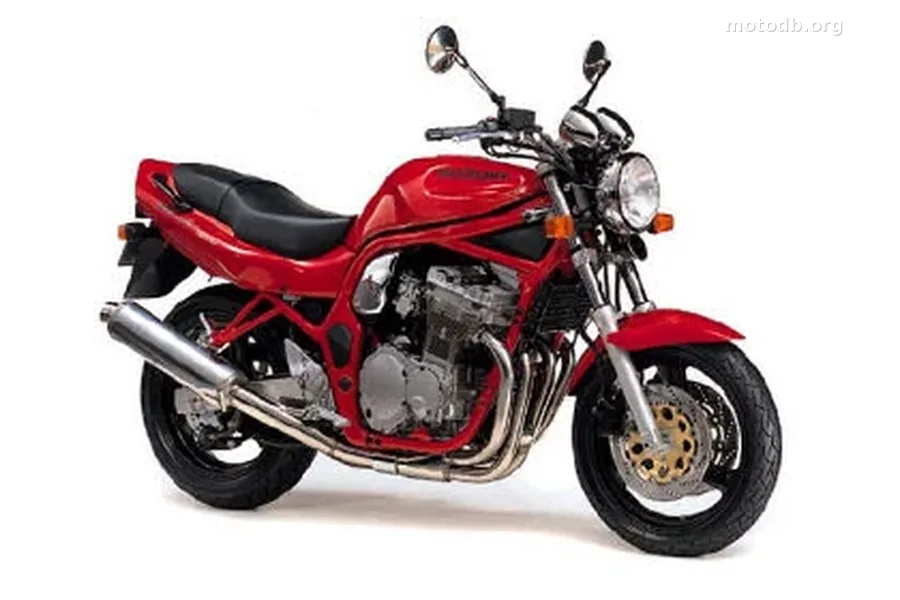
What makes a motorcycle stay year after year in the top sales charts without ever really changing the recipe? The Suzuki GSF 600 Bandit model year 2000 answers that question with disarming simplicity. Suzuki chose not to revolutionize its golden goose, but to give it a welcome polish. The tubular steel double-cradle frame gets sleeker lines, the 599 cc inline four-cylinder inherited from the older GSX-R gains an extra 4 horsepower to peak at 78 hp at 10,500 rpm, and the S version stands out with a bikini fairing that finally gives it real visual character. The rest of the silhouette retains that classic roadster DNA that enthusiasts know by heart: round headlight, touches of chrome, color-matched frame. Nothing to blow away the purists, but an honest face that ages well.
On the road, this air-and-oil-cooled engine plays a familiar but still pleasant tune. The 58.8 Nm of torque at 9,500 rpm won't work miracles in the lower rev range. Below 6,000 rpm, the engine is frankly lacking in response, a flaw Suzuki wouldn't truly fix until 2005. But past that threshold, the four-cylinder wakes up with a vigor that surprises every time. The power builds progressively, without brutality, all the way to the redline set at 12,000 rpm. This engine character rewards the rider who takes the time to wind it up rather than the one looking for an instant kick in the wrist. Against a Yamaha Fazer 600 or a Honda Hornet 600 from the same era, the Bandit falls slightly behind in outright liveliness, but makes up for it with legendarily bulletproof mechanicals.
The chassis lives up to the overall philosophy: effective without sporting pretension. The 41 mm telehydraulic fork and the rear monoshock each offer 130 mm of travel, enough for versatile use. But the rear suspension lacks compliance over rough surfaces. Pavement seams and manhole covers make themselves known to your back with somewhat blunt honesty. In corners, the Bandit demands confidence and smoothness; the 204 kg dry weight and the 120/60 and 160/60 tires on 17-inch rims don't forgive overly abrupt corner entries. The braking, handled by two 290 mm front discs and a 240 mm rear disc with twin-piston calipers, gets the job done without fanfare. The stopping power is there, progressive and predictable, but don't expect the bite of a sportbike.
The N version, stripped of any wind protection, shows its limits as soon as the speedometer passes 120 km/h. Your torso takes the full force of the wind and vibrations become noticeable around 150 km/h. The seat, firm as a church pew, demands regular breaks beyond 200 kilometers. The S version with its fairing partly solves the problem, and it's clearly the one to go for if you ride on the road regularly. The 20-liter tank provides decent range that allows for good legs without the anxiety of running dry.
Priced at 5,899 euros in 2000, the Bandit 600 remains one of the best value-for-money propositions on the market for a beginner rider or a daily commuter on a tight budget. Its maintenance is simple and inexpensive, its engine racks up the miles without complaint, and it willingly lends itself to cosmetic modifications for those who want to personalize it. It doesn't pretend to play in the sportbike league or compete with big adventure tourers, and it's precisely this well-placed modesty that makes it strong. A no-nonsense motorcycle, built to ride and to last.
Practical info
- Moto bridable à 34 ch pour l'ancien permis A MTT1 - pas garanti pour le permis A2
- La moto est accessible aux permis : A, A (MTT1)
Indicators & positioning
Similar bikes
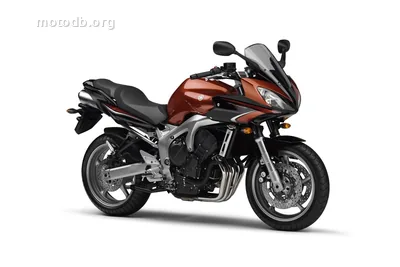
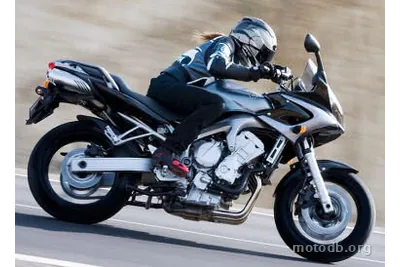
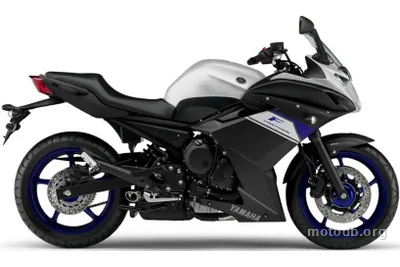
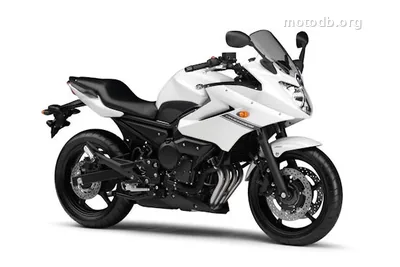
XJ6 600 Diversion
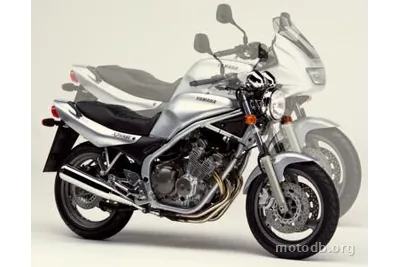
XJ 600 Diversion N et S
Reviews & comments
No reviews yet. Be the first to share your opinion!