Key performance
Technical specifications
Engine
- Displacement
- 1199 cc
- Power
- 180.0 ch @ 10000 tr/min (135.0 kW)
- Torque
- 134.0 Nm @ 7500 tr/min
- Engine type
- In-line four, four-stroke
- Cooling
- Liquid
- Compression ratio
- 12.2:1
- Bore × stroke
- 83.0 x 55.4 mm (3.3 x 2.2 inches)
- Valves/cylinder
- 4
- Camshafts
- 2 ACT
- Fuel system
- Injection
- Starter
- Electric
Chassis
- Frame
- monocoque en aluminium
- Gearbox
- 6-speed
- Final drive
- Chain (final drive)
- Front suspension
- Fourche téléhydraulique inversée Ø 43 mm, déb : 120 mm
- Rear suspension
- Mono-amortisseur, déb : 140 mm
- Front wheel travel
- 120 mm (4.7 inches)
- Rear wheel travel
- 140 mm (5.5 inches)
Brakes
- Front brakes
- Dual disc
- Rear brakes
- Single disc
- Front tyre
- 120/70-ZR17
- Front tyre pressure
- 2.90 bar
- Rear tyre
- 200/50-ZR17
- Rear tyre pressure
- 2.90 bar
Dimensions
- Seat height
- 810.00 mm
- Wheelbase
- 1440.00 mm
- Fuel capacity
- 20.00 L
- Dry weight
- 215.00 kg
- New price
- 14 200 €
Overview
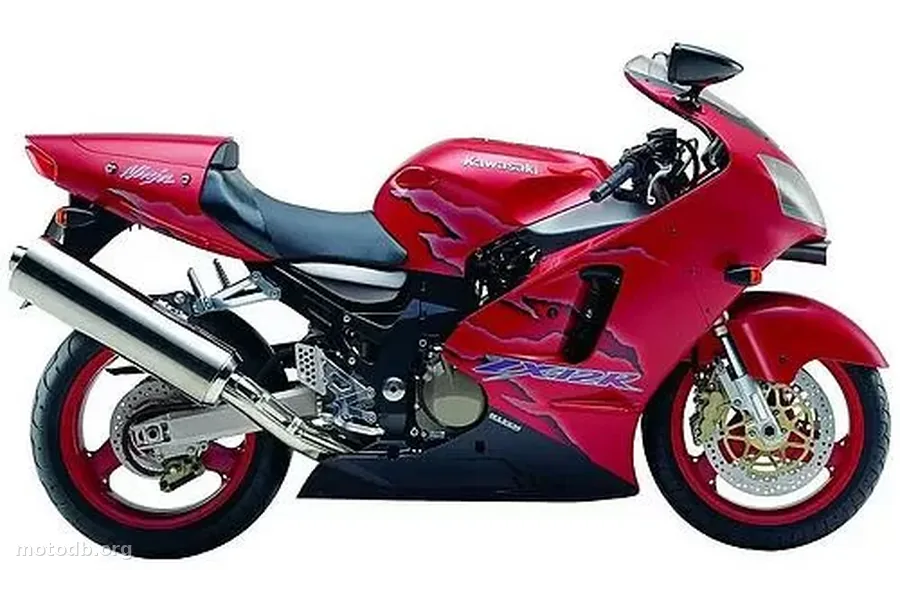
Do you remember the era when manufacturers were vying for the title of the world's fastest motorcycle? Suzuki had made a strong statement with its Hayabusa, and Kawasaki, in the shadows, was preparing its response. This wasn't a simple evolution, but a mechanical declaration of war. The Kawasaki ZX-12R, launched in 2001, was that response, a machine that wanted to push boundaries, not just follow trends.
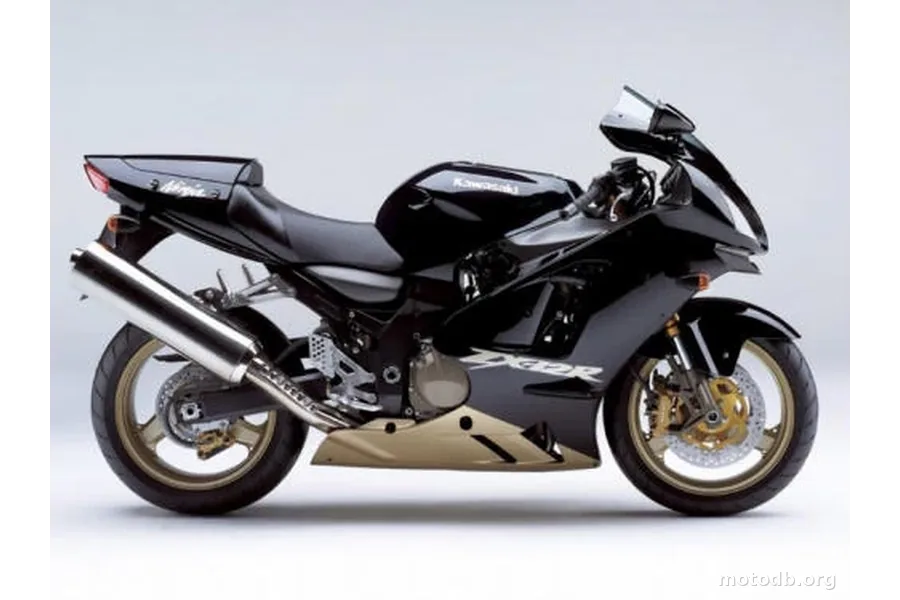
Its heart, an 1199 cm3 inline-four, was no ordinary engine. It delivered 180 horsepower at 10,000 rpm, a raw power that placed the Kawasaki ZX-12R Ninja in a very exclusive category. The torque, 134 Nm, was available much lower in the rev range, giving this motorcycle devastating traction from the middle of the tachometer. This force propelled the machine to an official top speed of 308 km/h, a figure that, at the time, turned heads and required a certain amount of courage. The question "what is the top speed of the Kawasaki ZX-12R?" was not a curiosity, but a measure of its ambition.
But Kawasaki didn't just create a powerhouse engine. The frame was a revolution. Abandoning the classic double-spar design, engineers opted for an integral aluminum monocoque. This structure also served as an airbox, while the exposed tank was a cover, the real one being housed under the seat. The goal was an agile motorcycle, but extremely stable at high speed. On this last point, the 2003 Kawasaki ZX-12R was impeccable, a rock-solid platform at any speed. However, in tight corners or quick transitions, it required a physical investment. It was less nimble than some lighter competitors, and its dry weight of 215 kg was noticeable. It took some grip to steer it precisely. It didn't give itself easily.
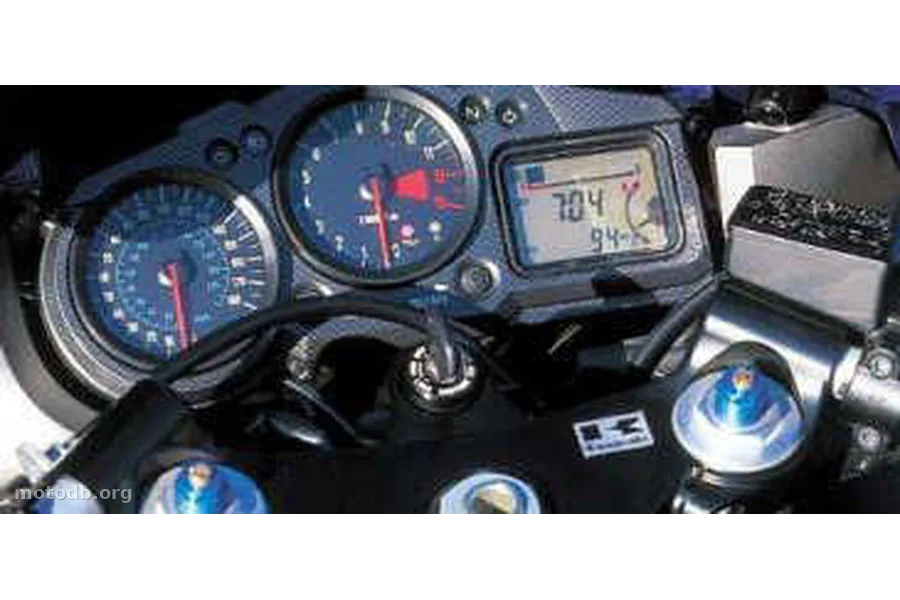
Who is it for? It wasn't a pure track machine, despite its sporting intentions. With a seat height of 810 mm and a fairing developed with Kawasaki’s aeronautics department, it offered correct protection for long journeys. It positioned itself rather as the ultimate sport-touring motorcycle, for the traveler who wanted stratospheric top speed and a monumental presence. The launch price, 14,200 euros, reflected this technological ambition. Today, if you are looking for a used Kawasaki ZX-12R 1200, you will find a historic machine, whose average consumption was significant, but whose feeling of power remains unmatched.
In summary, the Kawasaki ZX-12R was a motorcycle with character, a concentrate of raw technology that demanded a rider. Its engine was a masterpiece, its chassis innovative but specific. It didn't seek to be the easiest, but the most determined. For those who understand this philosophy, it remains a benchmark.
Practical info
- La moto est accessible aux permis : A
Reviews & comments
No reviews yet. Be the first to share your opinion!