Key performance
Technical specifications
Engine
- Displacement
- 739 cc
- Power
- 76.0 ch @ 9500 tr/min (55.5 kW)
- Torque
- 62.8 Nm @ 7500 tr/min
- Engine type
- In-line four, four-stroke
- Cooling
- par air
- Compression ratio
- 9.5 : 1
- Bore × stroke
- 66 x 54 mm
- Valves/cylinder
- 2
- Camshafts
- 2 ACT
- Starter
- Electric
Chassis
- Frame
- Double berceau en tubes d’acier
- Gearbox
- 5-speed
- Final drive
- Chain (final drive)
- Front suspension
- Fourche téléhydraulique Ø 41 mm, déb : 130 mm
- Rear suspension
- Mono-amortisseur, déb : 130 mm
Brakes
- Front brakes
- Dual disc
- Rear brakes
- Single disc
- Front tyre
- 120/70-17
- Front tyre pressure
- 2.50 bar
- Rear tyre
- 160/60-17
- Rear tyre pressure
- 2.50 bar
Dimensions
- Seat height
- 815.00 mm
- Fuel capacity
- 22.00 L
- Weight
- 220.00 kg
- Dry weight
- 202.00 kg
- New price
- 6 097 €
Overview
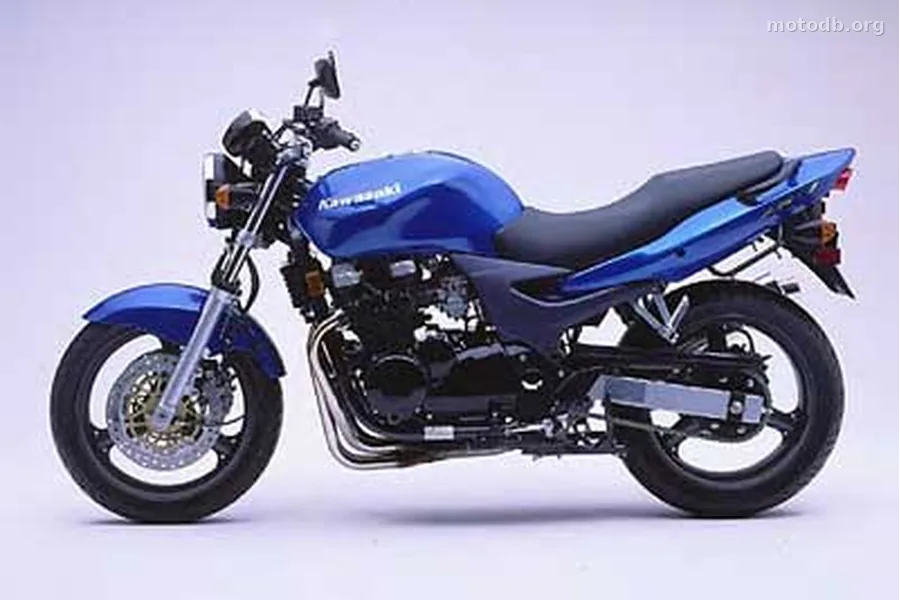
One looks for a motorcycle that is simple, efficient, without complications, with a true mechanical character. One often turns to 600 four-cylinder engines, but there is an alternative that speaks to the hands and the heart: the Kawasaki ZR-7. This machine, appearing around 1999 and produced until 2004, is a different proposition in the world of roadsters. It doesn't chase horsepower, it cultivates torque.
The secret lies in its engine. A 739 cm3 inline four, but with only two valves per cylinder. This architecture, of almost archaic simplicity, gives it a unique temperament. With 76 horsepower at 9500 rpm and 62.8 Nm of torque at 7500 rpm, it doesn't dazzle on paper compared to a Hornet 600 or a Fazer. But on the road, it's a different story. The power is there, with a maximum announced speed of 210 km/h, but the real richness lies in the mid-range. It pulls with a generosity and linearity that more sophisticated, more refined engines do not offer. It's an engine that works without fuss, that frees you from constantly playing with the gearbox. For a novice or a touring rider who prefers fluidity to frenzy, it is a major asset. The K-tric system, which optimizes ignition, contributes to this feeling of ease. It's a mechanical element that has character, visible in its cooling fins, and that brings that little nostalgic plus so sought after today by café racer enthusiasts. Numerous kits exist to transform a used Kawasaki ZR-7 into a customized machine in this style.
This mechanical generosity is served by an honest chassis. The steel tube double cradle frame and the 41 mm fork provide a solid base. With 220 kg fully fueled and a seat height of 815 mm, the motorcycle is maneuverable and accessible. In the city, it weaves without excessive bulkiness. On the road, the front end is precise, the handling inspires confidence to string together turns with a progressive rhythm. However, be careful, the footpegs are a little low and can serve as guardrails if you are really looking for the lean angle. On a degraded road, the rear, with its single shock absorber and 130 mm of travel, can become a little playful, requiring measured riding. The brakes, two front discs and one rear disc, are progressive and of a safe power, without being excessive. It is a motorcycle that encourages serenity rather than frontal attack.
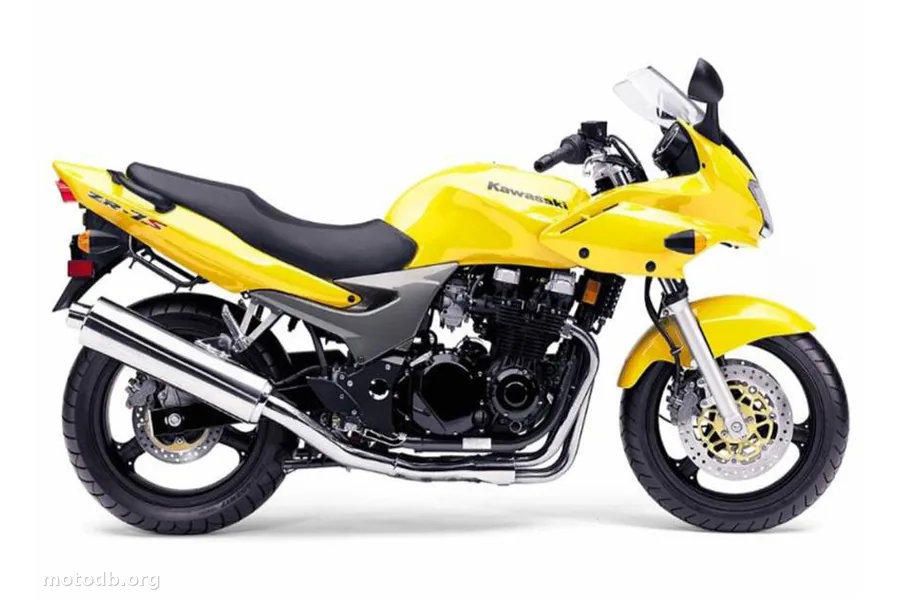
The positioning of the Kawasaki ZR-7 was clear: an alternative in the mid-range, offered at a price similar to a Suzuki Bandit 600 at the time. It slotted between the ER-5 and the ZRX 1100 in the Kawasaki lineup. Its audience? Those who want a simple, reliable everyday motorcycle, with a true engine character, without the complexity or price of an ultramodern machine. It is also an excellent base for a project, thanks to its robust mechanics and classic frame. For travelers, the S version, with its fairing, was a more protective option. Today, finding a used Kawasaki ZR-7 is an excellent deal for those looking for an authentic roadster. Its technical specifications show a well-equipped motorcycle with a 22-liter tank, storage under the seat, and hooks. One can regret some choices, such as the abandonment of chain adjustment by eccentric on the latest versions. But its simple and playful side remains its best argument. It may not have the flashy charisma of a modern machine, but it has a mechanical personality that speaks to those who understand the essence of a motorcycle.
Practical info
- La moto est accessible aux permis : A
Reviews & comments
No reviews yet. Be the first to share your opinion!