Key performance
Technical specifications
Engine
- Displacement
- 745 cc
- Power
- 55.0 ch @ 6250 tr/min (40.5 kW)
- Torque
- 68.6 Nm @ 4750 tr/min
- Engine type
- Bicylindre en ligne, 4 temps
- Cooling
- liquide
- Compression ratio
- 10.7 : 1
- Bore × stroke
- 77 x 80 mm
- Valves/cylinder
- 4
- Camshafts
- 1 ACT
- Fuel system
- Injection Ø 36 mm
Chassis
- Frame
- type Diamond en acier
- Gearbox
- boîte à 6 rapports
- Final drive
- Chaîne
- Front suspension
- Fourche téléhydraulique Ø 41 mm, déb : 120 mm
- Rear suspension
- Mono-amortisseur, déb : 120 mm
Brakes
- Front brakes
- Freinage 1 disque Ø 320 mm, étrier 2 pistons
- Rear brakes
- Freinage 1 disque Ø 240 mm, étrier simple piston
- Front tyre
- 120/70-17
- Front tyre pressure
- 2.50 bar
- Rear tyre
- 160/60-17
- Rear tyre pressure
- 2.90 bar
Dimensions
- Seat height
- 790.00 mm
- Fuel capacity
- 14.10 L
- Weight
- 227.00 kg
- New price
- 7 499 €
Overview
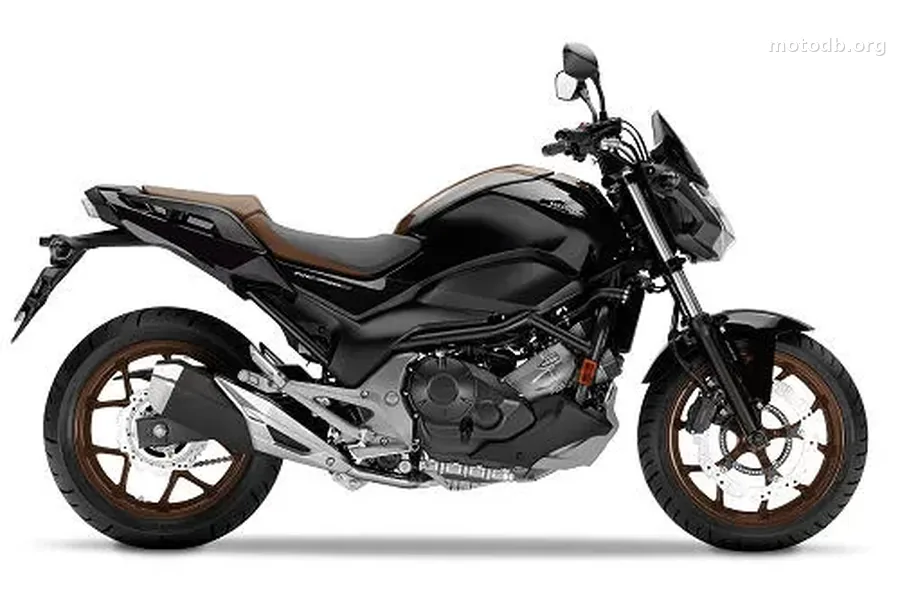
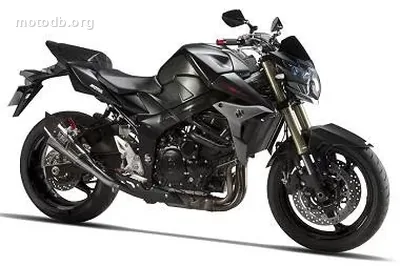
The NC 750 S has, since 2018, opened up access for young riders with the possibility of being restricted to A2 power. This allows broadening its scope of investigation without upsetting its pretensions. Power loss will be almost anecdotal given the original efficiency of the twin.
Genesis:
Since its first version, the NC has known how to evolve. One cannot say that it hasn't made an effort on the engine side. The twin goes from 670 to 745 cc. An increase of 4 mm in the bore allows obtaining these extra 75 cc, a little more torque, and above all 7 additional horsepower. Seen like that, the increase appears striking. We will temper enthusiasm with the final addition displaying barely less than 55 horsepower. As with the 700, the displacement/power ratio is disappointing. However, the engine relies on other arguments to seduce: a second balancing shaft to reduce vibrations, a modified exhaust for a more pleasant sound, consumption reduced to a minimum with less than 3.5 L per 100 km, a torque reaching 7 kg-m and an improved DCT gearbox. Gear ratios have been lengthened but the NC 750 should still offer more responsiveness than its predecessor with its increased displacement and extra watts. The machine even announces an average consumption lower than the NC 700, while its performance is increasing. But let's not fool ourselves; this roadster is designed for comfort and the smoothness of riding at mid-range, not for biting between two avenues.
The engine management software promises to be more intuitive, with downshifts that engage earlier and more smoothly. Let's recall the main features of this Dual Clutch Transmission gearbox, namely the perfect co-pilot for riding in the city, with the choice of a fully automatic selection or a mode with impulse where the rider shifts gears with a flick. The double clutch, one commanding the even gears and the other the odd gears, allows for ultra-fast and smooth gear selection. Therefore, 3 modes are available: MT lets the rider freely shift gears when he wants, using two triggers. The D mode is automatic, rather suitable for the city and the highway. With the possibility of "guessing" traffic conditions and adapting gear changes. Finally, the S mode, also automatic, is more dynamic, with a more valiant revving. With this second generation of DCT, the rider can now intervene in gear changes when on an automatic mode. The system then calculates the ideal moment to take back control of the gearbox a little later.
The NC 750 mainly differs by its increase in displacement and horsepower, and by its improved DCT gearbox. The fairing and the cycle parts remain unchanged. The motorcycle has never hidden its basic attributes, and even claims them. It sits on a simple, classic and very sufficient steel tube "Diamond" frame. A 41 mm fork, a shock absorber, a brake disc per wheel, 226 kilos and it rolls. A major practical point: the NC 750 S retains its false tank concealing a trunk large enough to accommodate a helmet. Let's not forget the small improvements of this second version of the NC S: namely an adjustable brake lever, ABS fitted as standard, consumption and gear indicator added to the instrumentation, and a slightly more refined finish. Small drawback for a basic and economy-focused motorcycle: with ABS and DCT as standard, the machine no longer displays a shock price. This leaves the CB 500 Flu to steal the show at the entry level. The latter cannot, however, be equipped with the automatic gearbox.
M.B - Photos manufacturer
Standard equipment
- Assistance au freinage : C-ABS
Practical info
- Véhicule accessible au permis A2 ou bridable à 47.5ch / 35 Kw
- La moto est accessible aux permis : A, A2
Reviews & comments
No reviews yet. Be the first to share your opinion!