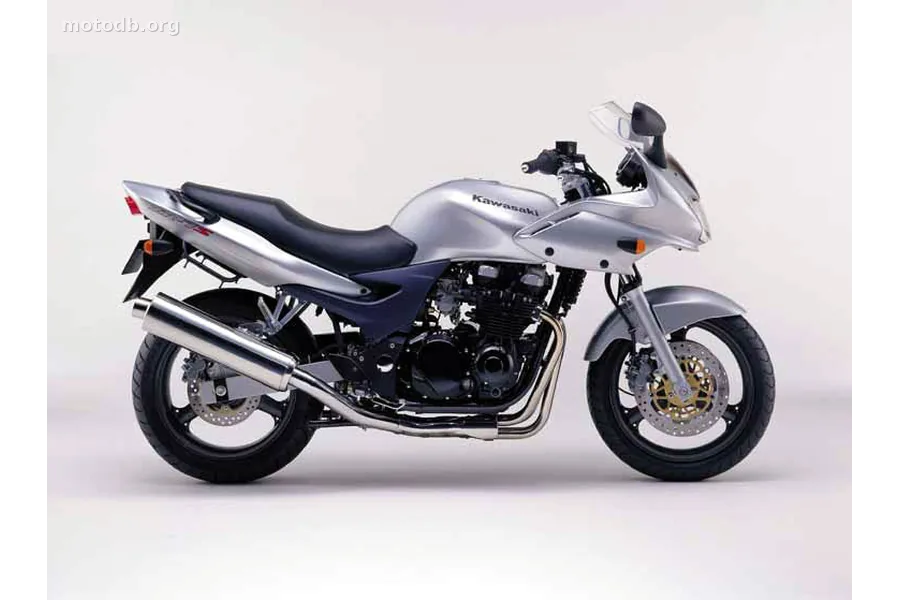
Key performance
Technical specifications
Engine
- Displacement
- 739 cc
- Power
- 76.0 ch @ 9500 tr/min (55.5 kW)
- Torque
- 63.0 Nm @ 7300 tr/min
- Engine type
- In-line four, four-stroke
- Cooling
- par air
- Compression ratio
- 9.5 : 1
- Bore × stroke
- 66.0 x 54.0 mm (2.6 x 2.1 inches)
- Valves/cylinder
- 2
- Camshafts
- 2 ACT
- Fuel system
- Carburettor
Chassis
- Frame
- Double berceau en tubes d’acier
- Gearbox
- 5-speed
- Final drive
- Chain (final drive)
- Front suspension
- Fourche téléhydraulique Ø 41 mm, déb : 130 mm
- Rear suspension
- Mono-amortisseur, déb : 130 mm
- Front wheel travel
- 130 mm (5.1 inches)
- Rear wheel travel
- 130 mm (5.1 inches)
Brakes
- Front brakes
- Dual disc
- Rear brakes
- Single disc
- Front tyre
- 120/70-ZR17
- Front tyre pressure
- 2.50 bar
- Rear tyre
- 160/60-ZR17
- Rear tyre pressure
- 2.50 bar
Dimensions
- Seat height
- 815.00 mm
- Wheelbase
- 1455.00 mm
- Fuel capacity
- 22.00 L
- Weight
- 220.00 kg
- Dry weight
- 205.00 kg
- New price
- 6 097 €
Overview
At the dawn of the 2000s, as the race for horsepower and stylistic aggressiveness escalated, did Kawasaki choose wisdom with the ZR-7? Or a slight delay? This roadster, positioned between the ER-5 and the gargantuan ZRX, arrived with a secret weapon: a 739 cm³ inline four-cylinder engine, but with a deliberately archaic architecture. With only two valves per cylinder and a compression ratio contained to 9.5:1, this engine block seemed straight out of a design from the 1980s. Yet, that is where its genius lies. Where its direct rivals, the Hornet 600 or Fazer 600, had to rev high to deliver their 76 horsepower, the Kawasaki ZR-7 slams down its 63 Nm of torque from the mid-range. The power curve is full, linear, and makes riding incredibly intuitive. The K-TRIC adaptive ignition system completes the picture, offering crisp acceleration without hesitation. For those seeking a used Kawasaki ZR-7, it is this indestructible and generous engine that constitutes the major argument, far more than a technical specification sheet full of spectacular figures.
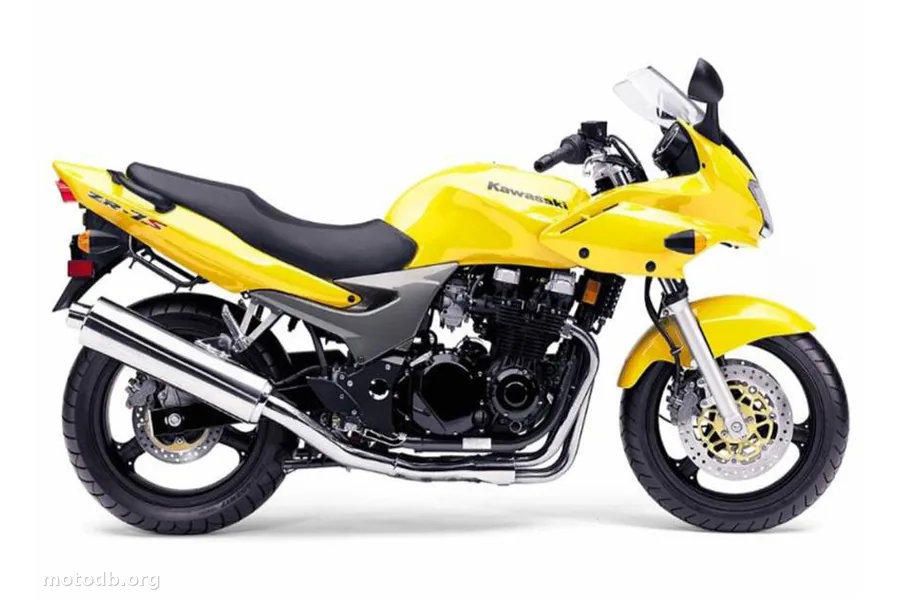
This philosophy of efficient simplicity is also found in the chassis. A steel double cradle frame, a 41 mm fork, a mono-shock: nothing revolutionary, but everything is coherent and well-balanced. With a wet weight of 220 kg and a low center of gravity, the ZR-7 is a motorcycle that immediately inspires confidence. It enters corners with disarming ease, the front end is precise, and the wheelbase of 1455 mm provides reassuring stability. However, be careful not to lean too much on the angle, as the footpegs quickly touch down, reminding you that its preferred terrain remains winding but clean roads, not the racetrack. The brakes, with dual front discs, are powerful enough and progressive for this type of use, even if the rear lacks bite. It is an honest machine that forgives mistakes and never imposes a fight on the rider.
In everyday use, the Kawasaki ZR-7 reveals all its qualities as an all-round roadster. The riding position, slightly leaned forward, is comfortable for long journeys. The seat at a height of 815 mm suits the majority of body types, and the 22-liter fuel tank promises excellent range. In the city, its maneuverability and the legendary smoothness of its engine make it a docile companion. One might perhaps regret the absence of chain adjustment by eccentric, a detail that characterized the older Kawasakis. But with its complete dashboard, storage space under the seat, and center stand, it remains perfectly practical. The S version, with its headlight fairing, is also an excellent choice for travelers seeking extra protection.
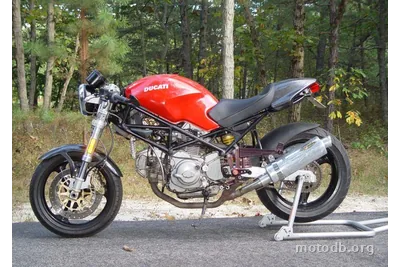
So, who should turn to a used Kawasaki ZR-7 today, whether it's a 1999, 2003, or 2004 model? The novice looking for a first large displacement, reliable, smooth, and predictable motorcycle. The nostalgic rider who vibrates for pure mechanics, an air-cooled engine block that also lends itself beautifully to transformations into a Kawasaki ZR-7 cafe racer. Or simply the epicurean who believes that the pleasure of motorcycling is not limited to the latest electronic gadgets. Faced with a Suzuki Bandit 600 or a Yamaha Fazer, it offers a different character, less sharp but more accessible. Its price on the used market often makes it a very good deal, provided its history is checked. It is not the most exhilarating motorcycle in the world, but it is a sincere, robust, and terribly endearing machine. Proof that sometimes, in mechanics as elsewhere, the right measure is the most difficult to achieve… and the most durable.
Practical info
- La moto est accessible aux permis : A
Reviews & comments
No reviews yet. Be the first to share your opinion!