Key performance
Technical specifications
Engine
- Displacement
- 675 cc
- Power
- 50.0 ch @ 7000 tr/min (37.2 kW)
- Torque
- 55.9 Nm @ 5500 tr/min
- Engine type
- Twin, four-stroke
- Cooling
- Air
- Compression ratio
- 8.7:1
- Bore × stroke
- 72 x 83 mm
- Valves/cylinder
- 4
- Camshafts
- 1 ACT
- Starter
- Electric
Chassis
- Frame
- Double cradle, high tensile steel
- Gearbox
- 6-speed
- Final drive
- Chain (final drive)
- Front suspension
- Fourche téléhydraulique, déb : 130 mm
- Rear suspension
- 2 amortisseurs latéraux, déb : 105 mm
Brakes
- Front brakes
- Single disc
- Rear brakes
- Expanding brake (drum brake)
- Front tyre
- 100/90-19
- Front tyre pressure
- 2.00 bar
- Rear tyre
- 130/80-18
- Rear tyre pressure
- 2.25 bar
Dimensions
- Seat height
- 800.00 mm
- Fuel capacity
- 15.00 L
- Weight
- 215.00 kg
- Dry weight
- 195.00 kg
- New price
- 6 999 €
Overview
Who still remembers the days when British twins ruled the London cafés, when leather smelled of castor oil, and when every ride on a Norton or Triumph was as much about pleasure as it was a mechanical gamble? It is precisely that era Kawasaki sought to resurrect with the W 650, a classic that draws its inspiration from the lines of the great British machines without inheriting their temperamental nature. The Kawasaki W 650 model year 2006, offered new at 6,999 euros, played a card few Japanese manufacturers dared to lay down: that of pure emotion, with no technological safety net.
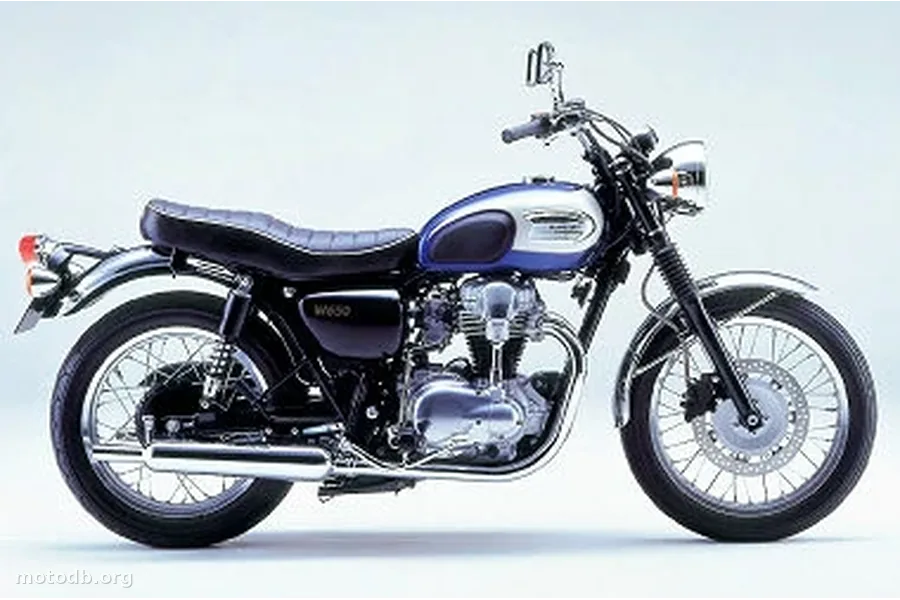
Beneath the 15-liter tank with its round, generous curves, the 675 cc parallel twin develops 50 horsepower at 7,000 rpm with 55.9 Nm of torque available from just 5,500 rpm. A far cry from the figures of a Hornet or SV 650 of the same era. But the Kawasaki W 650's spec sheet only tells part of the story. This twin with four valves per cylinder, featuring a 72 mm bore and 83 mm stroke, favors smoothness over fury. The modest 8.7:1 compression ratio confirms the philosophy: here, you savor every twist of the throttle rather than chasing outright performance. The six-speed gearbox and chain drive do their job without fuss, and top speed caps out at 170 km/h. More than enough to ride with peace of mind without ever feeling restricted on main roads.
On the chassis side, the high-tensile steel double cradle frame houses a cycle part that is honest without being sporty. The telehydraulic fork offers 130 mm of travel at the front, while the twin rear shocks make do with 105 mm at the back. The braking perfectly illustrates the retro commitment: a single disc up front and a drum brake at the rear. There is no ABS, no dual disc setup, and that is worth keeping in mind for anyone riding in the rain or carrying a passenger. The 100/90-19 and 130/80-18 tires reinforce the slender silhouette, almost anachronistic next to the wide rubber of modern roadsters. At 215 kg wet and with a seat height of 800 mm, the W 650 remains accessible to most riders.
Pleasant to look at, beautifully finished with gleaming chrome and lines that evoke another century, the Kawasaki W 650 is aimed above all at lovers of fine machinery who put passion before lap times. Reviews of the Kawasaki W 650 often converge on the same conclusion: it is a reliable machine, easy to get to grips with, ideal for daily use or stress-free Sunday rides. It also appeals to creative types who dream of turning it into a cafe racer or scrambler, as its platform lends itself so well to modifications. On the other hand, track enthusiasts and thrill-seekers will look elsewhere. Against the Triumph Bonneville T100, its natural rival, the Kawasaki counters with Japanese reliability and more reasonable maintenance costs, even if the British bike retains an edge in prestige and community following.
Today, a used Kawasaki W 650 can be found for between 3,000 and 5,000 euros depending on condition and mileage, and spare parts remain available without too much difficulty. The Kawasaki W 650's residual value holds up well, a sign that the model has found its loyal following. For anyone seeking a sincere classic, unpretentious yet full of character, this Japanese bike in British clothing remains a sound choice. Provided you accept that pleasure, sometimes, is better measured in smiles than in horsepower.
Practical info
- La moto est accessible aux permis : A
Indicators & positioning
Similar bikes
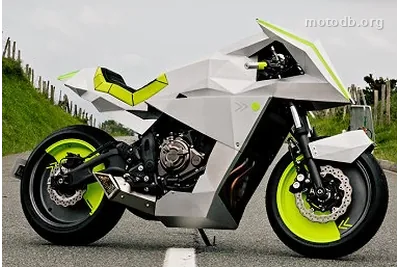
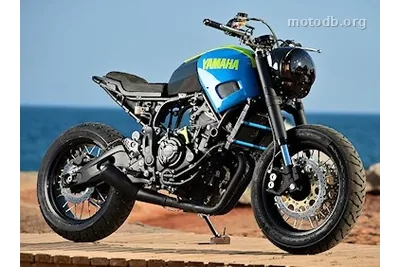
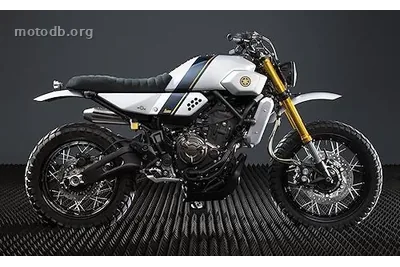
XSR 700 Yard Built - Bunker Custom Motorcycles -
Reviews & comments
No reviews yet. Be the first to share your opinion!