Key performance
Technical specifications
Engine
- Displacement
- 498 cc
- Power
- 50.0 ch @ 9000 tr/min (35.8 kW)
- Torque
- 43.0 Nm @ 7200 tr/min
- Engine type
- Twin, four-stroke
- Cooling
- Liquid
- Compression ratio
- 9.8:1
- Bore × stroke
- 74 x 58 mm
- Valves/cylinder
- 2
- Camshafts
- 2 ACT
- Fuel system
- Injection
- Valve timing
- Double Overhead Cams/Twin Cam (DOHC)
Chassis
- Frame
- Double berceau tubulaire en acier
- Gearbox
- 6-speed
- Final drive
- Chain (final drive)
- Front suspension
- Fourche telescopique Ø 37 mm, déb : 125 mm
- Rear suspension
- 2 amortisseurs latéraux, déb : 105 mm
Brakes
- Front brakes
- Single disc
- Rear brakes
- Expanding brake (drum brake)
- Front tyre
- 110/70-H-17
- Front tyre pressure
- 2.25 bar
- Rear tyre
- 130/70-H-17
- Rear tyre pressure
- 2.50 bar
Dimensions
- Seat height
- 810.00 mm
- Wheelbase
- 1430.00 mm
- Fuel capacity
- 17.00 L
- Weight
- 196.00 kg
- Dry weight
- 179.00 kg
- New price
- 4 599 €
Overview
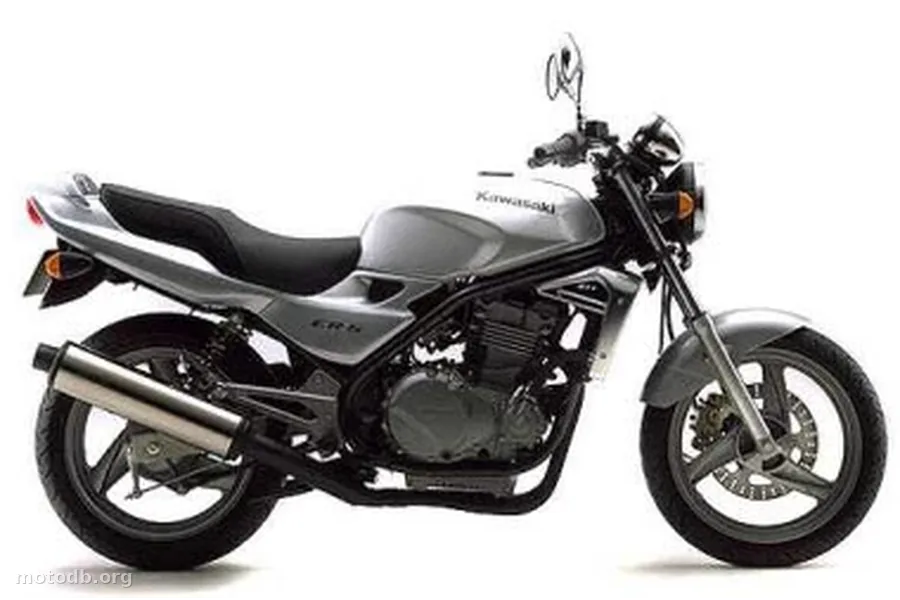
Some motorcycles don't try to seduce. They work. The Kawasaki ER-5 belongs to that category — machines that embrace their utilitarian purpose without apology, and ultimately win you over through use rather than at first glance on a dealership floor.
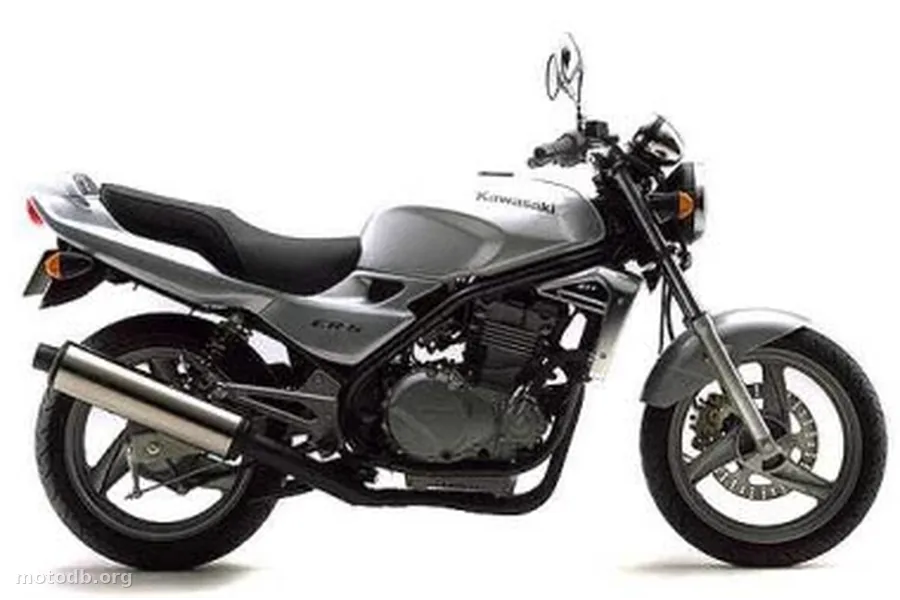
The 498 cc parallel twin, largely inherited from the GPZ 500, is no competition engine. Its 50 horsepower peaks at 9,000 rpm, with 43 Nm of torque arriving at 7,200 rpm. These aren't numbers that set the pulse racing on paper, and it would be dishonest to pretend otherwise. But the real argument for this engine lies elsewhere: in the mid-range, where you actually ride, the ER-5 delivers a clean, linear response that makes daily commuting less taxing than a sports bike that needs to be wrung out to come alive. The 178 km/h top speed is adequate for motorway use, nothing more. That was never the point.
For the 2004 Kawasaki ER-5, few visible changes compared to the updates introduced in 2001. The styling remains functional, almost austere, with that steel double cradle frame making no effort to appear modern. At 196 kg fully fuelled, it's no lightweight, but the 810 mm seat height makes it accessible to a wide range of riders. A confident beginner or average-height rider will find their bearings quickly. Urban maneuverability is adequate, though the turning radius can frustrate in tight manoeuvres — a point frequently raised by regular ER-5 owners in their real-world feedback.
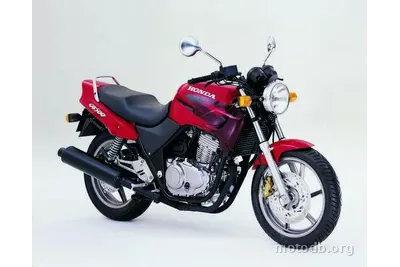
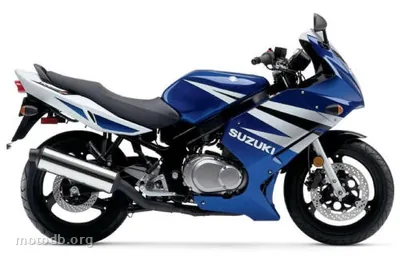
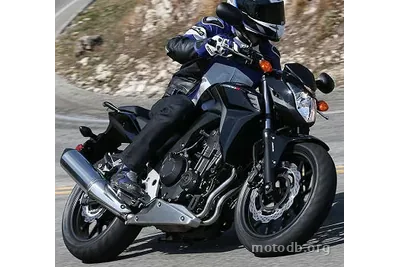
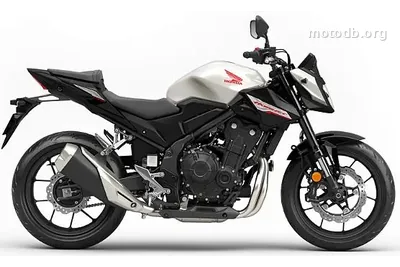
Where the machine genuinely surprises is on the open road. The frame does its job seriously, the suspension absorbs without complaint, and the front end inspects corners with a precision you wouldn't necessarily expect from an entry-level tourer. The 37 mm telescopic fork offers 125 mm of travel, the twin rear shock absorbers 105 mm. It's no track setup, but it proves considerably more convincing than what several direct rivals offer. The Honda CB 500 is more refined, the Suzuki GSF 500 even more affordable, but on the chapter of pure dynamic comfort, the Kawasaki holds its own.
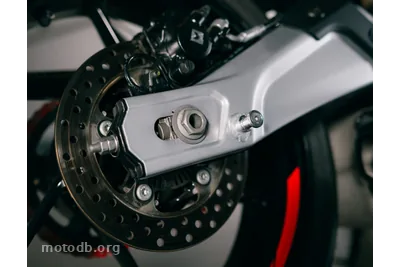
The mixed braking setup — disc at the front, drum at the rear — is representative of both the era and the price segment. It gets the job done without inspiring confidence in emergency situations. It's the most obvious weakness in the Kawasaki ER-5 spec sheet when reviewed today, and it deserves to be clearly flagged. Anyone looking at a Kawasaki ER-5 from 1996 to 2006 on the used market — particularly the 2002, 2004, or 2005 model years — should plan on a systematic inspection of the pads and drum.
At €4,599 on the price list, the 2004 Kawasaki ER-5 presents itself as an honest proposition in a fiercely competitive segment. It's not the cheapest option, but it justifies its price through solid build quality and a well-established mechanical reliability. For an A2 licence holder, a commuter ready to rack up kilometres without overthinking it, or a rider seeking a dependable first large-displacement machine, it's a solid foundation. You don't choose it for its character — you choose it because it delivers on its promises, kilometre after kilometre. In a world of marketing and shiny plastics, that counts for a great deal.
Practical info
- Moto bridable à 34 ch pour l'ancien permis A MTT1 - pas garanti pour le permis A2
- La moto est accessible aux permis : A, A (MTT1)
Reviews & comments
No reviews yet. Be the first to share your opinion!