Key performance
Technical specifications
Engine
- Displacement
- 499 cc
- Power
- 50.0 ch @ 9000 tr/min (36.5 kW)
- Torque
- 44.1 Nm @ 7200 tr/min
- Engine type
- Twin, four-stroke
- Cooling
- liquide
- Compression ratio
- 9.8:1
- Bore × stroke
- 74 x 58 mm
- Valves/cylinder
- 4
- Camshafts
- 2 ACT
Chassis
- Frame
- Double berceau tubulaire en acier
- Gearbox
- 6-speed
- Final drive
- Chain (final drive)
- Front suspension
- Fourche telescopique Ø 37 mm, déb : 125 mm
- Rear suspension
- 2 amortisseurs latéraux, déb : 105 mm
Brakes
- Front brakes
- Single disc
- Rear brakes
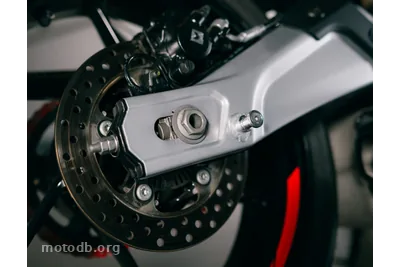
- Expanding brake
- Front tyre
- 110/70-17
- Front tyre pressure
- 2.25 bar
- Rear tyre
- 130/70-17
- Rear tyre pressure
- 2.50 bar
Dimensions
- Seat height
- 780.00 mm
- Fuel capacity
- 16.00 L
- Weight
- 196.00 kg
- Dry weight
- 179.00 kg
- New price
- 4 599 €
Overview
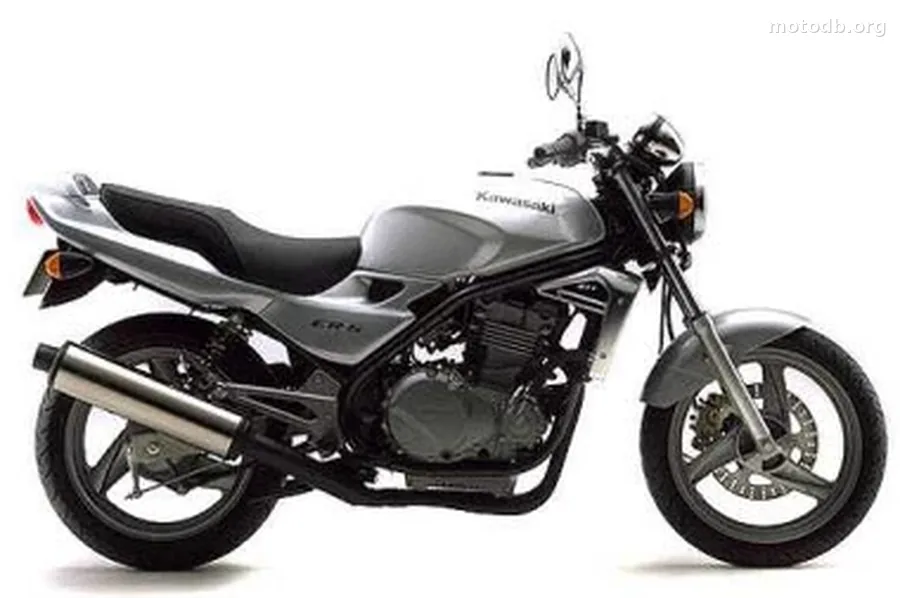
What makes an entry-level motorcycle stand the test of time? Not charisma, not figures, but that rare ability to deliver on its promise without ever failing. That is exactly what the Kawasaki ER-5 did for a decade, from 1996 to 2006, without fanfare and without missteps, generation after generation.
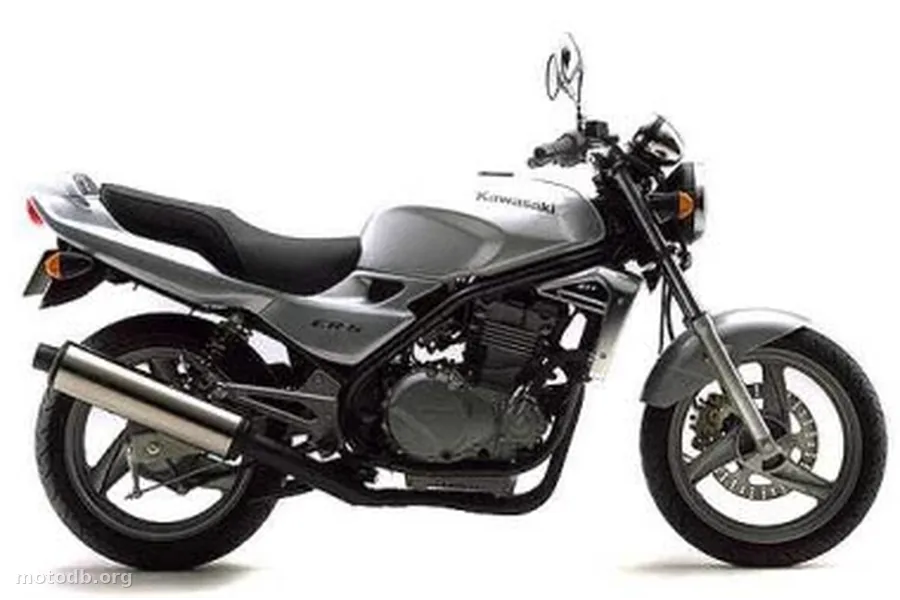
In 2002, the model year we are focusing on here, the Kawasaki ER-5 2002 benefits from a slight aesthetic refresh initiated the previous year, with no mechanical revolution. Beneath the 16-liter tank, the 499 cc inline twin derived from the GPZ 500 still runs with the same philosophy: 50 horsepower at 9,000 rpm, 44.1 Nm of torque available from 7,200 rpm, and a 9.8:1 compression ratio that aims not to impress but to last. This engine is not an orator — it is a workhorse. It delivers its sensations economically, but it never lies about its availability in the mid-rev range, where most everyday riding takes place.
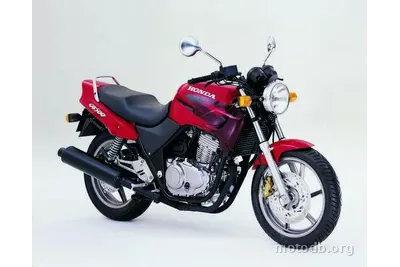
In its segment, the accessible 500 naked class is far from empty. The Honda CB 500 asserts its reputation for ironclad reliability, the Suzuki GSF 500 plays the lightweight card, and the Suzuki GS 500 E trails the Kawasaki ER-5 review after review in the value-for-money stakes. At 4,599 euros, the Kawasaki sits at the upper end of the segment, but it responds with suspension equipment that is genuinely above average: the 37 mm telescopic fork and twin rear shock absorbers offer seat comfort and absorption that leave its direct rivals behind on this specific point. The 196 kg wet weight remains manageable, the 780 mm seat height makes touching down easy without struggle, and the bike proves quick to get to grips with, even for a newly licensed rider.
Where it falls short is turning radius. In town, the Kawasaki ER-5 2002 proves less maneuverable than one might hope from an urban naked of this size. It is not a dealbreaker, but it is worth noting for anyone planning primarily city use on tight streets. On the other hand, as soon as the road opens up, the tubular double-cradle frame reasserts itself: the machine reveals itself to be surprisingly at ease at a sustained pace, this discreet sporting temperament being a house signature that Kawasaki never quite managed to erase from its roadsters, regardless of displacement.
The Kawasaki ER-5 specifications describe a motorcycle conceived for the A2 license before such a category existed, built for riders looking to progress without getting in over their heads. Its claimed top speed of 178 km/h is honest, never put forward as a selling point. What is put forward is longevity, mechanical seriousness, and that ability to remain relevant years after leaving the dealership — which explains why the used Kawasaki ER-5 market stays active long after production ended. For Kawasaki ER-5 tuning, the potential exists but remains limited by an architecture designed for sensibility rather than excess. An honest motorcycle, in the noblest sense of the word.
Practical info
- Moto bridable à 34 ch pour l'ancien permis A MTT1 - pas garanti pour le permis A2
- La moto est accessible aux permis : A, A (MTT1)
Reviews & comments
No reviews yet. Be the first to share your opinion!