Key performance
Technical specifications
Engine
- Displacement
- 498 cc
- Power
- 50.0 ch @ 9000 tr/min (36.8 kW)
- Torque
- 44.1 Nm @ 7200 tr/min
- Engine type
- Twin, four-stroke
- Cooling
- Liquid
- Compression ratio
- 9.8:1
- Bore × stroke
- 74 x 58 mm
- Valves/cylinder
- 4
- Camshafts
- 2 ACT
- Fuel system
- Injection
Chassis
- Frame
- Double berceau tubulaire en acier
- Gearbox
- 6-speed
- Final drive
- Chain (final drive)
- Front suspension
- Telescopic fork
- Rear suspension
- Dual shocks with preload adjustment
Brakes
- Front brakes
- Single disc
- Rear brakes
- Expanding brake (drum brake)
- Front tyre
- 110/70-17
- Front tyre pressure
- 2.25 bar
- Rear tyre
- 130/70-17
- Rear tyre pressure
- 2.50 bar
Dimensions
- Seat height
- 800.00 mm
- Fuel capacity
- 16.00 L
- Weight
- 196.00 kg
- Dry weight
- 197.00 kg
- New price
- 4 599 €
Overview
Ten years on the market — that's a longevity worth examining. The Kawasaki ER-5 crossed a decade without any major revolution, just a few cosmetic tweaks at the turn of the 2000s to stay presentable against competition that, for its part, never stood still. The 498 cc parallel twin, inherited from the GPZ 500, never claimed to shake up the dyno sheets: 50 horsepower at 9,000 rpm, 44 Nm of torque available from 7,200 rpm. It's not the kind of output that will pin you to the seat, but this twin has one genuine quality: it delivers on its promises in the mid-range, which is where you actually ride day to day.
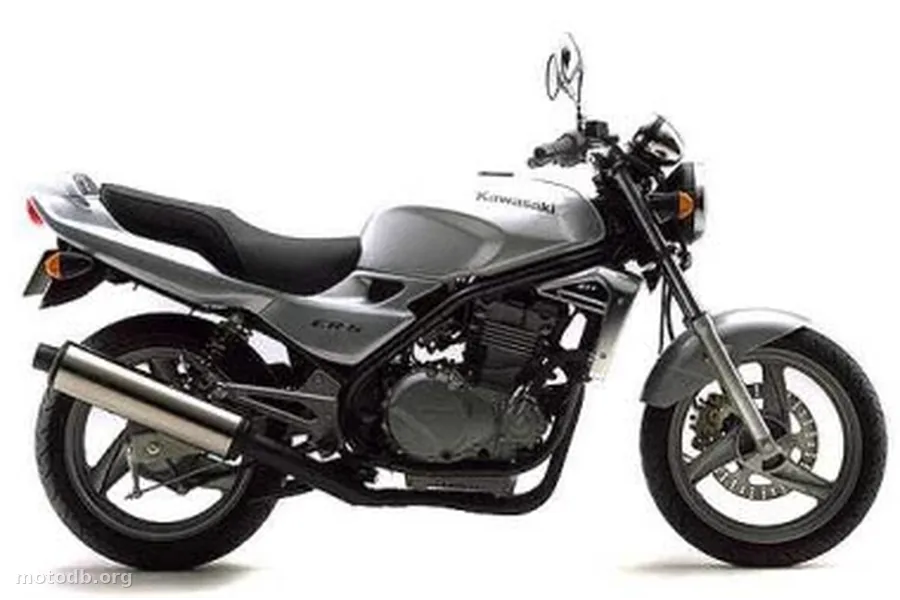
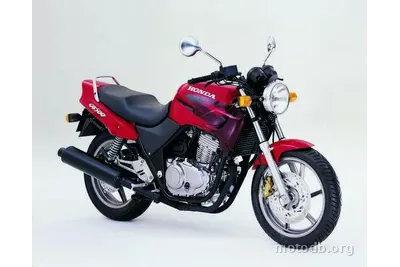
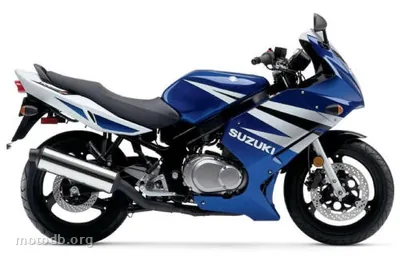
Facing the Honda CB 500 and the Suzuki GSE 500, the Kawasaki ER-5 holds a clear commercial position. Priced at 4,599 euros toward the end of its run, it makes no attempt to seduce through style or prestige. The steel double-cradle frame, the 110/70-17 and 130/70-17 tires, the non-adjustable telescopic fork: everything is functional, understated, designed to last. The 800 mm seat height makes putting a foot down straightforward, which is no small matter for the audience this machine targets — new license holders and riders who want a reliable tool without breaking the bank.
What surprises is the dynamism hiding beneath this utilitarian engine. A Kawasaki is still a Kawasaki, and the Kawasaki ER-5 2004 and the Kawasaki ER-5 2005 both retain that slightly lively character that sets the brand apart from its Japanese rivals. The chassis handles a sustained pace without complaint, and the mixed braking setup — front disc and rear drum — does its job seriously, even if one might reasonably question the drum choice at this price point. The turning radius, however, remains the weak spot in the city: navigating traffic jams requires anticipation.
Where the Kawasaki ER-5 edges ahead of the GSE and the CB 500 is in comfort. The preload-adjustable rear shock absorbers and the seat absorb deteriorated tarmac noticeably better than what its direct competitors offered at the time. For daily use or first long-distance rides, that's a tangible advantage. The 16-liter tank, combined with reasonable fuel consumption, delivers a decent range without forcing a stop at the petrol station every 150 kilometers.
Long available as a used Kawasaki ER-5 on the second-hand market, this machine remains an honest benchmark in its category. It never tried to be anything other than an effective, accessible, and durable tool. For a first-time rider or someone returning to motorcycling without committing to a serious budget, the Kawasaki ER-5 from 1996 to 2006 still represents a coherent choice today — provided you accept that the pleasure here is measured in trouble-free miles rather than thrills at the throttle.
Practical info
- Moto bridable à 34 ch pour l'ancien permis A MTT1 - pas garanti pour le permis A2
- La moto est accessible aux permis : A, A (MTT1)
Reviews & comments
No reviews yet. Be the first to share your opinion!