Key performance
Technical specifications
Engine
- Displacement
- 124 cc
- Power
- 12.6 ch (9.2 kW)
- Torque
- 9.2 Nm
- Engine type
- Single cylinder, four-stroke
- Cooling
- Air
- Compression ratio
- 9.0:1
- Bore × stroke
- 56.5 x 49.5 mm (2.2 x 1.9 inches)
- Valve timing
- Single Overhead Cams (SOHC)
- Starter
- Electric & kick
Chassis
- Frame
- Steel
- Gearbox
- 5-speed
- Front suspension
- Telescopic forks
- Rear suspension
- Central unit
- Front wheel travel
- 170 mm (6.7 inches)
- Rear wheel travel
- 150 mm (5.9 inches)
Brakes
- Front brakes
- Single disc
- Rear brakes
- Single disc
- Front tyre
- 2.75-19
- Rear tyre
- 3.50-16
Dimensions
- Seat height
- 830.00 mm
- Wheelbase
- 1350.00 mm
- Fuel capacity
- 6.50 L
- Dry weight
- 99.00 kg
Overview
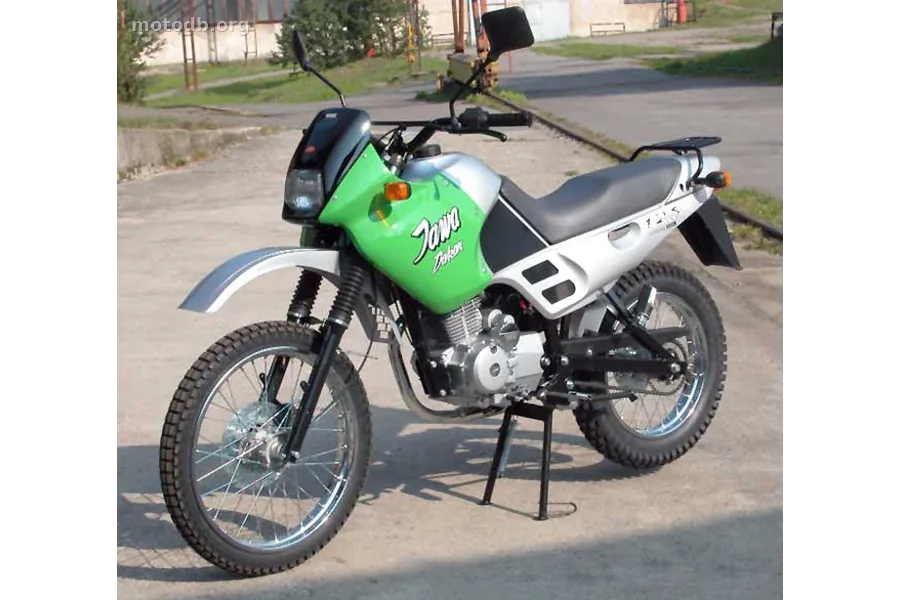
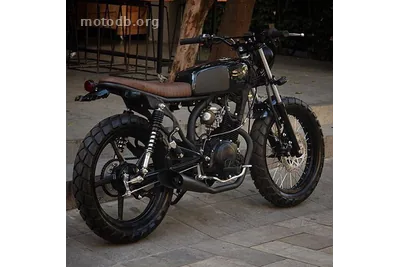
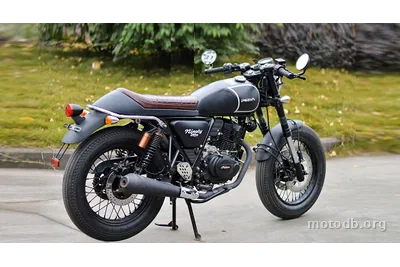
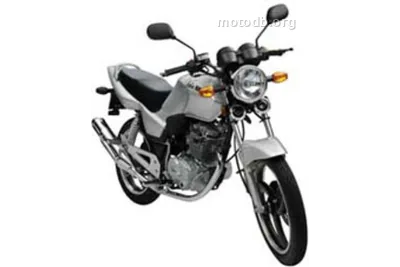
In 2009, launching a 125 cm³ sportbike with knobby tires and a name evocative of the Paris-Dakar was either a stroke of marketing genius or a profound misunderstanding of the segment. The Jawa 125 Dakar, with its 12.6 horsepower patiently extracted from an air-cooled four-stroke single-cylinder, clearly did not claim to rival the Aprilia RS 125 models of the time. Its steel frame, classic telescopic suspension, and single disc brakes announced rather a Spartan philosophy, a tribute to a certain idea of mechanical simplicity. With a 6.5-liter tank and a dry weight of 99 kg, it targeted the essentials: to be accessible, reliable, and endowed with a well-tempered character.
Under the hood, the figures speak for themselves. A bore of 56.5 mm for a stroke of 49.5 mm gives a fairly square engine, and the modest compression ratio of 9:1 suggests a tolerant design, capable of digesting ordinary fuel without a hitch. The 9.2 Nm of torque, although modest, had to arrive early in the rev range to make the most of the five-speed gearbox. This is not a machine that screams to its rev limit; it purrs, it pushes, it advances with a certain mechanical dignity. The announced top speed, 108 km/h, is a realistic objective, achievable with the right gear and a little patience.
The equipment confirms this no-frills approach. A seat height of 830 mm and a wheelbase of 1350 mm outline a straight, almost classic silhouette, very different from the racing handlebars of a true sportbike. The choice of tires, in 2.75-19 at the front and 3.50-16 at the rear, with their high sidewalls and potentially off-road tread, is the most intriguing element. It betrays a desire for versatility, or at least a certain ability to leave the smooth tarmac, aligning the name "Dakar" with a tangible proposition, even a very light one.
Ultimately, the 2009 Jawa 125 Dakar targeted young license holders seeking a more robust identity than that of a simple scooter, or a nostalgic motorcyclist looking for a simple and unassuming mount for the city and stabilized roads. It positioned itself as an alternative to the often more aseptic Japanese bikes, offering a touch of adventure in its look and a mechanical feel that felt indestructible. In the landscape of 125 cm³, it served as a friendly oval, recalling that before the race for power and electronics, a motorcycle could simply be an honest and charismatic mobility object.
Reviews & comments
No reviews yet. Be the first to share your opinion!