Key performance
Technical specifications
Engine
- Displacement
- 124 cc
- Power
- 15.0 ch @ 9000 tr/min (11.0 kW)
- Torque
- 12.3 Nm @ 8000 tr/min
- Engine type
- Monocylindre, 4 temps
- Cooling
- liquide
- Compression ratio
- 11.2 : 1
- Bore × stroke
- 52 x 58.6 mm
- Valves/cylinder
- 4
- Camshafts
- 1 ACT
- Fuel system
- Injection
Chassis
- Frame
- type Deltabox en acier
- Gearbox
- boîte à 6 rapports
- Final drive
- Chaîne
- Front suspension
- Fourche téléhydraulique Ø 33 mm, déb : 130 mm
- Rear suspension
- Mono-amortisseur, déb : 125 mm
Brakes
- Front brakes
- Freinage 1 disque Ø 292 mm, étrier 2 pistons
- Rear brakes
- Freinage 1 disque Ø 230 mm, étrier simple piston
- Front tyre
- 100/80-17
- Front tyre pressure
- 1.80 bar
- Rear tyre
- 130/70-17
- Rear tyre pressure
- 2.00 bar
Dimensions
- Seat height
- 818.00 mm
- Fuel capacity
- 13.80 L
- Weight
- 138.00 kg
- Dry weight
- 127.00 kg
- New price
- 3 999 €
Overview
Do you remember that time when a 125 could make you dream almost as much as a liter bike? In 2010, Yamaha pushed the concept to its peak with this YZF-R 125 Team Race Replica. It wasn't just another color scheme; it was an act of faith, a statement of intent addressed to all young aspiring riders. The Japanese manufacturer dared to dress its smallest sportbike, barely 15 horsepower under the fairing, in the battle gear of Valentino Rossi’s M1. The Fiat blue, the Packard-Bell stickers, the famous 46 discreetly placed – everything was there to transform every ride into an imaginary victory lap. For around €4000, you bought more than just a means of transport; you gained status.
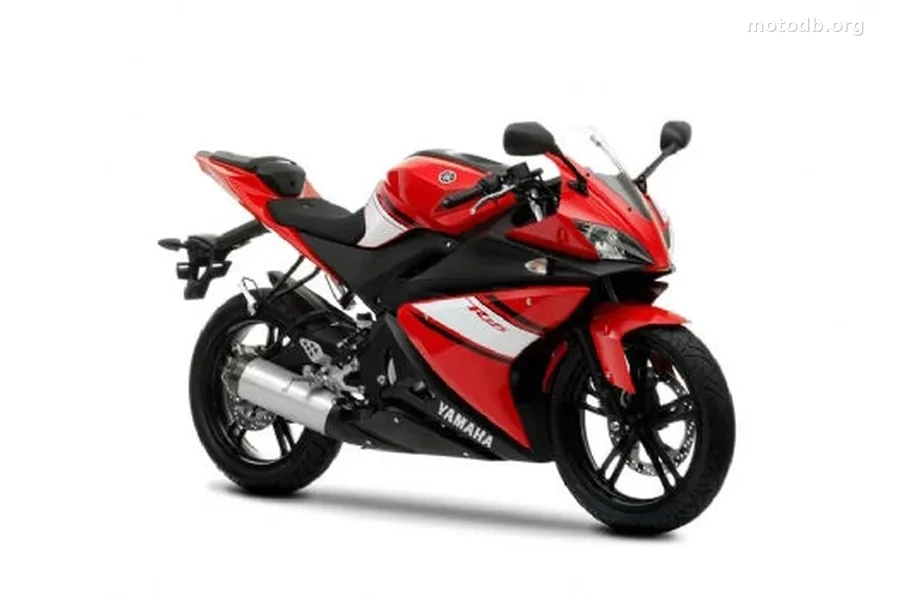
Technically, it remained the fine blade we knew. Its 124 cm³ four-stroke single-cylinder engine, although limited to 11 kW, was lively and playful, demanding to be kept above 8000 rpm to unleash its 12.3 Nm of torque. With a dry weight of 127 kg, it was as agile as a dragonfly. The Deltabox steel frame, inherited from the brand's sporting lineage, offered reassuring rigidity, while the 33 mm fork and single shock ensured serious handling, well beyond the simple needs of an A1 license. The braking system, with a 292 mm disc at the front, was frankly honest. It was a machine that taught you how to ride, to seek out the ratios of its six-speed gearbox, to anticipate. Its announced top speed of 124 km/h was a goal to be achieved, not just a figure on paper.
But let's face it, the main appeal of this Replica was purely emotional. At the time, no competitor – whether it was called CBR125R or Aprilia RS4 125 – offered such a level of detail and homage to racing. It was a brilliant marketing move, but also a true gateway to motorcycle passion. The target audience was obvious: the young license holder, proud, demanding in terms of style, and already hooked on the world of racing. This bike told him that he was part of the club, even on the way to school.
Today, this Replica has become a small collector's item, a testament to an era when Yamaha flirted with marketing genius. It had its flaws, of course: a very limited power output for long gradients, a 81.8 cm seat sometimes high for smaller riders, and a price that rose for the aesthetics. But it fully assumed its role as a first sportbike, much more engaging and formative than a simple disguised road bike. It proved that you could have the spirit of an R1 even with the heart of a 125. A lesson that some manufacturers seem to have forgotten.
Practical info
- La moto est accessible aux permis : A
Reviews & comments
No reviews yet. Be the first to share your opinion!