Key performance
Technical specifications
Engine
- Displacement
- 999 cc
- Power
- 136.0 ch @ 9500 tr/min (100.0 kW)
- Torque
- 89.2 Nm @ 6000 tr/min
- Engine type
- Bicylindre en V, 4 temps
- Cooling
- liquide
- Compression ratio
- 10.8:1
- Bore × stroke
- 100 x 63.6 mm
- Valves/cylinder
- 4
- Camshafts
- 2 ACT
- Fuel system
- Injection
Chassis
- Frame
- Double poutre alu
- Gearbox
- boîte à 6 rapports
- Final drive
- Chaîne
- Front suspension
- Fourche téléhydraulique inversée , déb : 130 mm
- Rear suspension
- Mono-amortisseur, déb : 120 mm
Brakes
- Front brakes
- Freinage 2 disques Ø 320 mm, étrier 4 pistons
- Rear brakes
- Freinage 1 disque Ø 220 mm, étrier simple piston
- Front tyre
- 120/70-17
- Front tyre pressure
- 2.50 bar
- Rear tyre
- 190/50-17
- Rear tyre pressure
- 2.90 bar
Dimensions
- Seat height
- 813.00 mm
- Fuel capacity
- 18.00 L
- Dry weight
- 200.00 kg
- New price
- 15 245 €
Overview
When Honda decides to play with the big boys, it doesn’t do things by halves. At the turn of the 2000s, to counter Ducati’s hegemony in Superbike racing, the Hamamatsu factory unleashed its heavy artillery and released the VTR SP-1, also known as the RC 51. The idea was simple but radical: to beat the Italian V-twins with their own money, by injecting a massive dose of HRC technology. The result is a war machine, a 999 cm3 V-twin engine packed with technical solutions, such as magnesium cases and a forced air intake fed by a duct integrated into the front frame. At first glance, this Japanese sportbike has a killer look, far from a standard road bike, with aesthetics that loudly proclaim its competition ambitions.
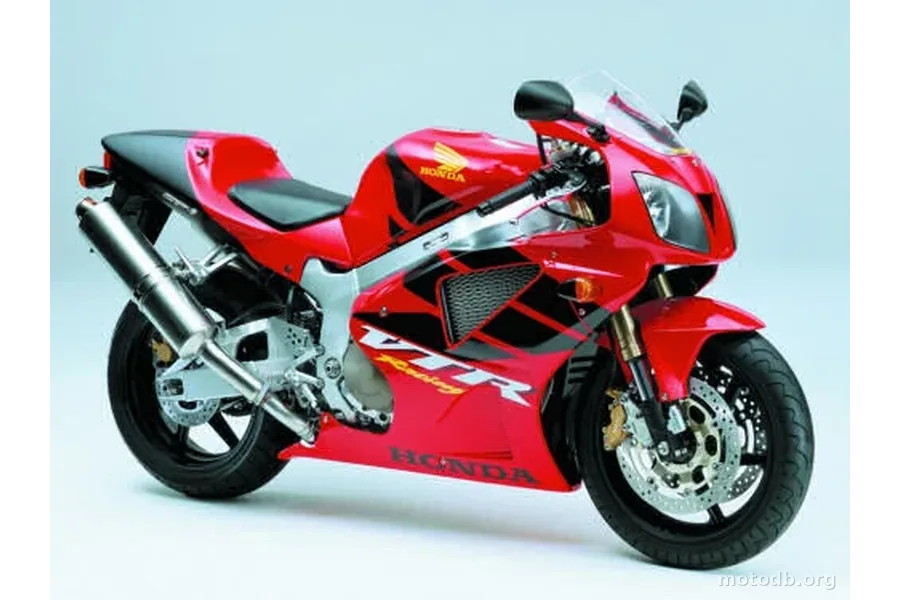
On paper, the technical specifications are a dream: 136 horsepower at 9500 rpm, a torque of 89 Nm available relatively early, and a dry weight of 200 kg. But it’s on the track that things get tough. In customer version, the SP-1 shows some weaknesses compared to a Ducati 996, particularly in terms of suspension. The inverted fork and single shock absorber, although adjustable, lack firmness and can be too forgiving on a bumpy circuit, easily reaching the stop. A flaw that destabilizes the bike when the pace accelerates, penalizing lap times. The braking, on the other hand, is a pure marvel of precision and power, with its two 320 mm front discs. The bike throws itself into corners with insane aggression, but demands committed riding, especially if you delay releasing the brakes. It’s not a bike for beginners, it’s a weapon for an experienced rider who is willing to fight.
The paradox is that this supposed track bike often reveals its best qualities on the road. Its V2 engine is a gem, with exemplary smoothness at low revs before delivering a furious surge beyond 5500 rpm. The curve is less explosive than that of an Italian twin, but it is otherwise more progressive and energetic than a four-cylinder engine. The perimeter aluminum frame and the huge swingarm offer impeccable handling, and the riding position, although aggressive, remains manageable for long, winding rides. It’s there, on country roads, that the SP-1 transforms into a formidable and charismatic companion, revealing all the richness of its character.
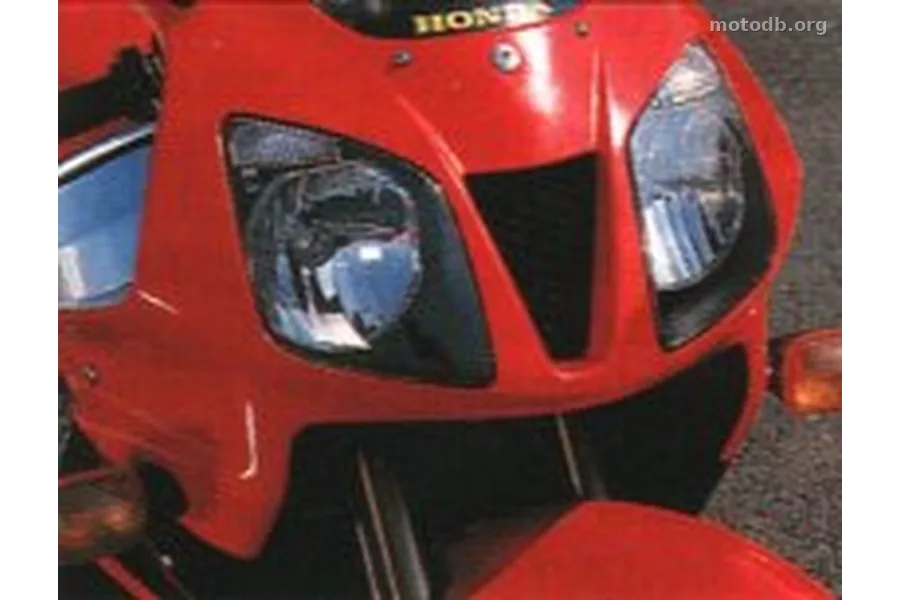
With a price at the time approaching 15,245 euros, the VTR SP-1 was clearly not intended for the general public. It was a bike for initiates, for purists seeking a Japanese alternative to the Ducati myth, with factory support behind the scenes. Its track record, including a victory at the 24 Hours of Le Mans on its first participation, speaks for itself. Today, it has become a collector's item, a symbol of an era when Honda challenged Italy head-on with a machine with a well-tempered character, demanding but terribly endearing. A piece of mechanical history that has managed, despite its flaws, to leave a mark.
Practical info
- La moto est accessible aux permis : A

Reviews & comments
No reviews yet. Be the first to share your opinion!