Key performance
Technical specifications
Engine
- Displacement
- 781 cc
- Power
- 106.0 ch @ 10500 tr/min (78.0 kW)
- Torque
- 78.5 Nm @ 8500 tr/min
- Engine type
- 4 cylindres en L à 90°, 4 temps
- Cooling
- liquide
- Compression ratio
- 11.6:1
- Bore × stroke
- 72 x 48 mm
- Valves/cylinder
- 4
- Camshafts
- 2 ACT
- Fuel system
- Injection PGM-FI
Chassis
- Frame
- double poutre en aluminium
- Gearbox
- boîte à 6 rapports
- Final drive
- Chaîne
- Front suspension
- Fourche téléhydraulique Ø 43 mm, déb : 109 mm
- Rear suspension
- Monobras oscillant Pro-Arm monoamortisseur, déb : 120 mm
Brakes
- Front brakes
- Freinage 2 disques Ø 296 mm, étrier 3 pistons
- Rear brakes
- Freinage 1 disque Ø 256 mm, étrier 3 pistons
- Front tyre
- 120/70-17
- Front tyre pressure
- 2.50 bar
- Rear tyre
- 180/55-17
- Rear tyre pressure
- 2.90 bar
Dimensions
- Seat height
- 805.00 mm
- Fuel capacity
- 22.00 L
- Weight
- 256.00 kg
- Dry weight
- 218.00 kg
- New price
- 12 490 €
Overview
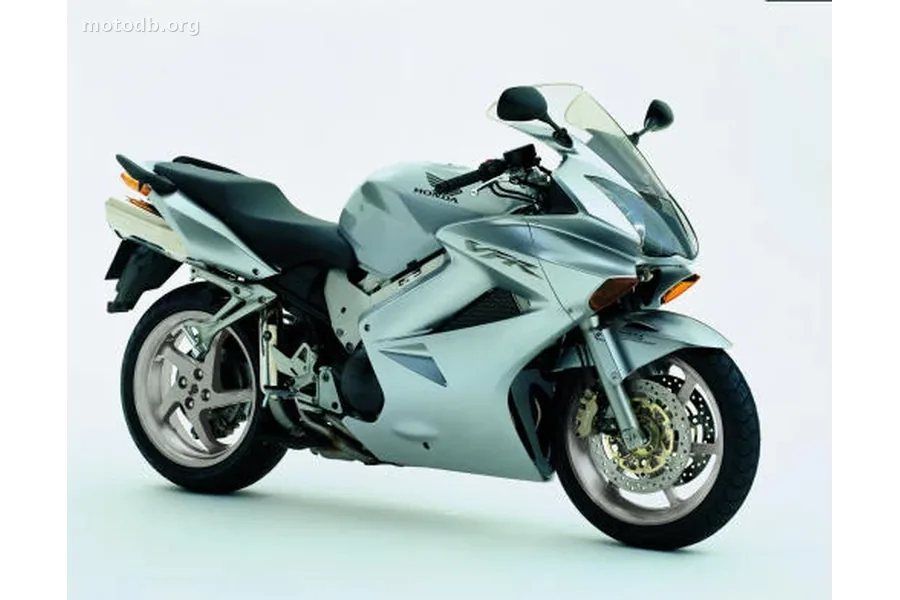
Four years. That's how long it separates each evolution of the VFR, a mechanical entity that has always progressed in subtle ways, never upsetting its loyal following. But in 2002, the shock was severe: farewell to the rounded lines and the gentle cascade of gears, making way for an angular design and that famous V-TEC which left more than one rider perplexed. So, when the 2006 renewal loomed, one logically expects a revolution. And there, astonishment: the motorcycle seems to have spent those four years in hibernation.
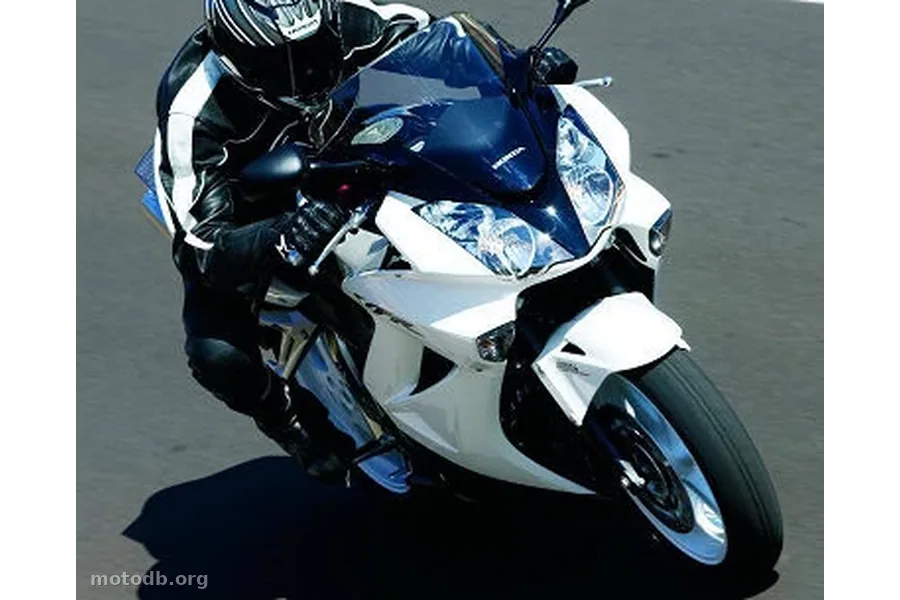
Looking closely, the differences are so slight that it takes a lynx's eye to discern them. White-lensed turn signals, a slightly tinted bubble, a nose fairing that changes color… that’s about all the stylists at Honda bothered to modify. One could retort that the design of the previous R1 didn’t evolve much either, but at least, at Yamaha, the time between generations was shorter. Here, the feeling is one of a missed opportunity, of a design department left fallow. Fortunately, the chassis, it, did not need rejuvenation. The aluminum twin-beam frame, the coupled CBS braking system, and the well-balanced suspension make this VFR 800 a machine that is still as delightful on its playing field: the open road. It swallows the kilometers with the assurance of a grand tourer, while still retaining a surprising agility for its 256 kilograms fully fueled. On this point, no criticism.
The real novelty, the heart of the evolution, is nestled under the 22-liter tank. Honda has thoroughly reworked the mapping of its V-TEC system. The switchover from 2 to 4 valves per cylinder now occurs at 6600 rpm, 200 revolutions earlier than on the previous model. The objective? To soften the transition, that famous “step” which could surprise in the middle of a corner. Mission accomplished: the passage is more progressive, without however diluting the unique sound of this V4. The same attention was paid to deceleration, the return to 2-valve mode occurring at 6100 rpm. One feels that the engineers listened to the feedback, refining the character to make it more linear, more predictable. With its 106 horsepower at 10500 rpm and its torque of 78.5 Nm at 8500 rpm, the engine remains a mechanical gem, supple and refined, even if it doesn't measure up to the wave of more powerful twin-cylinder or triple engines that are emerging at the time.
Ultimately, this 2006 VFR 800 poses a simple question: is refinement at all costs enough to seduce a changing market? At nearly 12,500 euros, it is aimed at the demanding globetrotter, the one who seeks the perfect alliance between the comfort of a GT and the temperament of a sportbike. It is reassuringly consistent, of legendary reliability. But by being so timid in its evolution, Honda risks seeing its benchmark become a gentle relic. The loyal public will love it, certainly. But it will not succeed in reconquering those who have gone to more radical or modern machines. The future will prove it right: as early as 2007, ABS will become mandatory, a technological bandage on a philosophy that is beginning to date. The VFR remains the VFR, a masterpiece of balance. But the world, around it, has started to spin faster.
Standard equipment
- Assistance au freinage : CBS et ABS de série
Practical info
- La moto est accessible aux permis : A
Indicators & positioning
Similar bikes
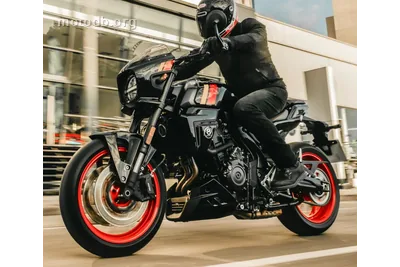
800 FAZER 8 Race Blu
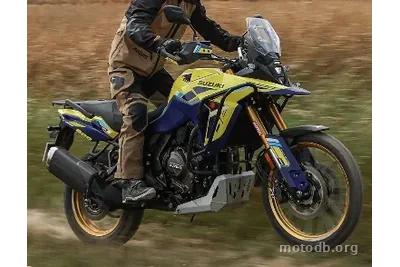
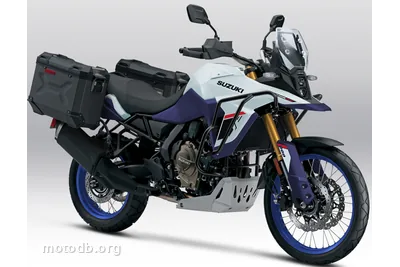
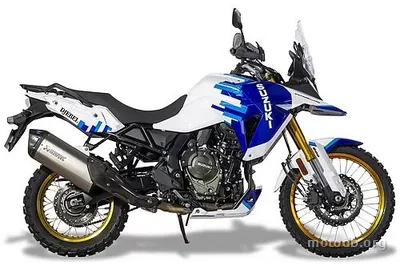
V-Strom 800DE Rally Edition
Reviews & comments
No reviews yet. Be the first to share your opinion!