Key performance
Technical specifications
Engine
- Displacement
- 781 cc
- Power
- 106.0 ch @ 10500 tr/min (78.0 kW)
- Torque
- 78.5 Nm @ 8500 tr/min
- Engine type
- 4 cylindres en L à 90°, 4 temps
- Cooling
- liquide
- Compression ratio
- 11.6:1
- Bore × stroke
- 72 x 48 mm
- Valves/cylinder
- 4
- Camshafts
- 2 ACT
- Fuel system
- Injection PGM-FI
Chassis
- Frame
- double poutre en aluminium
- Gearbox
- boîte à 6 rapports
- Final drive
- Chaîne
- Front suspension
- Fourche téléhydraulique Ø 43 mm, déb : 109 mm
- Rear suspension
- Monobras oscillant Pro-Arm monoamortisseur, déb : 120 mm
Brakes
- Front brakes
- Freinage 2 disques Ø 296 mm, étrier 3 pistons
- Rear brakes
- Freinage 1 disque Ø 256 mm, étrier 3 pistons
- Front tyre
- 120/70-17
- Front tyre pressure
- 2.50 bar
- Rear tyre
- 180/55-17
- Rear tyre pressure
- 2.90 bar
Dimensions
- Seat height
- 805.00 mm
- Fuel capacity
- 22.00 L
- Weight
- 256.00 kg
- Dry weight
- 218.00 kg
- New price
- 13 490 €
Overview
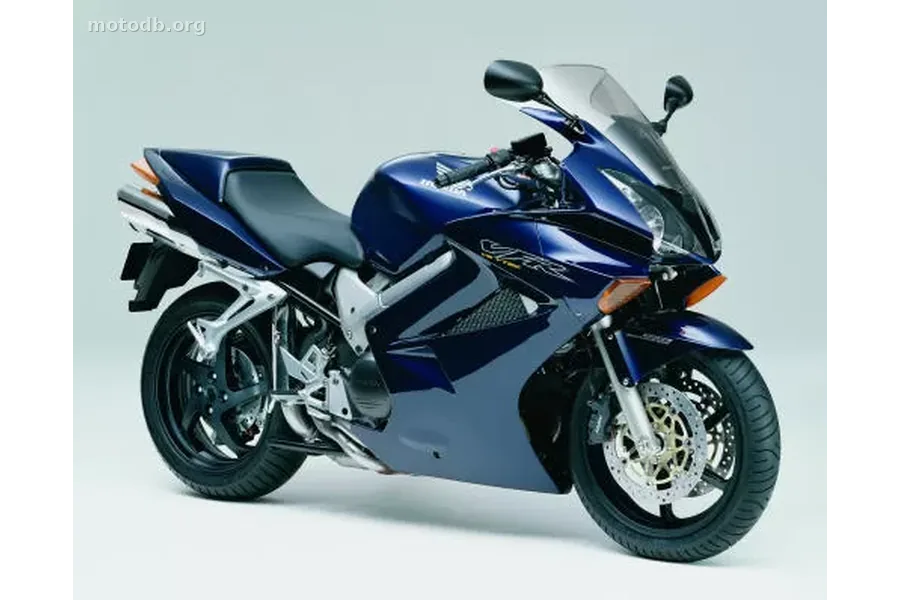
You either love it or hate it, but the VFR never leaves anyone indifferent. In 2009, this veteran, from a lineage that marked the 90s and 2000s, still places its 256 kg on the scale with a sense of authority. Yet, opening the catalog, doubt creeps in: where are the real evolutions? Honda presents here the RC 46 II, which bears a striking resemblance to the 2002 version, the one with the major overhaul featuring its V-TEC and sculpted lines. After seven years, one would have hoped for a refresh, a redesign, a new breath. It is not the case. Modifications are limited to cosmetic details: white lens turn signals, a slightly tinted windscreen, and a headlight separator that changes color. It’s minimal, very minimal. You almost get the impression that the engineering departments took a four-year coffee break. Compared to a Yamaha FZ8 or a Suzuki GSX-S750, they seem to come from another galaxy in terms of displayed modernity.
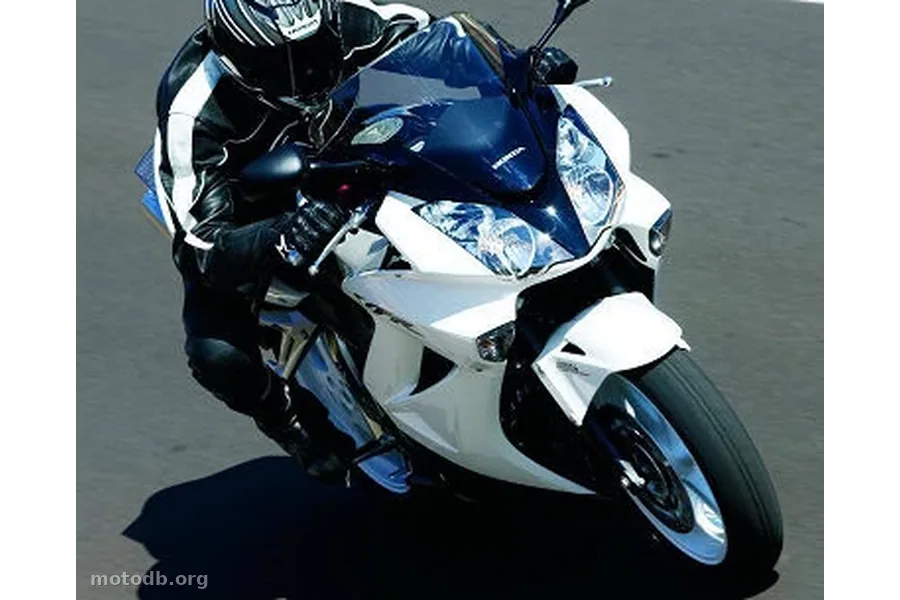
But let’s not be fooled: beneath this unchanged exterior still beats the heart of a true GT sportbike, a machine designed to devour highways and tackle mountain passes with the seriousness of a grand cru. The aluminum twin-spar frame, the famous combined Dual CBS braking system, and the 43 mm fork form a remarkably coherent assembly. The monoshock and single-sided swingarm ensure precise and reassuring handling. At 240 km/h top speed, stability remains, and the handling is surprisingly easy. This is precisely where the paradox of this VFR 800 lies: it doesn’t need to change, because its chassis is already a benchmark. For the demanding touring rider looking for a versatile motorcycle, capable of carrying a passenger in comfort while offering sporty sensations, it remains a serious contender. Its 22-liter tank and 805 mm seat height make it a first-rate long-distance travel companion.
The real novelty, if one can call it that, is nestled in its 781 cm³ V4 engine. Honda has reworked the V-TEC system, the transition from 2 to 4 valves per cylinder that confused more than one rider in 2002. Now, the switch occurs at 6,600 rpm, 200 rpm earlier, and the return to 2-valve mode occurs at 6,100 rpm. The goal? To smooth the transition, soften that characteristic “clack,” without betraying the unique sound of the V4. Mission accomplished. The power curve is more linear, more exploitable in everyday use. The 106 horsepower at 10,500 rpm and the 78.5 Nm of torque at 8,500 rpm deploy with exemplary progressiveness. It’s supple, refined, almost aristocratic. It’s far from the brutality of a super sport engine, but that’s precisely what makes its charm. The six-speed gearbox is precise, chain adjustment is easy, and the whole is bathed in a mechanical refinement that is sorely lacking in many of its contemporaries.
So, who buys a VFR 800 in 2009? Certainly not the young license holder eager for cheap thrills, nor the hardcore track rider. No, this machine is aimed at an informed audience, often from the generation that grew up with the VFR myth. It’s the rider who has experienced the legendary reliability of the 90s models, who is looking for a well-rounded, comfortable motorcycle, but capable of reminding him of beautiful sensations in the mountains. The problem is that the market has radically changed. At over 13,000 euros, it faces more recent, lighter, and sometimes more powerful competitors. Honda’s approach seems too timid, almost hesitant. The VFR 800 V-TEC is an excellent motorcycle, of rare maturity and balance. But by offering it only a simple technical facelift, the manufacturer risks seeing it bog down in a market that now demands raw emotion and aggressive design. It remains a grand lady, certainly, but a lady whose elegance is beginning to show its age.
Standard equipment
- Assistance au freinage : CBS de série - ABS en option
Practical info
- La moto est accessible aux permis : A
Indicators & positioning
Similar bikes
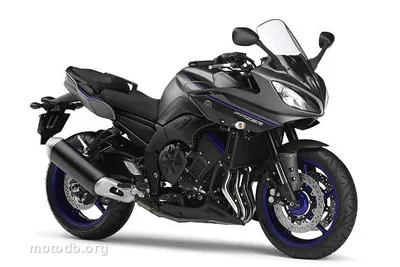
800 FAZER 8 Race Blu
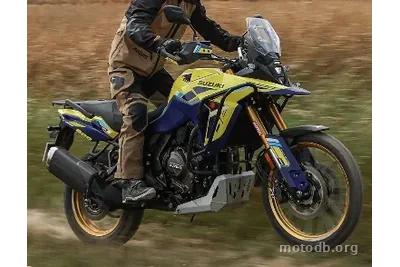
V-Strom 800DE Rally Edition
Reviews & comments
No reviews yet. Be the first to share your opinion!