Key performance
Technical specifications
Engine
- Displacement
- 781 cc
- Power
- 106.0 ch @ 10500 tr/min (78.0 kW)
- Torque
- 78.5 Nm @ 8500 tr/min
- Engine type
- 4 cylindres en L à 90°, 4 temps
- Cooling
- liquide
- Compression ratio
- 11.6:1
- Bore × stroke
- 72 x 48 mm
- Valves/cylinder
- 4
- Camshafts
- 2 ACT
- Fuel system
- Injection PGM-FI
Chassis
- Frame
- double poutre en aluminium
- Gearbox
- boîte à 6 rapports
- Final drive
- Chaîne
- Front suspension
- Fourche téléhydraulique Ø 43 mm, déb : 109 mm
- Rear suspension
- Monobras oscillant Pro-Arm monoamortisseur, déb : 120 mm
Brakes
- Front brakes
- Freinage 2 disques Ø 296 mm, étrier 3 pistons
- Rear brakes
- Freinage 1 disque Ø 256 mm, étrier 3 pistons
- Front tyre
- 120/70-17
- Front tyre pressure
- 2.50 bar
- Rear tyre
- 180/55-17
- Rear tyre pressure
- 2.90 bar
Dimensions
- Seat height
- 805.00 mm
- Fuel capacity
- 22.00 L
- Weight
- 256.00 kg
- Dry weight
- 218.00 kg
- New price
- 12 490 €
Overview
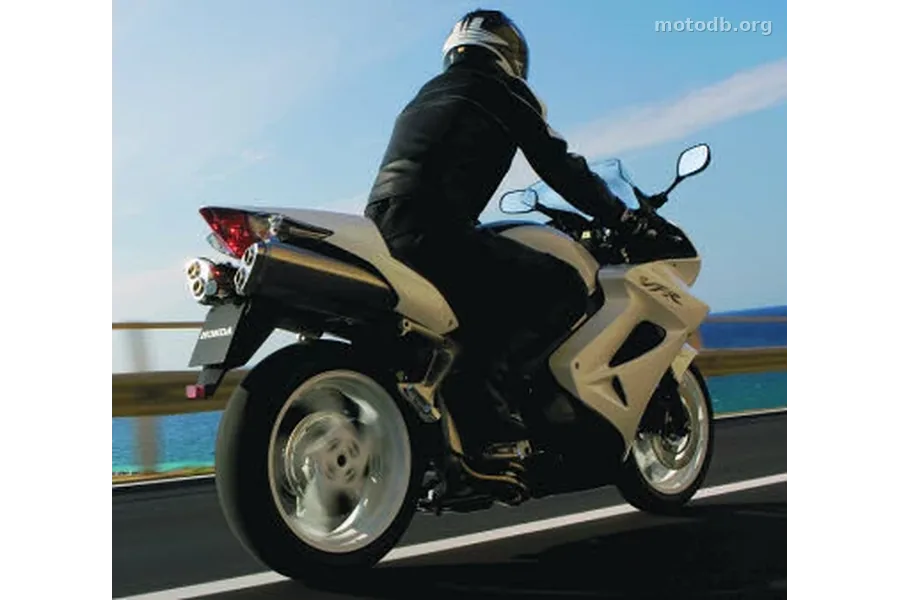
So, a new VFR? Truth be told, in 2006, fans of Honda’s legendary sport touring motorcycle were scratching their heads when it arrived. Four years after the stylistic and mechanical upheaval of the first-generation RC46, one expected a real revolution. But no. The design remained frozen, almost identical to that of 2002, except for a few cosmetic details like clear indicator lenses. One might have believed in a major technical update, but the chassis, it too, hadn't moved an inch. The aluminum twin-spar frame, the linked CBS braking system, and the adjustable suspension still make this motorcycle a benchmark in terms of comfort and precision. For the rider seeking a sporty GT with reassuring and effective handling, it’s still a delight. The real work, the only work in fact, was concentrated under the fairing.
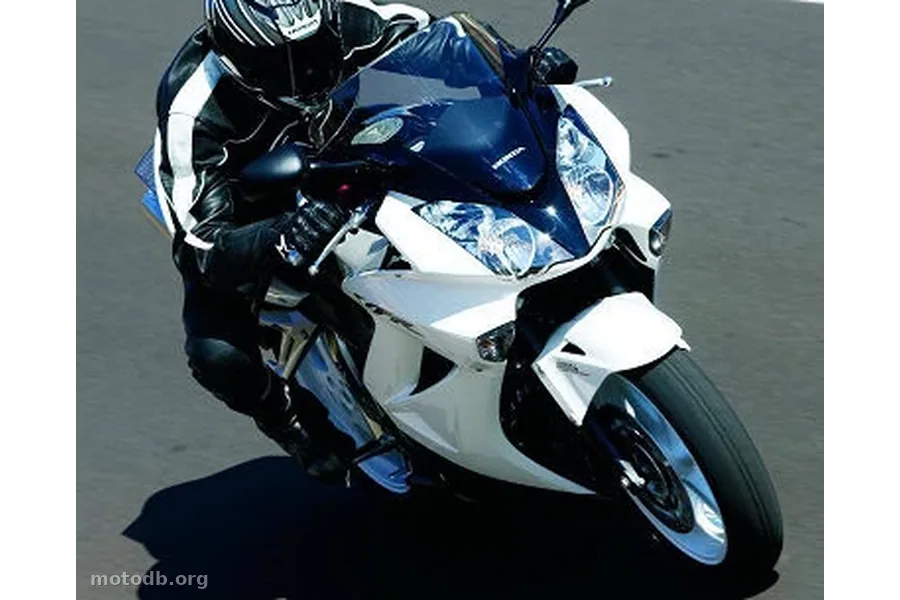
Because that’s where the previous version was failing. The famous V-TEC, this system that switched the V4 from two to four valves per cylinder, was often criticized for its abrupt transition, like a kick in the rev range. Honda therefore reworked the mapping and the mechanics. The engagement threshold is now lowered to 6600 rpm, 200 rpm earlier, and the return to two-valve mode occurs at 6100 rpm. The goal? To smooth the power curve and soften the transition, without betraying the characteristic sound of this V4. The 781 cm3 engine, with its 106 horsepower at 10500 rpm and its torque of 78.5 Nm at 8500 rpm, gains in progressiveness. Injectors from the CBR 1000 RR Fireblade were even grafted onto it, along with preparation for Euro 3 standard. It’s better, it’s more civilized, but is it enough?
That’s where doubt creeps in. In a market where the competition, such as the Yamaha FZ1 Fazer or the Suzuki GSX-S 1000, offered more flexible and more powerful engines, Honda’s approach seems timid, almost hesitant. The 2006 VFR 800 corrects the defects of its predecessor, but it doesn't bring that spark that could have placed it back at the top. It remains an exceptionally well-executed compromise machine, ideal for the demanding touring rider who covers hundreds of kilometers in comfort while retaining a sporty reserve for mountain passes. But it won't seduce the hardcore track rider, put off by its weight of 256 kg fully fueled and its mechanics ultimately more geared towards flexibility than rage.
Ultimately, this 2006 VFR 800 V-TEC is an excellent motorcycle that pays for the sins of its predecessor. Honda has healed the wound of the brutal V-TEC, but hasn't dared the total overhaul that some were hoping for. It is perfectly suited to those seeking a reliable, comfortable companion capable of being playful, without ever being brutal. At 12,490 euros at the time, it positioned itself as a high-end and refined alternative to competitors who were sometimes simpler but more lively. A beautiful machine, therefore, but which perhaps marks the beginning of a certain timidity for a model that was, in its beginnings, a true revolutionary oddity.
Standard equipment
- Assistance au freinage : CBS et ABS de série
Practical info
- La moto est accessible aux permis : A
Indicators & positioning
Similar bikes
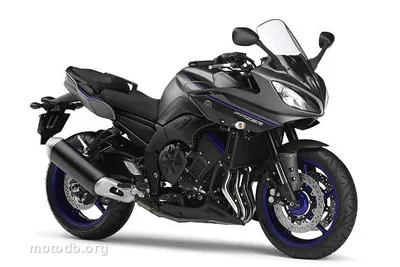
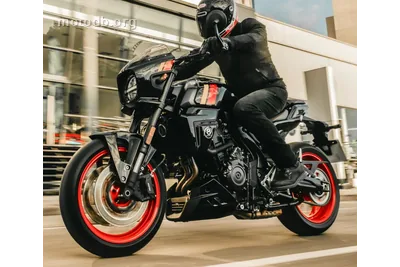
800 FAZER 8 Race Blu
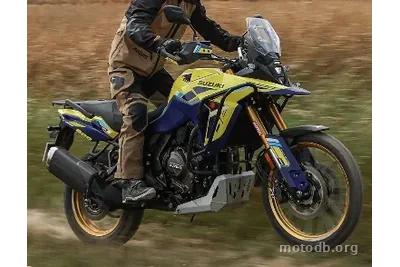
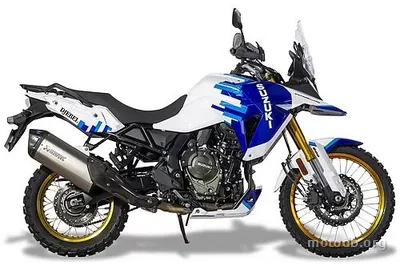
V-Strom 800DE Rally Edition
Reviews & comments
No reviews yet. Be the first to share your opinion!