Key performance
Technical specifications
Engine
- Displacement
- 1000 cc
- Power
- 192.0 ch @ 13000 tr/min (141.2 kW)
- Torque
- 112.8 Nm @ 11000 tr/min
- Engine type
- 4 cylindres en ligne, 4 temps
- Cooling
- liquide
- Compression ratio
- 13 : 1
- Bore × stroke
- 76 x 55,1 mm
- Valves/cylinder
- 4
- Fuel system
- Injection Ø 48 mm
Chassis
- Frame
- Double poutre périmétrique en aluminium
- Gearbox
- boîte à 6 rapports
- Final drive
- Chaîne
- Front suspension
- Fourche téléhydraulique inversée Öhlins NIX30 Ø 43 mm, déb : 120 mm
- Rear suspension
- Mono-amortisseur Öhlins TTX36, déb : 60 mm
Brakes
- Front brakes
- Freinage 2 disques Ø 320 mm, fixation radiale, étrier 4 pistons
- Rear brakes
- Freinage 1 disque Ø 220 mm, étrier simple piston
- Front tyre
- 120/70-17
- Front tyre pressure
- 2.50 bar
- Rear tyre
- 190/50-17
- Rear tyre pressure
- 2.90 bar
Dimensions
- Seat height
- 820.00 mm
- Fuel capacity
- 16.00 L
- Weight
- 195.00 kg
- New price
- 22 499 €
Overview
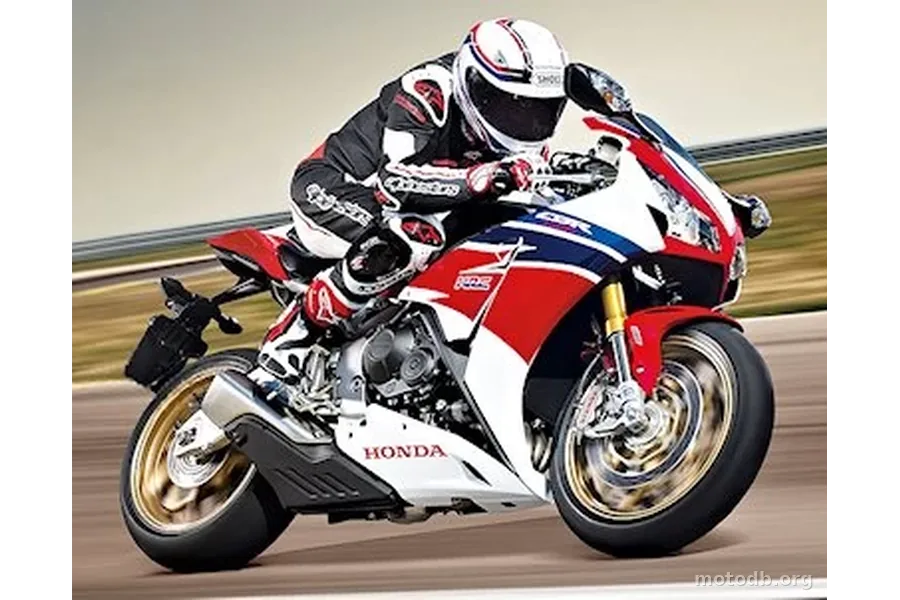
What separates a refined sportbike from a track weapon? Sometimes, three letters are all it takes. With the 2017 CBR 1000 RR Fireblade SP, Honda decided to rejoin the hypersport war where the brand had somewhat left it behind. The 999 cc inline four-cylinder puts out 192 horsepower at 13,000 rpm and 112.8 Nm of torque at 11,000 rpm. All housed in a twin-spar perimeter aluminum frame that keeps the wet weight down to 195 kg. The power-to-weight ratio rivals the best in the class, and puts Honda back in the conversation alongside the Yamaha YZF-R1M and the likes of the Ducati Panigale.
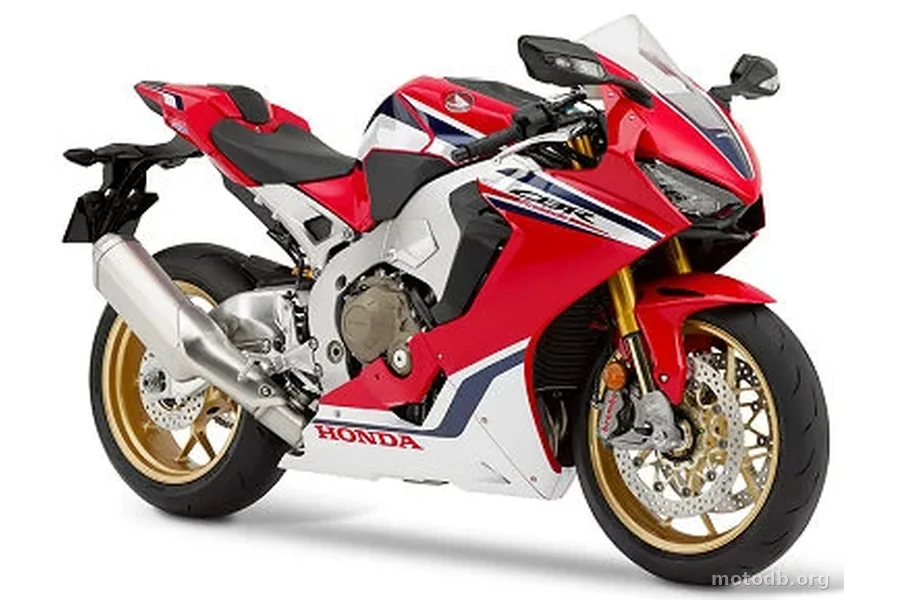
The technical foundation builds on the standard CBR 1000 RR, already seriously overhauled that year. New lighter engine, revised chassis, sharp-edged bodywork, and above all, electronics that finally close the gap that had built up. TFT dashboard, traction control, cornering ABS, ride-by-wire, five-axis Bosch IMU, anti-wheelie, anti-stoppie, three engine maps, three riding modes. The spec sheet is complete. But the SP pushes things further, right where it matters most when the corners tighten and the clock is ticking.
The difference is immediately obvious with the gold-finished stanchions of the 43 mm Öhlins NIX30 inverted fork. These are not simple passive suspensions like on the previous SP. Honda opted for semi-active technology with the Swedish manufacturer's S-EC system, linked to the IMU via an SCU control unit. In practice, compression and rebound adjust in real time depending on whether you're braking, accelerating, or riding on lean. Three active modes (Track, Sport, Comfort) and three manual modes offer a depth of adjustment that will satisfy the weekend rider and the methodical track day enthusiast alike. The TTX36 rear shock follows the same logic. The gain in precision and confidence over the standard version is tangible. At the braking end, the radial-mount four-piston Brembo calipers bite down on 320 mm discs. Honda did not go with the higher-end M50 calipers, which leaves a slight sense of unfinished business at this price point. You'd have liked to see the brand follow through on its premium logic.
The up-and-down quickshifter comes standard here while it remains optional on the base RR, allowing clutchless upshifts and downshifts through all six gears with three sensitivity levels. The 16-liter titanium fuel tank saves 1.3 kg over the standard's steel unit. Lightweight aluminum wheels shaving off 100 grams, the removal of the pillion pegs, and a deep blue livery over raw aluminum visually underscore the more radical character of this version. The seat height of 820 mm won't do any favors for shorter riders, but nobody buys a Fireblade SP to pop down to the shops.
At €22,499, the Honda CBR 1000 RR Fireblade SP positions itself as an exceptional sportbike for demanding riders who want cutting-edge technology without crossing over into the world of pure competition. For those ready to take that next step, Honda offers the SP2, sharper still. The SP nonetheless remains a coherent choice for anyone alternating between track days and road rides with an advanced skill level. Against both Japanese and European competition, it has regained solid credentials. It was about time.
Standard equipment
- Assistance au freinage : ABS de série
Practical info
- La moto est accessible aux permis : A
Reviews & comments
No reviews yet. Be the first to share your opinion!