Key performance
Technical specifications
Engine
- Displacement
- 1198 cc
- Power
- 162.0 ch @ 9250 tr/min (118.2 kW)
- Torque
- 130.5 Nm @ 8000 tr/min
- Engine type
- V2, four-stroke
- Cooling
- Liquid
- Compression ratio
- 12.5:1
- Bore × stroke
- 106.0 x 67.9 mm (4.2 x 2.7 inches)
- Valves/cylinder
- 4
- Camshafts
- 2 ACT
- Fuel system
- Injection. Elliptical throttle bodies, fully ride-by-wire controlled
- Valve timing
- Desmodromic valve control
- Starter
- Electric
Chassis
- Frame
- Tubular steel Trellis frame
- Gearbox
- 6-speed
- Final drive
- Chain (final drive)
- Clutch
- Slipper and self-servo wet multiplate clutch with hydraulic control
- Front suspension
- Marzocchi DLC coated 50mm fully adjustable usd forks
- Rear suspension
- Progressive linkage with fully adjustable Sachs monoshock. Remote spring preload adjustment. Aluminium single-sided swingarm
- Front wheel travel
- 120 mm (4.7 inches)
- Rear wheel travel
- 120 mm (4.7 inches)
Brakes
- Front brakes
- Double disc. ABS. Floating discs. Four-piston calipers. Radially mounted.
- Rear brakes
- Single disc. ABS. Floating disc. Two-piston calipers.
- Front tyre
- 120/70-ZR17
- Front tyre pressure
- 2.50 bar
- Rear tyre
- 240/45-ZR17
- Rear tyre pressure
- 2.50 bar
Dimensions
- Seat height
- 770.00 mm
- Wheelbase
- 1590.00 mm
- Fuel capacity
- 17.00 L
- Weight
- 234.00 kg
- Dry weight
- 205.00 kg
- New price
- 21 590 €
Overview
When Ducati first unveiled the Diavel, purists rolled their eyes. A cruiser signed Bologna, with the compromises that implies between a relaxed posture and a predator's instinct? The idea seemed outlandish. A few years later, the results are undeniable: the gamble paid off. The Carbon version pushes the logic even further, targeting those for whom the standard version was not enough, which says a lot about the ambition of the project.
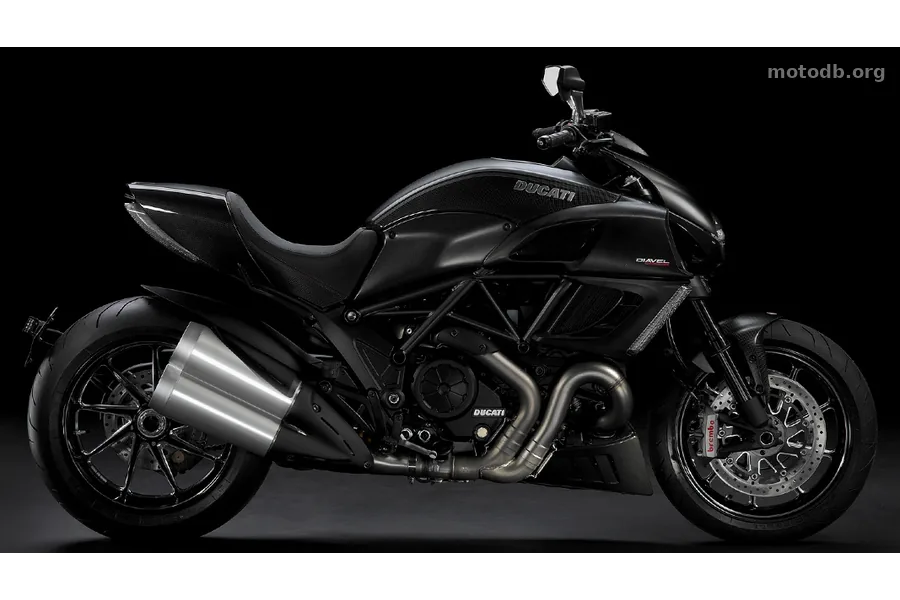
The Testastretta 11°, this 1198 cc V-twin derived from the Superbike lineage, announces 162 horsepower at 9250 rpm and 130.5 Nm of torque at 8000 rpm. These figures, on a machine that weighs 205 kg dry, give an idea of the temperament. The 240 mm rear tire, mounted on a forged aluminum Marchesini wheel, more closely resembles an American muscle car than a European roadster, and that is precisely the effect sought. The 50 mm fully adjustable Marzocchi inverted fork, the remote-preload Sachs monoshock, the four-piston radial calipers on the dual floating front discs: nothing was left to chance on the chassis.
What truly distinguishes the Ducati Diavel Carbon from other versions of the range is the attention paid to the details that matter. The carbon fiber parts on the front fender, the tank and the seat cover are not there solely for aesthetics. The 2.5 kg weight saving on the Marchesini rims, for its part, acts directly on the unsprung mass, therefore on the steering responsiveness and precision on corner entry. On a machine weighing 234 kg fully fueled, every gram subtracted from the wheels is worth ten times its weight in sensations. The polished forged aluminum that shines at the heart of the black rims further transforms every stop into a permanent exhibition.
Phase II brings its share of concrete refinements. Dual ignition per cylinder on the Testastretta refines combustion and nibbles a little extra torque in the low revs. The redesigned optics with its semicircle of daytime LEDs modernizes a face that was already imposing. The reworked seat and the raised handlebars improve comfort on long distances, a historical weakness of the first generation. The 2016 Ducati Diavel Carbon inherits all of this, making it one of the most accomplished evolutions of the series since the model's launch.
At €21,590, the Ducati Diavel Carbon positions itself as a desirable object as much as it is performant, tailored for a rider who wants to stand out as much when stationary as when in motion. This is not a motorcycle for beginners, despite a low seat at 770 mm and well-thought-out electronic aids. The seat height accommodates a wide diversity of builds, but the engine's temperament demands respect. Faced with a Yamaha VMAX or a Honda F6C, Ducati plays a sharper, more European card, with a finish and a visual identity that its competitors can hardly dispute. For those considering a used Ducati Diavel Carbon, the versions from 2011 to 2015 share the same base, but Phase II remains clearly the reference to prioritize.
Standard equipment
- Assistance au freinage : ABS de série
Practical info
- La moto est accessible aux permis : A
Indicators & positioning
Similar bikes
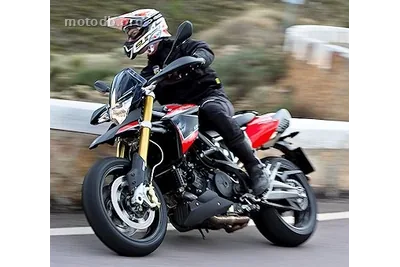
DORSODURO 1200 1.2
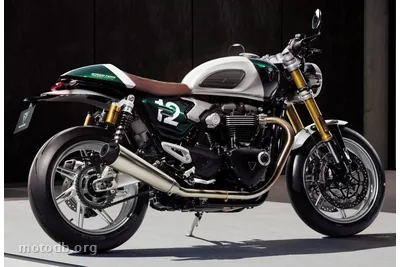
Speed Twin 1200 Café Racer Edition
Reviews & comments
No reviews yet. Be the first to share your opinion!