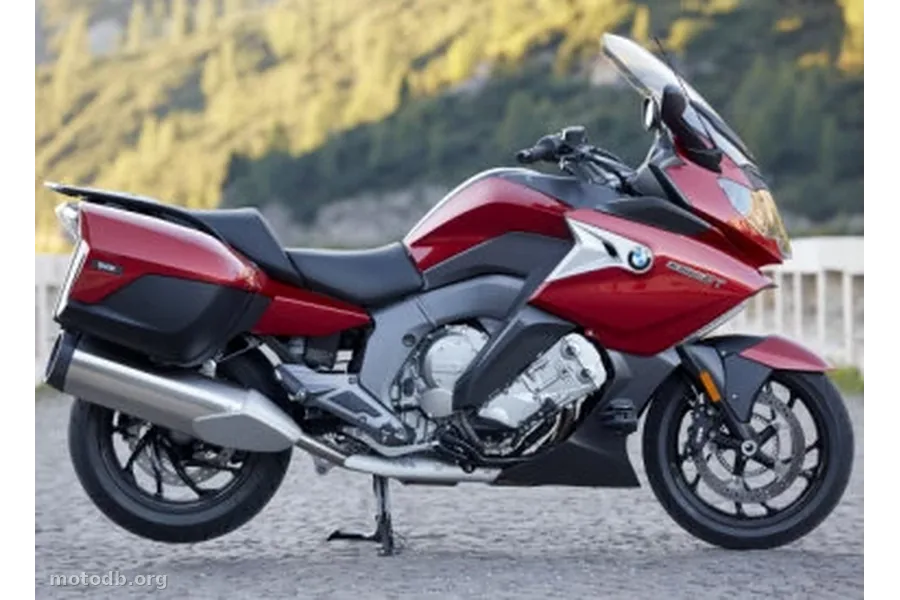
Key performance
Technical specifications
Engine
- Displacement
- 1649 cc
- Power
- 160.0 ch @ 7750 tr/min (116.8 kW)
- Torque
- 175.0 Nm @ 5520 tr/min
- Engine type
- In-line six, four-stroke
- Cooling
- Liquid
- Compression ratio
- 12.2:1
- Bore × stroke
- 72.0 x 67.5 mm (2.8 x 2.7 inches)
- Valves/cylinder
- 4
- Camshafts
- 2 ACT
- Fuel system
- Injection. Electronic intake pipe injection
- Valve timing
- Double Overhead Cams/Twin Cam (DOHC)
- Lubrication
- Dry sump
- Starter
- Electric
Chassis
- Frame
- Bridge-type frame, cast aluminium, load-bearing engine
- Gearbox
- 6-speed
- Final drive
- Shaft drive (cardan) (final drive)
- Clutch
- Multiple-disc clutch in oil bath
- Front suspension
- BMW Motorrad Duolever
- Rear suspension
- BMW Motorrad Paralever
- Front wheel travel
- 115 mm (4.5 inches)
- Rear wheel travel
- 135 mm (5.3 inches)
Brakes
- Front brakes
- Double disc. ABS. Four-piston calipers.
- Rear brakes
- Single disc. ABS. Two-piston calipers.
- Front tyre
- 120/70-ZR17
- Front tyre pressure
- 2.90 bar
- Rear tyre
- 190/55-ZR17
- Rear tyre pressure
- 2.90 bar
Dimensions
- Seat height
- 810.00 mm
- Wheelbase
- 1618.00 mm
- Length
- 2324.00 mm
- Width
- 1000.00 mm
- Height
- 1440.00 mm
- Fuel capacity
- 26.50 L
- Weight
- 334.00 kg
- Dry weight
- 306.00 kg
- New price
- 24 100 €
Overview
Fifteen years ago, engineers in Munich dared to slip a six-cylinder inline engine under the fairing of a grand touring motorcycle, and no one in the segment has yet found a comparable offering. The BMW K 1600 GT remains, in 2018, a welcome anomaly in a market dominated by Japanese four-cylinder engines and Austrian flat-twin engines. Its model year update doesn't shake things up, and that's precisely its intelligence.
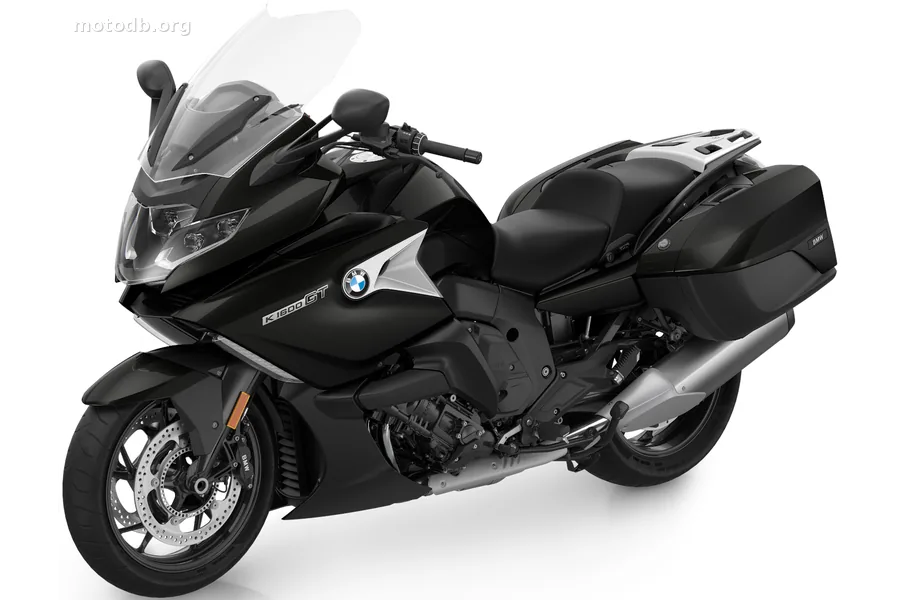
The heart of the matter is this 1649 cm³ engine, crafted like a piece of horology, so compact that it integrates as a structural element within the aluminum frame. One hundred sixty horsepower at 7750 rpm, 175 Nm of torque at 5520 rpm, and above all, a power delivery that makes this BMW K 1600 GT addictive from the first few kilometers. No dips, no jolts, a linear progression that contrasts with the sometimes abrupt temperament of Japanese multi-cylinder engines of the same category. The transition to Euro 4 standards was achieved without a loss of power, BMW having revised the injection mapping and exhaust gas treatment without touching the mechanical architecture. The result is also reflected at the pump, since the announced consumption of 5.7 liters per hundred kilometers, combined with the 26.5-liter tank, allows for stages of over 400 kilometers in relaxed riding. For a grand touring motorcycle weighing 334 kilograms fully fueled, this is a notable performance.
The major novelty of this 2018 version concerns the suspension. Electronically controlled ESA Dynamic dampers are now standard equipment, a decision that should have been implemented much earlier given the machine’s size. The system adjusts damping in real time according to the detected loads, with two distinct modes, Road and Dynamic, switchable on the fly. The chassis remains faithful to the patented architecture, Duolever at the front and Paralever swingarm with cardan drive at the rear, a combination that eliminates diving effects during braking and offers a trajectory precision that conventional telescopic forks struggle to match. This dynamic rigor is the best argument against the BMW K 1600 GT problem often raised by skeptics, that of weight. Yes, 334 kilograms is substantial. But the very low center of gravity makes the mass virtually invisible once in motion.
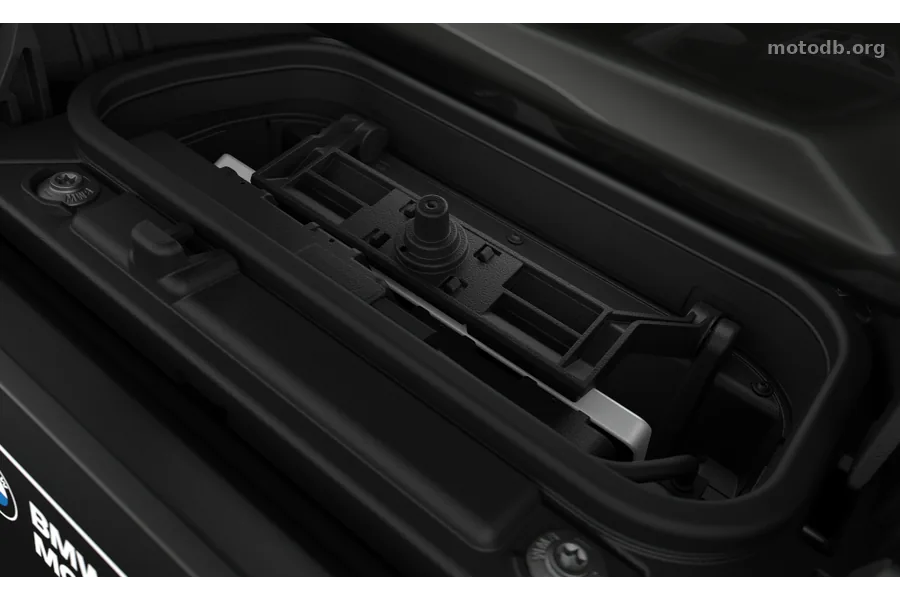
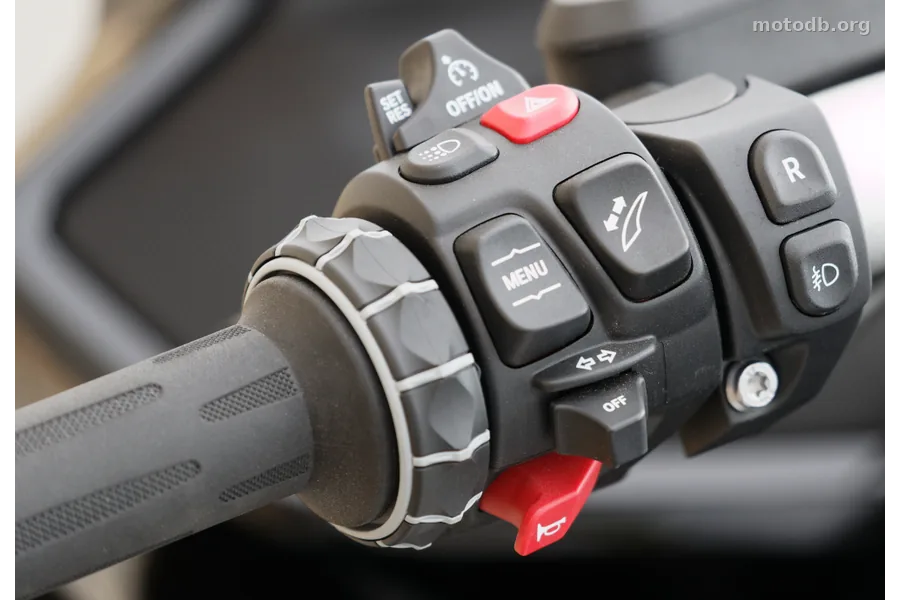
The standard equipment leaves no competitor able to lecture it. Electrically adjustable windscreen with memory function, xenon headlight, TFT screen, heated grips and seat for the rider and passenger, cruise control, ABS Pro with partial coupling between the two wheels, traction control DTC, and three riding modes. BMW K 1600 GT accessories and BMW K 1600 GT luggage integrate into a comprehensive catalog, organized into two optional packs, Security and Comfort, the latter including, in particular, the Pro shifter inherited from the S 1000 RR and reverse gear. The latter, reserved for options, elicits some legitimate grumbling from owners, as maneuvering 334 kilograms in an underground parking garage without motorized assistance is a gymnastics that no one voluntarily requests.
What is the profile of the buyer of the new BMW K 1600 GT priced at €24,100? Certainly not a beginner, nor even a weekend occasional rider. This machine is aimed at the long-distance rider who covers 30,000 kilometers per year, who demands as much from their equipment as from themselves, and who accepts no compromise between comfort and dynamism. Facing the Honda Gold Wing and its automatic transmission, BMW maintains a more sporty, more engaged proposition in curves. Facing the Kawasaki 1400 GTR and its four cylinders, it opposes the incomparable sound and smoothness of a six-cylinder engine, the last of its kind in this segment. The BMW K 1600 GT technical specifications speak for themselves, but it is on the road that the difference is truly measured, in that silky flow of power at 130 km/h on the highway, when the engine is barely turning over and everything seems easy, too easy.
Standard equipment
- Assistance au freinage : BMW Motorrad ABS (partially integrated)
Practical info
- La moto est accessible aux permis : A
Indicators & positioning
Similar bikes
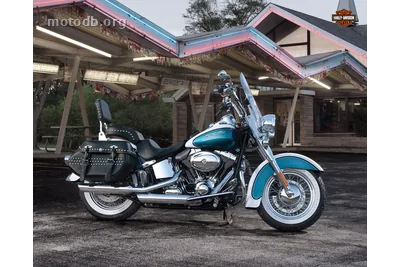
Heritage Softail Classic 110th Anniversary
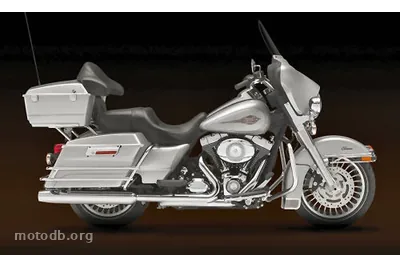
FLHTC Electra Glide Classic
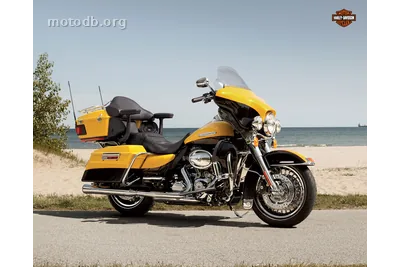
Electra Glide Ultra Limited 110th Anniversary
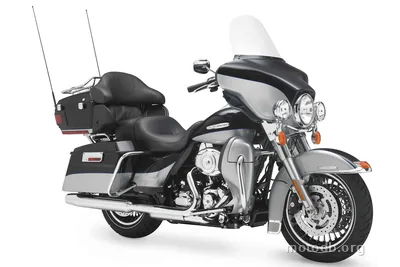
FLHTK Electra Glide Ultra Limited
1690 ELECTRA GLIDE ULTRA LIMITED 110ème Anniversaire FLHTK
Reviews & comments
No reviews yet. Be the first to share your opinion!