Key performance
Technical specifications
Engine
- Displacement
- 895 cc
- Power
- 105.0 ch @ 8500 tr/min (77.2 kW)
- Torque
- 92.2 Nm @ 6750 tr/min
- Engine type
- Bicylindre en ligne, 4 temps
- Cooling
- Liquid
- Compression ratio
- 13.1:1
- Bore × stroke
- 86.0 x 77.0 mm (3.4 x 3.0 inches)
- Valves/cylinder
- 4
- Camshafts
- 2 ACT
- Fuel system
- Injection. Electronic intake pipe injection / digital engine management system: BMS-X with throttle-by-wire.
- Valve timing
- Double Overhead Cams/Twin Cam (DOHC)
- Lubrication
- Dry sump
- Starter
- Electric
- Euro standard
- Euro 5+
Chassis
- Frame
- Bridge-type, steel shell construction
- Gearbox
- 6-speed
- Final drive
- Chain (final drive)
- Clutch
- Multiplate clutch in oil bath, slipper clutch
- Front suspension
- Upside-down telescopic fork, Ø 43 mm, spring pre-load manually adjustable, rebound and compression adjustable
- Rear suspension
- Cast aluminum dual swing arm, central WAD spring strut, spring pre-load hydraulically adjustable, rebound damping adjustable
- Front wheel travel
- 230 mm (9.1 inches)
- Rear wheel travel
- 215 mm (8.5 inches)
Brakes
- Front brakes
- Double disc. ABS.2-piston floating calipers.
- Rear brakes
- Single disc. ABS. Floating disc. Single-piston caliper.
- Front tyre
- 90/90-R21
- Front tyre pressure
- 2.20 bar
- Rear tyre
- 150/70-R17
- Rear tyre pressure
- 2.50 bar
Dimensions
- Seat height
- 869.00 mm
- Seat type
- Selle biplaces
- Wheelbase
- 1590.00 mm
- Length
- 2271.00 mm
- Width
- 942.00 mm
- Height
- 1392.00 mm
- Fuel capacity
- 14.38 L
- Weight
- 219.00 kg
- New price
- 14 500 €
Overview
When Munich decides to set things straight, it doesn’t hesitate. The BMW F 900 GS 2025 arrives in a category that has transformed into a battlefield: the Triumph Tiger 900 Rally Pro, the Ducati DesertX with its 937 cc engine, the KTM 890 Adventure R built for rough terrain, without forgetting the Aprilia Tuareg 660 which plays the lightweight card. Facing this pack, the previous 850 was starting to feel dated. The Bavarian response is surgical, and it touches everything.
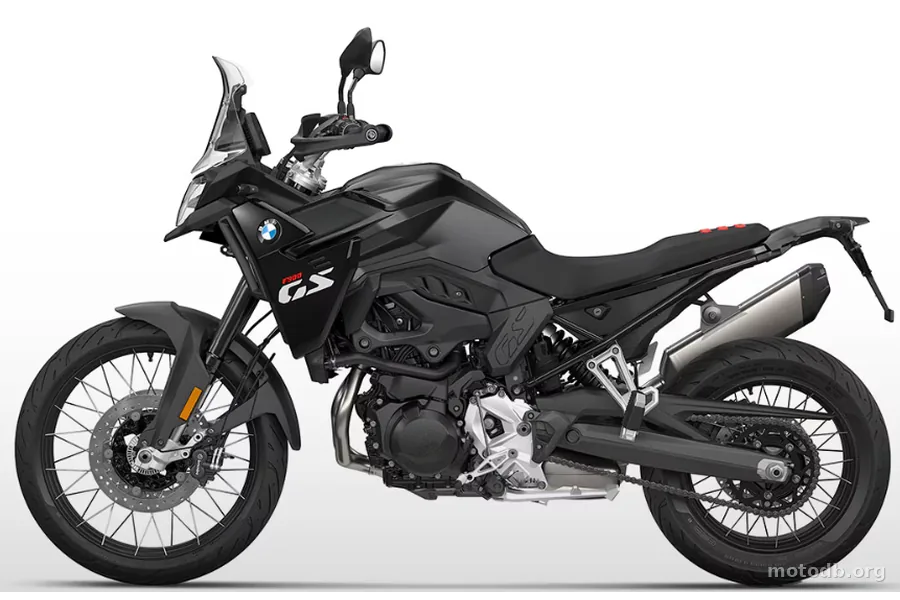
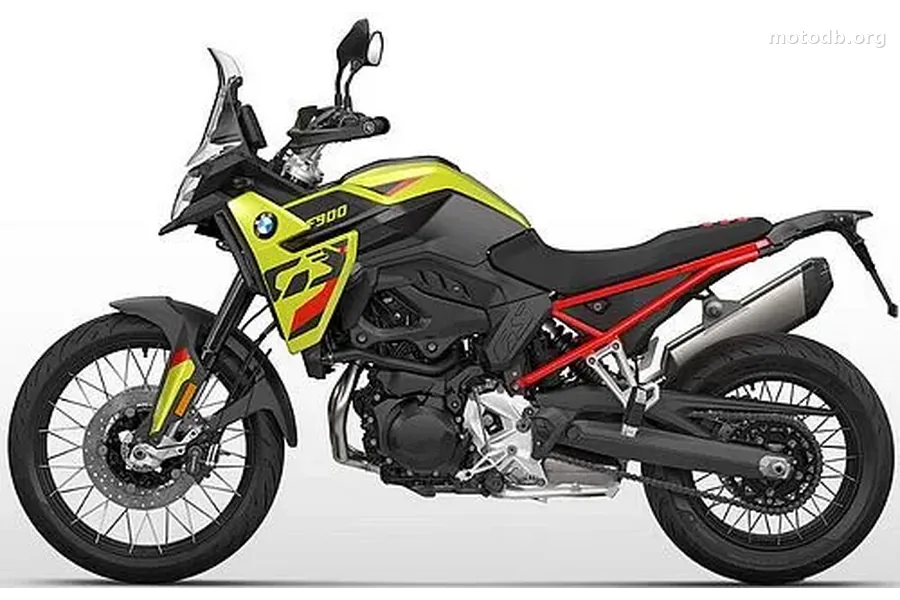
The most visible change is immediately apparent. Where the old 850 displayed a slightly conservative, almost bourgeois line, the 900 adopts a tighter silhouette, a shorter nose, a higher stance and narrower shoulders. The result evokes more of a rally-raid machine than the polished road trail that BMW has cultivated until now. This visual repositioning is consistent with the actual use its owners make of the machine. The BMW F 900 GS Adventure, in its more rugged version, had already charted this path; the standard version finally bridges the gap. The ergonomics follow the same direction: handlebars raised by 15 mm, footpegs lowered by 20 mm in enduro format, reshaped fuel tank to facilitate standing-up riding. A seat height of 869 mm demands long legs, but this is explained by the off-road vocation displayed.
Under the bodywork, the most significant evolution concerns the inline twin-cylinder engine. A 2 mm increase in bore diameter is enough to increase the displacement from 853 to 895 cc, aligning the BMW F 900 GS with its roadster F 900 R and F 900 XR cousins. The gain is noticeable: 105 horsepower at 8500 rpm compared to 95 previously, for a peak torque of 92.2 Nm at 6750 rpm. Power increases significantly, torque less spectacularly, but BMW emphasizes a more linear and exploitable curve at mid-range, which counts more in off-road conditions than a brutal peak. The downside, and it is real, is the loss of A2 license compatibility. Riders with restricted licenses will need to consider other options in the range.
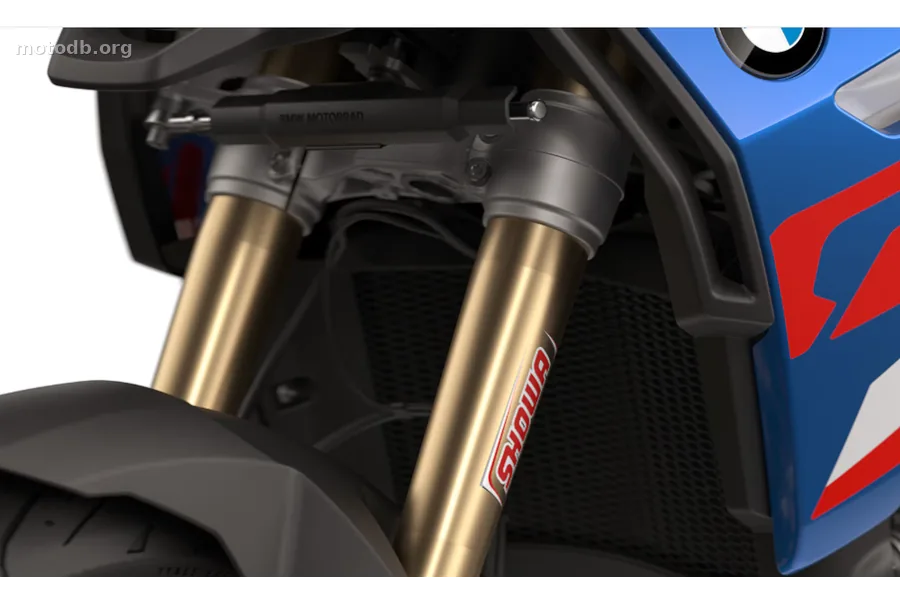
The real strength of this generation remains the weight loss. Fourteen kilograms evaporated between the 850 and the 900: plastic fuel tank instead of steel, redesigned rear frame, standard Akrapovic silencer 1.7 kg lighter, aluminum side stand, new headlight with wider diffusion. This results in a weight of 219 kg fully fueled, which remains in the higher end of the segment compared to a Tenere 700 or a Tuareg 660 which are noticeably lighter, but the difference is felt in use. The fully adjustable Showa 43 mm inverted fork and the rear shock absorber with rebound adjustment complement a seriously improved chassis. Wheel travel of 230 mm at the front and 215 mm at the rear are among the most generous in the category. The 90/90-21 and 150/70-17 wheels clearly anchor the off-road positioning.
The electronics, however, have not changed at all, and this is the only real regret to express about the BMW F 900 GS 2025. The 6.5-inch screen is beautiful, ABS Pro and traction control work well, but Enduro modes remain an option, as do the quickshifter, tire pressure monitoring and Dynamic ESA electronic suspension. BMW has not changed its pricing doctrine: the base price of €14,500 is appealing, the list of options less so. This mid-size trail bike is aimed at an experienced rider looking for a versatile machine capable of swallowing trails on weekends and roads during the week, not a beginner or a track rider. In this niche, between the BMW F 900 GS 2024 available on the second-hand market and this thoroughly revised 2025 version, the choice deserves consideration. But for new purchases, the progress is undeniable.
Standard equipment
- Assistance au freinage : ABS
- Nombre de mode de conduite : 2
- Taille de l'écran TFT couleur : 16,51 cm / 6.5 pouces
- Amortisseur de direction
- Indicateur de vitesse engagée
- Prise USB
- Contrôle de traction
- Poignées chauffantes
- Embrayage anti-dribble
- Jantes à rayon
- Echappement Akrapovic
Practical info
- Véhicule accessible au permis A2 ou bridable à 47.5ch / 35 Kw
- La moto est accessible aux permis : A, A2
Indicators & positioning
Similar bikes
VN 900 Light Tourer
Reviews & comments
No reviews yet. Be the first to share your opinion!