
Key performance
Technical specifications
Engine
- Displacement
- 798 cc
- Power
- 83.8 ch @ 8000 tr/min (61.2 kW)
- Torque
- 86.0 Nm @ 5800 tr/min
- Engine type
- Twin, four-stroke
- Cooling
- Liquid
- Compression ratio
- 12.0:1
- Bore × stroke
- 82.0 x 75.6 mm (3.2 x 3.0 inches)
- Valves/cylinder
- 4
- Fuel system
- Injection. Electronic intake pipe injection / digital engine management (BMS-K)
- Valve timing
- Double Overhead Cams/Twin Cam (DOHC)
- Lubrication
- Dry sump
- Starter
- Electric
Chassis
- Frame
- Bridge-type aluminium frame, load-bearing engine
- Gearbox
- 6-speed
- Final drive
- Belt (final drive)
- Clutch
- Multiple-disc clutch in oil bath, mechanically operated
- Front suspension
- Telescopic fork, 43 mm
- Rear suspension
- Cast aluminium single-sided swing arm with eccentric adjustment for rear axle, central spring strut, spring pre-load hydraulically adjustable (continuously variable) at handwheel, rebound damping adjustable
- Front wheel travel
- 140 mm (5.5 inches)
- Rear wheel travel
- 140 mm (5.5 inches)
Brakes
- Front brakes
- Double disc. Optional ABS.
- Rear brakes
- Single disc. Optional ABS.
- Front tyre
- 120/70-ZR17
- Rear tyre
- 180/55-ZR17
Dimensions
- Seat height
- 840.00 mm
- Wheelbase
- 1466.00 mm
- Length
- 2082.00 mm
- Width
- 860.00 mm
- Height
- 1155.00 mm
- Fuel capacity
- 16.00 L
- Weight
- 204.00 kg
- Dry weight
- 182.00 kg
Overview
When Munich decides to step outside its comfort zone, it results in the BMW F 800 S. A discreet but real turning point in the history of the Bavarian manufacturer: for the first time, a BMW sport revolves around a parallel-twin engine, an architecture the company had always carefully avoided in favor of its iconic boxer. A paradigm shift, or simply a response to a market demanding an accessible sportbike without the usual price tag of the range? Probably both.

The engine deserves attention. This 798 cm3 twin was born from a collaboration with Rotax, the Austrian plant that also supplies Aprilia with twin-cylinder engines. The technical lineage is serious: four valves per cylinder, a compression ratio of 12:1, and a rare series balancing system, with an additional connecting rod that neutralizes the first and second-order vibrations. The result on paper: 85 hp at 8000 rpm, 86 Nm at 5800 rpm, and a consumption announced at 3.4 liters per hundred kilometers, which is honest for a sportbike. The sound benefited from particular care: engineers worked on the acoustics so that this parallel-twin would recall, at least in timbre, the Boxer that sits above in the range. It's a detail that matters to the brand's loyalists.
The chassis follows the same logic of reasonable seriousness. Perimeter aluminum frame, 43 mm telescopic fork, continuously hydraulically adjustable single shock absorber, cast aluminum single-sided swingarm. Final transmission is by toothed belt, a proven solution on the F 650 CS Scarver, clean and without constraining maintenance. ABS is available as an option, which in 2009 remains a commercial argument. At 204 kg fully fueled for 182 kg dry, the machine is in the upper middle of its category, without being penalizing.
What the BMW F 800 S clearly claims is the territory of a character sportbike rather than a record-breaking machine. Faced with a Kawasaki Z750 or a Honda CB600F Hornet of the time, it plays on a more premium, more constructed register, without offering the performance of a pure Supersport. Seat at 790 mm, engaged but not sacrificed riding position, 16-liter tank for correct autonomy: the targeted profile is that of the experienced rider who wants daily pleasure without masochism. Not a machine for beginners, but nothing hostile either.
The real debate surrounding the BMW F 800 S test revolves around the price. At 9070 euros in the catalog, the question naturally arises: for this budget, Japanese or Italian competition sometimes offers more raw sensations. But the technical specifications of the BMW F 800 S are not read only in horsepower. The finish, the belt transmission, the aluminum frame, and the BMW F 800 S reputation for long-term reliability are part of the equation. Today, on the BMW F 800 S used market, prices have logically evolved, but the motorcycle remains consistent with what it has always been: an adult sportbike, built to last, which assumes its Bavarian origins even in its pricing.
Indicators & positioning
Similar bikes
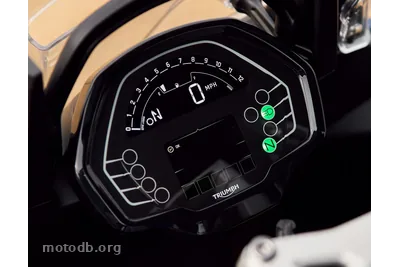
Tiger Sport 800 Tour
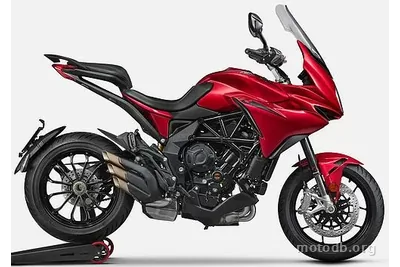
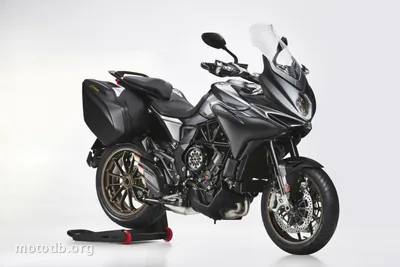
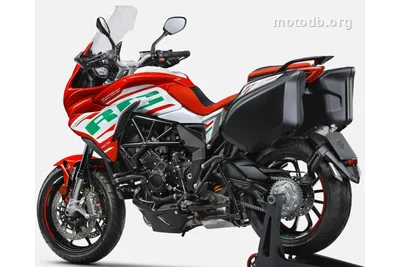
Turismo Veloce Lusso SCS
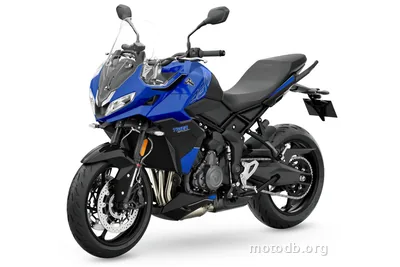
Tiger Sport 800
Reviews & comments
No reviews yet. Be the first to share your opinion!