Key performance
Technical specifications
Engine
- Displacement
- 782 cc
- Power
- 107.0 ch @ 10250 tr/min (76.4 kW)
- Torque
- 75.0 Nm @ 8500 tr/min
- Engine type
- V4, four-stroke
- Cooling
- Liquid
- Compression ratio
- 11.8:1
- Bore × stroke
- 72.0 x 48.0 mm (2.8 x 1.9 inches)
- Valves/cylinder
- 2
- Camshafts
- 2 ACT
- Fuel system
- Injection. PGM-FI
- Valve timing
- Double Overhead Cams/Twin Cam (DOHC)
- Ignition
- Computer-controlled digital transistorised with electronic advance
- Starter
- Electric
Chassis
- Frame
- Diamond triple-box section aluminium twin-spar frame
- Gearbox
- 6-speed
- Final drive
- Chain (final drive)
- Front suspension
- 43 mm HMAS cartridge-type telescopic fork with stepless preload and ten DF adjustment
- Rear suspension
- Pro-Link with gas-charged HMAS damper, 7-step (stepless remote-controlled hydraulic) preload and stepless rebound damping adjustment
- Front wheel travel
- 108 mm (4.3 inches)
- Rear wheel travel
- 120 mm (4.7 inches)
Brakes
- Front brakes
- Double disc. Combined 3-piston calliper (ABS) and sintered metal pads
- Rear brakes
- Single disc. Combined 3-piston callipers (ABS) and sintered metal pads
- Front tyre
- 120/70-ZR17
- Front tyre pressure
- 2.50 bar
- Rear tyre
- 180/55-ZR17
- Rear tyre pressure
- 2.90 bar
Dimensions
- Seat height
- 789.00 mm
- Wheelbase
- 1460.00 mm
- Ground clearance
- 126.00 mm
- Length
- 2134.00 mm
- Width
- 748.00 mm
- Height
- 1203.00 mm
- Fuel capacity
- 21.50 L
- Weight
- 242.00 kg
- New price
- 12 999 €
Overview
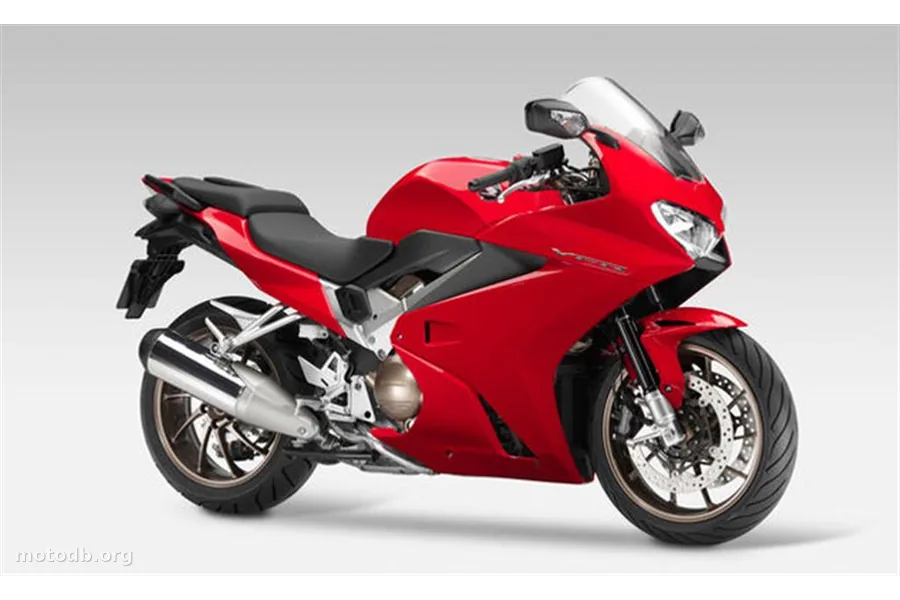
The Honda VFR800F seems to fear neither the years nor moods. However, it must comply with regulations like all others. The latest mandates require some modifications, followed by a few minor changes. Difficult to distinguish, and therefore almost transparent. The most notable additions are the retroreflective markers, compliance with Euro4 emissions standards, and an imperceptible weight gain of 1 kg. Thus, the exhaust has been slightly reworked, with a more discreet style and cleaner emissions. The airbox has been modified, with the removal of a valve. Outside of these regulations, we note the disappearance of the black finish on the frame and fork tubes, the adoption of L-shaped valves on the rims, and the addition of a 12V accessory socket. A small bonus in terms of power: the previously applicable restriction law in Japan has been lifted. The VFR gains 1 horsepower and 0.2 mkg of torque.
A very fine update, necessary for the most famous sport-GT to continue its journey. It can look on with a smile, glorifying itself as one of its manufacturer's most beautiful successes, and attempt to seduce once again. Gently sliding from history towards nostalgia, the VFR800 waited until 2014 to give itself a boost. New design, improved chassis, and preserved identity – much is revised to maintain its status as a legendarily homogeneous sport touring machine.
Entirely new, a major evolution, or a marked refresh? The VFR’s bodywork would make us think we are in the presence of a completely new machine. The fairing is entirely new, from the X-shaped headlight to the multi-spoke rear rim. The mirrors now house the position lights and turn signals. Diodes are present for the taillight but also, for the first time on a Honda, for the front lighting. Undeniably, the overall appearance is less sporty, regaining the rigor and maturity of the VFR saga. The dashboard modernizes its information without fundamentally changing its shapes; it now also includes the gear indicator and consumption indicators. And the detail that will make you hesitate is, of course, an appendage that we thought had been forgotten for 15 years: the laterally mounted exhaust pipe. Surprising that the rear of the VFR miss wants to get rid of its under-seat outlets. A desire to return to the fundamentals, with the ingratitude of hiding the splendid rim? No, a need to slim down. With this exhaust, the 2014 edition shed 7 kg. Huge!
And it’s not the only place where the machine puts itself on a diet. Honda has also shaved off 3 kg from the now aluminum rear frame. It’s the first time since it’s been an 800cc machine that the VFR has lost weight. And not ungrateful for a sou, it takes the opportunity to enrich its equipment. ABS is still present, except that it has a new friend at the sensor level: traction control, which can also be disconnected. Think that the hypersport CBR1000RR doesn’t even have the right to that. The 43mm HMAS fork, with preload adjustment, revises its tubes to accommodate a pair of radial 4-piston calipers. Honda thus updates the front end without offering an inverted fork that can be seen on many models, sometimes less sporty and/or less noble. However, the difference in color between the black tubes and the gray metal caliper supports creates a remarkably good illusion. Pity, the CBS linked braking system disappears. We will console ourselves with its new, larger brake discs, going from 296 to 310 mm. One of the great strengths of the VFR is the suave, mysterious, and subliminal feel of its monobrach, an integral part of its identity since 1990. Touching it is a delicate or even perilous exercise. With finesse and a certain incisiveness, Honda grafts a new Pro-Arm, connected to an adjustable preload and rebound damper. New rims, simply superb, with very thin spokes, complete the renewal of the style. Let’s take all that away and observe the entrails of the VFR 6th generation. If the mutation is striking on the exterior, it is much wiser on the interior. The aluminum double-beam "Pivotless" frame does not change a single bolt. The only modification of the VFR’s entrails concerns the V4. Change of displacement? Of power? Of technique? No, just an adjustment at the V-Tec level to make the transition between 2-valve and 4-valve per cylinder smoother. As well as a small update to the valve timing diagram and valve opening time – to improve muscle at low and mid-revs. Now, the maximum power of 107 hp is obtained at 10,250 rpm, 250 rpm lower than on the previous generation. As for the torque, let's hope its availability is reinforced at the bottom; because at the top, at 8,500 rpm, we have lost a few grams of mkg (7.9 against 8).
With this new generation, the VFR800 renews its robe while retaining the essentials at the chassis and engine level. With the general weight reduction, the VFR will retain its formidable homogeneity and its pronounced taste for doing everything, from the road to sport, including everyday use. The 2014-2020 version introduces automatic turn signal recall, taking into account the difference in wheel speeds to deactivate. Heated grips with 5 positions are standard, and for sports enthusiasts, a quickshifter is available in the options range. We are delighted that Honda perpetuates the VFR lineage and makes it evolve, but when will the manufacturer decide to make THE VFR that everyone is waiting for: one with a V4 without this V-Tec that doesn't do much, with a displacement of 1000 cm3, with a generous 140-150 horsepower without being overwhelming. The rest is top-notch for 20 years and has never been equaled.
M.B - photos constructeur
Standard equipment
- Assistance au freinage : ABS de série
Practical info
- La moto est accessible aux permis : A
Indicators & positioning
Similar bikes
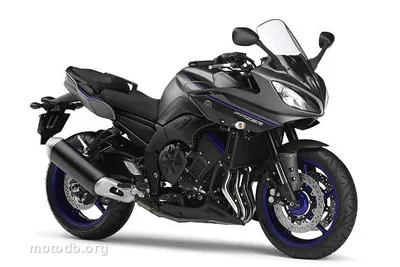
800 FAZER 8 Race Blu
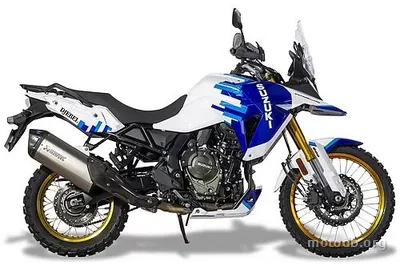
V-Strom 800DE Rally Edition
Reviews & comments
No reviews yet. Be the first to share your opinion!