Key performance
Technical specifications
Engine
- Displacement
- 798 cc
- Power
- 90.0 ch @ 8000 tr/min (65.7 kW)
- Torque
- 86.0 Nm @ 5800 tr/min
- Engine type
- Twin, four-stroke
- Cooling
- Liquid
- Compression ratio
- 12.0:1
- Bore × stroke
- 82.0 x 75.6 mm (3.2 x 3.0 inches)
- Valves/cylinder
- 4
- Camshafts
- 2 ACT
- Fuel system
- Injection. Electronic intake pipe injection, digital engine management (BMS-K+)
- Valve timing
- Double Overhead Cams/Twin Cam (DOHC)
- Lubrication
- Dry sump
- Starter
- Electric
Chassis
- Frame
- Bridge-type frame, cast aluminium, load-bearing engine
- Gearbox
- 6-speed
- Final drive
- Belt (final drive)
- Clutch
- Multiple-disc clutch in oil bath, mechanically operated
- Front suspension
- Telescopic fork, 43 mm
- Rear suspension
- Cast aluminium single sided swing arm with eccentric adjustment for rear axle, central spring strut, spring pre-load hydraulically adjustable (continuously variable) at handwheel, rebound damping adjustable
- Front wheel travel
- 125 mm (4.9 inches)
- Rear wheel travel
- 125 mm (4.9 inches)
Brakes
- Front brakes
- Double disc. ABS. Floating discs. Four-piston calipers.
- Rear brakes
- Single disc. ABS. Floating disc. Single-piston caliper.
- Front tyre
- 120/70-ZR17
- Front tyre pressure
- 2.50 bar
- Rear tyre
- 180/55-ZR17
- Rear tyre pressure
- 2.90 bar
Dimensions
- Seat height
- 800.00 mm
- Wheelbase
- 1514.00 mm
- Length
- 2156.00 mm
- Width
- 902.00 mm
- Height
- 1248.00 mm
- Fuel capacity
- 15.00 L
- Weight
- 213.00 kg
Overview
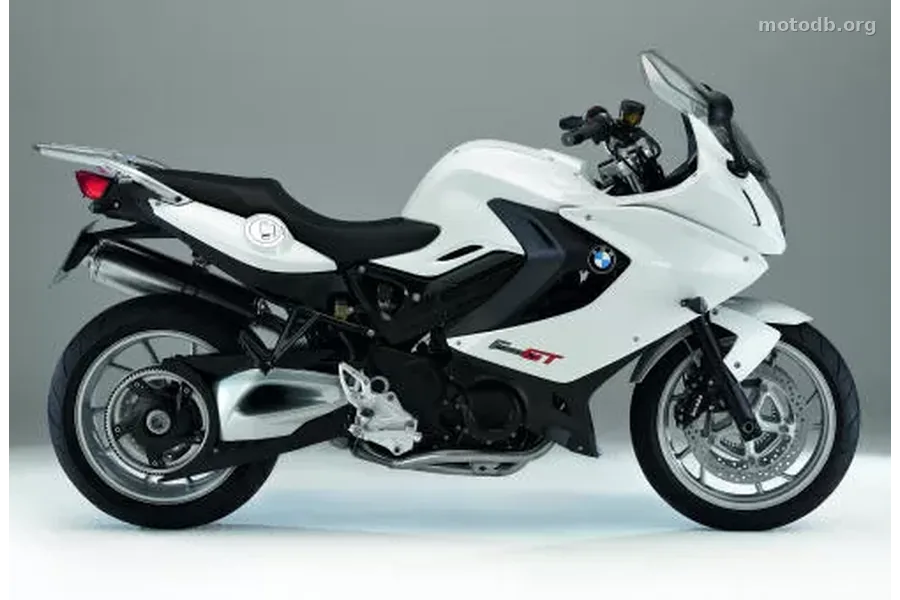
When BMW decides to evolve a lineage, the Bavarian firm doesn’t settle for a simple paint job. The F 800 GT embodies this philosophy: a direct descendant of the F 800 ST, it retains the foundations to build something more ambitious, more mature, more touring-focused. In the market for small, accessible GTs, it finds itself in an almost deserted niche, facing competitors like the Kawasaki Versys 650 or the Yamaha Tracer 700, but with a very different proposition.
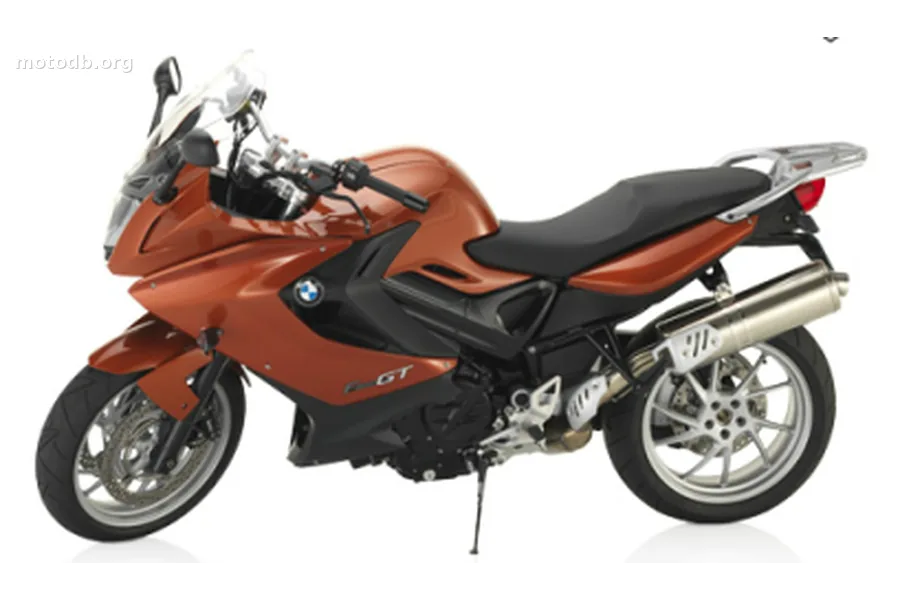
The 798 cc parallel-twin retains the essence of its character, but benefits from a serious recalibration, including the exhaust manifold from the F 800 R. Result: 90 horsepower at 8000 rpm and 86 Nm of torque at 5800 rpm, five horsepower more than its predecessor. These figures are nothing to be ashamed of, especially when considering that the bike weighs 213 kg fully fueled. The power-to-weight ratio remains honest, the final transmission by belt guarantees reduced maintenance over time, and the announced consumption of 3.4 liters per 100 kilometers should logically appeal to touring riders who calculate their stages. With a 15-liter tank, the range comfortably exceeds 400 kilometers in mixed use. For A2 license holders, a version restricted to 48 horsepower opens access to this GT from the first years of riding, which is quite rare in the segment.
What really changes compared to the ST is the completely redesigned ergonomics. The handlebar rises by 20 mm, the seat drops from 840 to 800 mm, the footrests move 10 mm forward and downward. On the BMW F 800 GT, you settle in rather than perch, and that’s precisely what the target audience is looking for: the daily commuter who wants to swallow kilometers without arriving at their destination with a sore back. The screen increases in size, the aerodynamic protection improves noticeably. The single-sided swingarm lengthens by 50 mm, the ground clearance recedes by 15 mm, the stability at high speed improves accordingly. The announced top speed of 200 km/h remains sufficient for highway use without stress, even if no one will go looking for these limits on a daily basis.
In terms of equipment, the BMW F 800 GT 2015 integrates ABS as standard on both wheels, with floating discs at the front clamped by four-piston calipers. Optional assistance systems make their appearance: switchable traction control ASC and ESA pilot suspension, the latter allowing electronic adjustment of the rear damper’s rebound between three modes. These technologies, usually reserved for higher displacement engines, give this small GT an equipped profile that justifies its premium positioning. The BMW accessories catalog completes the picture with 55-liter cases, a 28-liter top case, heated grips, or even an Akrapovic silencer for those who want to personalize their mount. The load capacity reaches 207 kg, 11 kg better than the ST, which finally allows you to travel as two with luggage without tight calculations.
The used BMW F 800 GT remains a credible option on the small European GT market. It is perfectly suited to the urban motorcyclist who goes on weekend trips regularly, the first-time A2 license holder who wants a machine capable of growing with them, and the moderate traveler who prefers lightness to the all-powerful nature of a 1200. Its weak point remains the 15-liter tank, a little tight if you are aiming for 500-kilometer days without refueling. But in this specific segment, few manufacturers offer such a coherent package between accessibility, equipment, and versatility.
Standard equipment
- Assistance au freinage : ABS de série
Practical info
- Véhicule accessible au permis A2 ou bridable à 47.5ch / 35 Kw
- La moto est accessible aux permis : A, A2
Indicators & positioning
Similar bikes
Tiger Sport 800
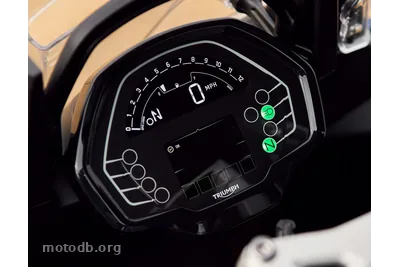
Tiger Sport 800 Tour
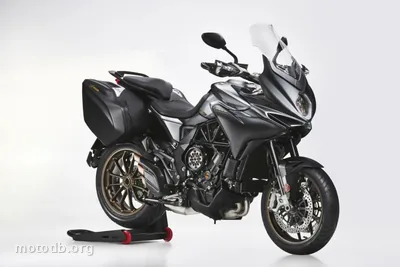
Turismo Veloce Lusso SCS
Reviews & comments
No reviews yet. Be the first to share your opinion!