Key performance
Technical specifications
Engine
- Displacement
- 895 cc
- Power
- 87.0 ch @ 6750 tr/min (64.0 kW)
- Torque
- 90.9 Nm @ 6750 tr/min
- Engine type
- Twin, four-stroke
- Cooling
- Liquid
- Compression ratio
- 13.1:1
- Bore × stroke
- 86.0 x 77.0 mm (3.4 x 3.0 inches)
- Valves/cylinder
- 4
- Camshafts
- 2 ACT
- Fuel system
- Injection. Electroinc intake pipe injection, digital engine management (BMS-K+)
- Valve timing
- Double Overhead Cams/Twin Cam (DOHC)
- Lubrication
- Dry sump
- Starter
- Electric
Chassis
- Frame
- Bridge-type, steel shell construction
- Gearbox
- 6-speed
- Final drive
- Chain (final drive)
- Clutch
- Multiple-disc clutch in oil bath, mechanically operated
- Front suspension
- Upside-down telescopic fork, 43 mm
- Rear suspension
- Aluminum twin-sided swingarm, central spring strut, rebound damping adjustable
- Front wheel travel
- 230 mm (9.1 inches)
- Rear wheel travel
- 215 mm (8.5 inches)
Brakes
- Front brakes
- Double disc. ABS. Floating discs. 2-piston calipers.
- Rear brakes
- Single disc. ABS. Floating disc. Single-piston caliper.
- Front tyre
- 110/80-R19
- Front tyre pressure
- 2.20 bar
- Rear tyre
- 150/70-R17
- Rear tyre pressure
- 2.50 bar
Dimensions
- Seat height
- 815.00 mm
- Seat type
- Selle biplaces
- Wheelbase
- 1557.00 mm
- Length
- 2294.00 mm
- Width
- 909.00 mm
- Height
- 1224.00 mm
- Fuel capacity
- 15.14 L
- Weight
- 226.80 kg
- New price
- 10 650 €
Overview
Twenty-five years after its debut, this Bavarian twin has caught up to the R 1150 GS in terms of power. That sums up well the slow but persistent trajectory of this lineage, which is reinventing itself today under the F 800 GS badge, inheriting an engine designed for the F 900 R and F 900 XR. BMW has therefore preferred to transplant an existing engine rather than develop a new one from scratch, which says a lot about the industrial logic at work.
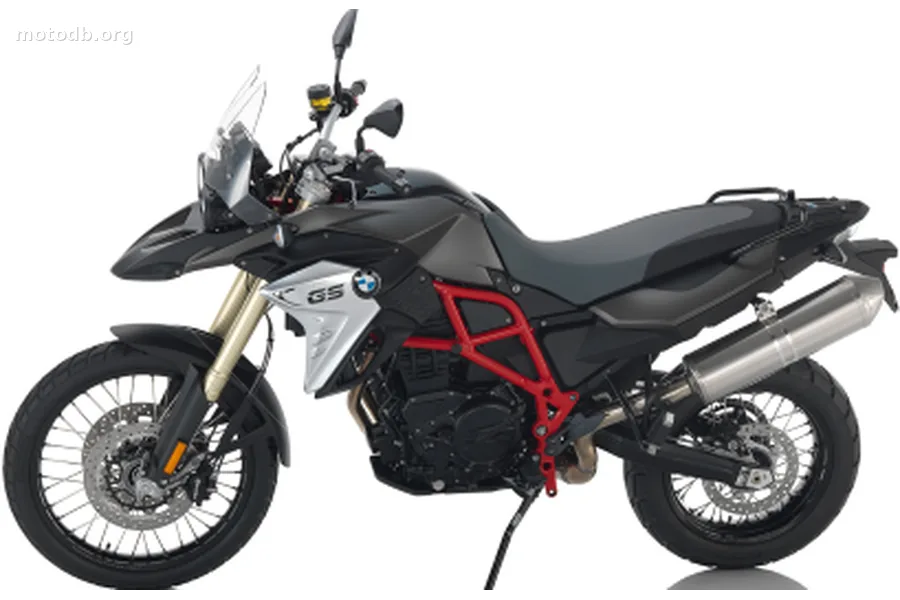
The parallel-twin increases to 895 cm3 via a simple two-millimeter bore enlargement. The result: 87 horsepower at 6,750 rpm and 90.9 Nm of torque, which is ten horsepower and nearly eight Nm more than the F 750 GS it extends. It’s clean, it’s consistent, and it places the BMW F 800 GS slightly above the Triumph Tiger 850 Sport on the technical specifications, even if the reality of a forest ride remains another conversation. The six-speed gearbox has been reworked to better handle this increase in energy, which translates to more precise gear changes.
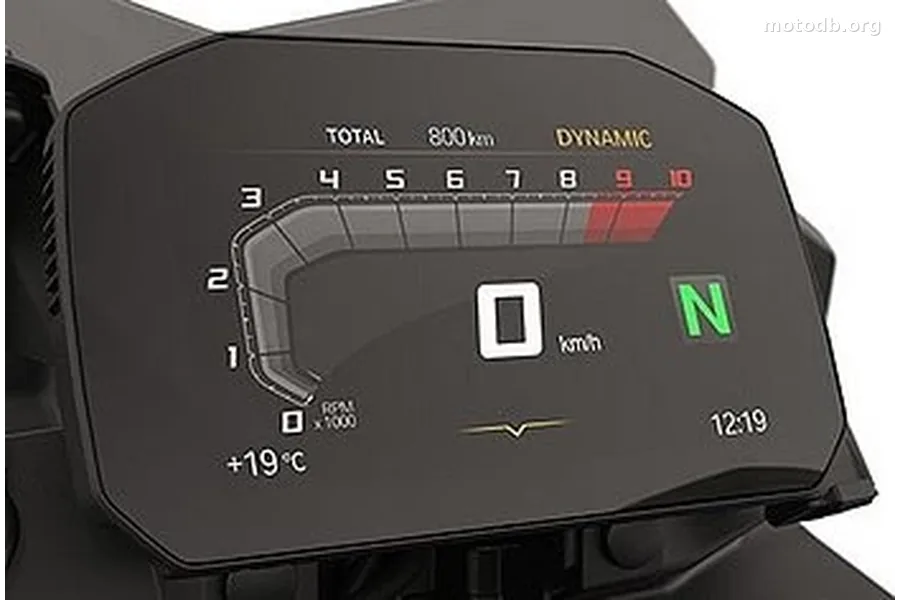
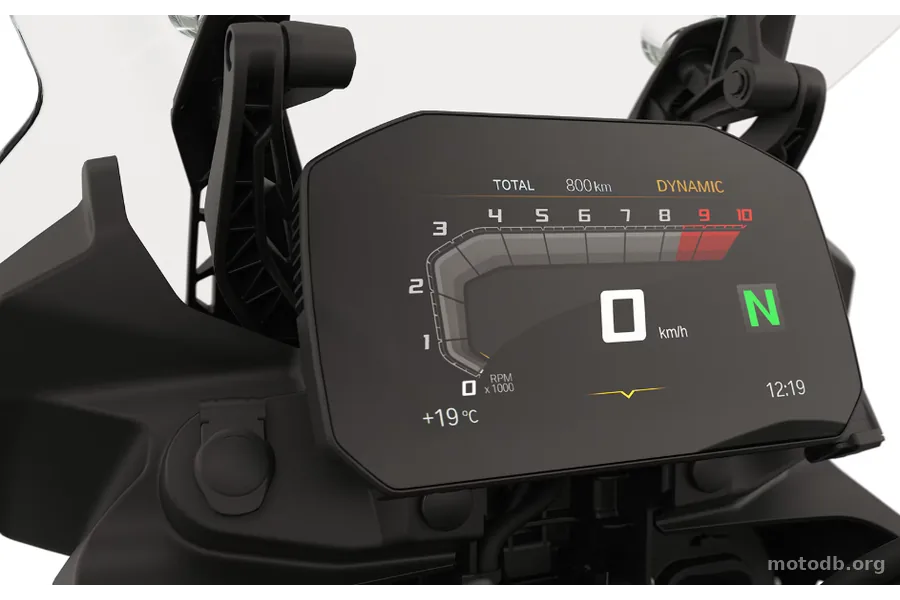
What truly changes the daily experience is the instrumentation. The 6.5-inch color TFT screen, formerly an optional paid feature, is now standard equipment. With it come smartphone connectivity, navigation, and call control. Heated grips and handguards complete this winter picture. For those seeking the BMW F 800 GS technical specifications before purchasing, it is important to know that cornering ABS PRO, traction control DTC, two riding modes Rain and Road, USB and 12V sockets are also part of the standard kit. The lack of a truly protective windscreen remains, however, a constant that Munich perpetuates with irritating regularity.
Regarding the chassis, continuity is the order of the day. The steel double-tube frame with engine carrier is carried over unchanged from the 750. The 226.8 kg of fully fueled weight is the same as before, which contrasts with the 14 kg weight reduction granted to the F 900 GS. The 43 mm inverted fork and central shock absorber with rebound adjustment offer 170 mm of travel, an honest value for a trail bike primarily intended for asphalt and gravel roads. Two 305 mm discs pinched by dual-piston calipers at the front, a single-piston 265 mm disc at the rear: the braking is appropriately calibrated, without excess or deficit for this size.
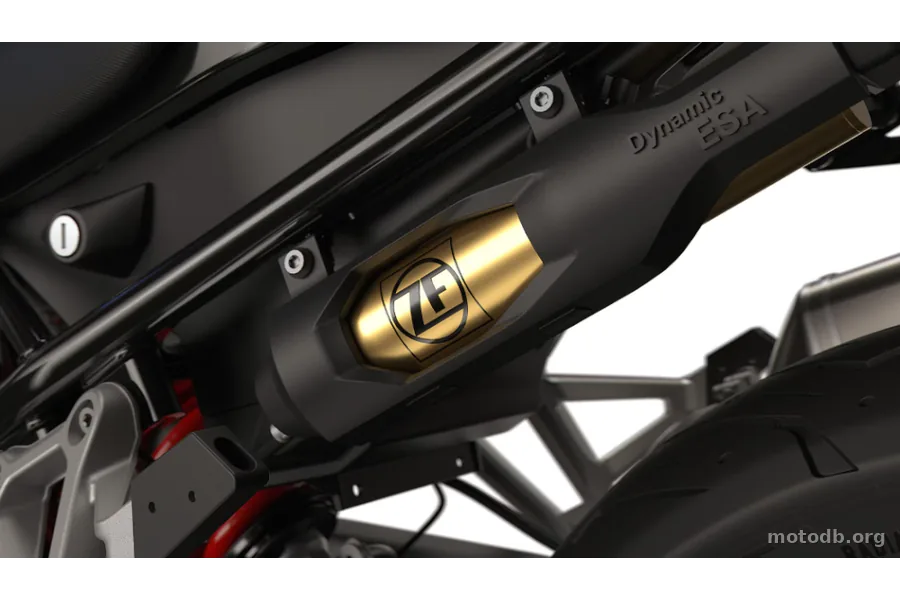
A word about the price, which merits reflection. The new BMW F 800 GS price starts at 10,650 euros, and that’s where the problem arises a bit. At this price, you’re already in the yard of the big ones, and the options that unlock the machine's true potential, ESA, the quickshifter, tire pressure monitoring, semi-active suspension, quickly drive up the bill. The 800 GS is now positioned as an entry point to the "large-displacement" GS range, a role formerly occupied by the 800 from 2013-2017. Those seeking a used BMW F 800 GS to avoid this entry ticket will find solid arguments, even if previous generations did not offer this level of electronic equipment. The announced top speed of 189.9 km/h and a consumption of 4.3 liters per hundred kilometers complete the portrait of a reasonable machine, designed for the urban or long-distance rider who wants versatility without being encumbered with a 240 kg machine.
This mid-size trail has managed to evolve without betraying its primary vocation: to be accessible, competent, and well-equipped enough not to make its owner blush at the start of a road trip. It’s not a revolutionary, it’s a pragmatist. And in that register, it does its job seriously.
Standard equipment
- Assistance au freinage : ABS
- Nombre de mode de conduite : 2
- Taille de l'écran TFT couleur : 16,51 cm / 6.5 pouces
- Indicateur de vitesse engagée
- Prise USB
- Contrôle de traction
- Poignées chauffantes
- Embrayage anti-dribble
Practical info
- Véhicule accessible au permis A2 ou bridable à 47.5ch / 35 Kw
- La moto est accessible aux permis : A, A2
Indicators & positioning
Similar bikes
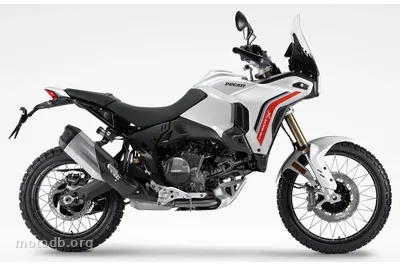
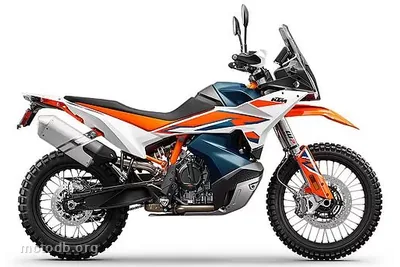
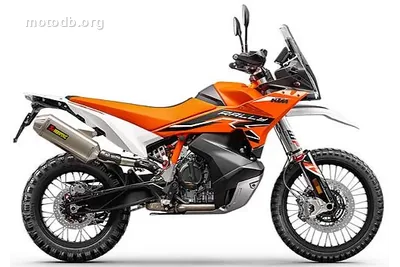
890 Adventure R Rally
Reviews & comments
No reviews yet. Be the first to share your opinion!