Key performance
Technical specifications
Engine
- Displacement
- 895 cc
- Power
- 87.0 ch @ 6750 tr/min (64.0 kW)
- Torque
- 91.2 Nm @ 6750 tr/min
- Engine type
- Bicylindre en ligne, 4 temps
- Cooling
- liquide
- Compression ratio
- 13.1 : 1
- Bore × stroke
- 86 x 77 mm
- Valves/cylinder
- 4
- Camshafts
- 2 ACT
- Fuel system
- Injection Ø 48 mm
- Starter
- électrique
- Euro standard
- Euro 5+
Chassis
- Frame
- Treillis en tubes d'acier
- Gearbox
- boîte à 6 rapports
- Final drive
- Chaîne
- Front suspension
- Fourche téléhydraulique Ø 41 mm, déb : 170 mm
- Rear suspension
- Mono-amortisseur, déb : 170 mm
Brakes
- Front brakes
- Freinage 2 disques Ø 305 mm, étrier 2 pistons
- Rear brakes
- Freinage 1 disque Ø 265 mm, étrier simple piston
- Front tyre
- 110/80-19
- Front tyre pressure
- 2.20 bar
- Rear tyre
- 150/70-17
- Rear tyre pressure
- 2.50 bar
Dimensions
- Seat height
- 815.00 mm
- Seat type
- Selle biplaces
- Fuel capacity
- 15.00 L
- Weight
- 227.00 kg
- New price
- 11 000 €
Overview
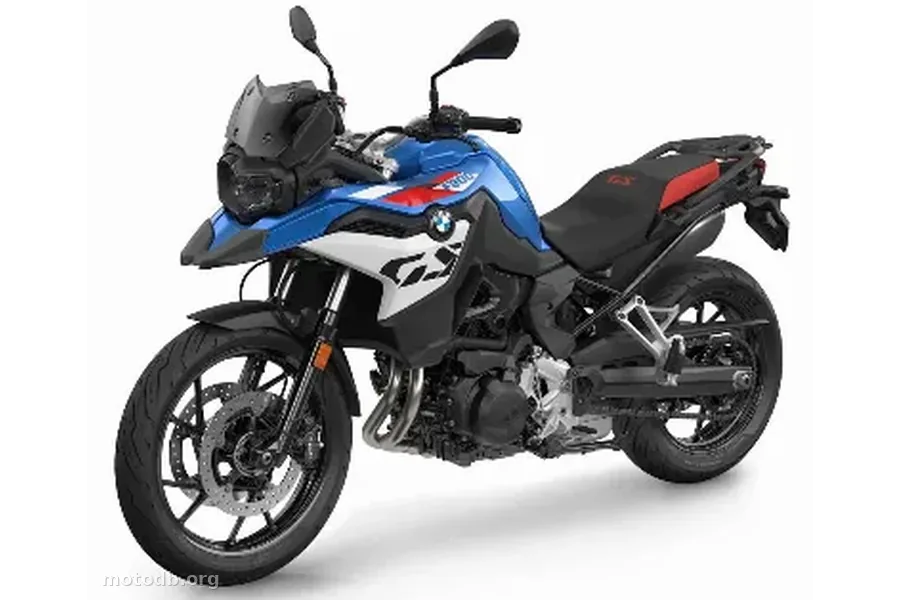
To kick off the year right, the F 800 GS is offered at a preferential price of 9,500 euros until the end of March.
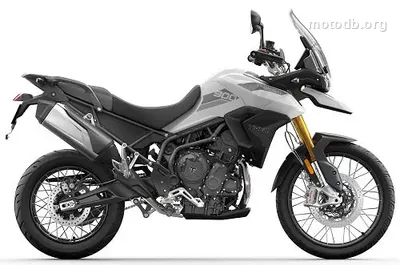
The GS series has seen a lot of changes in 2024. There’s the new 1300, the flagship model of the range, and its lieutenants 900 and 800. It’s the latter that interests us here, the successor to the 750 introduced in 2018.
While the 900 evolves significantly compared to the 850 it replaces, the F 800 GS primarily focuses its efforts on the engine and a few technical aspects. The base remains the same as the 7.5. The design is identical, with a new selection of colors to freshen up the look. And as with the 700/800 and 750/850 duos, the displacement designation has nothing to do with the actual cubic capacity.
Both the 800 and the 900 share the updated parallel-twin engine. It goes from 853 cm3 to 895 cm3 through an increase in its bore of 2 mm. In reality, the engine from Chinese manufacturer Loncin hasn’t been modified; it’s the bicylinder from the F 900 R and F 900 XR that has been transplanted into the GS; with less power to better suit the intended use. Consequently, BMW allows 87 horsepower at 6750 rpm, an increase of 10 hp, and peak torque achieved 750 rpm earlier. Torque is also well improved, with almost 1 mkg gained (from 83 Nm to 91 Nm). The Bavarian brand thus allows this trail to position itself just above the Tiger 850 Sport in terms of power. Some work on the gearbox allows for optimized gear changes.
The on-board equipment is also becoming more robust. The main improvement is the 6.5-inch TFT color display (previously optional). As a result, the GS can now pair with a smartphone and offer control of calls, music, and a navigation system. Daily use in cold weather will be more pleasant with the handguards and heated grips installed as standard. The 800 also receives an adjustable selector, the Vario luggage rack, and an LED headlight with a daytime signature.
Combined with what it inherits from the 7.5, it’s starting to add up to quite a lot. The list continues with ABS Pro cornering, traction control DTC, the two Riding Modes Rain and Road, 12V and USB sockets, the Dynamic Brake Light, and still no decent windscreen. It’s been a long time since BMW should have addressed this issue.
The F 800 GS weighs 227 kg – exactly the same weight as its predecessor. It doesn’t get the larger displacement of the 900 GS, allowing for a 14 kg weight reduction. A certain injustice but also a way to limit inflation. Its design relies on the continuity of its steel double-tube frame, where the engine plays a stiffening role. The fork and shock absorber of the 7.5 provided real satisfaction for users; finding them here will only make them that much more enjoyable. The suspension has a travel of 170 mm. A perfectly classic value for an urban / road trail, denouncing its weak desire to go off-road. It leaves that role to the F 900 GS, much more seasoned for this type of escapade.
The same goes for the discs. The F 800 GS 2024 will have 305 mm discs at the front with double-piston calipers. For the rear, the 265 mm bitten by a single piston will be quite sufficient. Well-calibrated equipment for this type of machine.
You’ll need to be careful with search engines when looking for the 800 GS. Because that name also identifies both the first version of 2013 to 2017 and the current one. The former was the high-end mid-size model; that role is now held by the 900. The latter is now the entry-level model in the GS range of "significant displacement."
But a BMW entry-level model is already much more expensive than the competition. Especially if you add the optional packs. These will unlock dynamic braking control DBC and engine torque regulation MSR but also two additional Riding Modes (Dynamic / Enduro, semi-active Dynamic ESA suspension, the quickshifter, tire pressure monitoring, keyless start, and intelligent emergency call.
By becoming the F 800 GS, the all-purpose “mid-size” trail has mainly gained power, certainly equipment, barely style (colors very slightly retouched), and primarily relaunched its career. Anecdote: in 25 years, it has managed to catch up with the R 1150 GS in terms of power and price. But in terms of sensations, equipment, and character, there is plenty to fuel many debates.
M.B - Photos constructeur
Standard equipment
- Assistance au freinage : ABS
- Nombre de mode de conduite : 2
- Taille de l'écran TFT couleur : 16,51 cm / 6.5 pouces
- Indicateur de vitesse engagée
- Prise USB
- Contrôle de traction
- Poignées chauffantes
- Embrayage anti-dribble
Practical info
- Véhicule accessible au permis A2 ou bridable à 47.5ch / 35 Kw
- La moto est accessible aux permis : A, A2
Indicators & positioning
Similar bikes
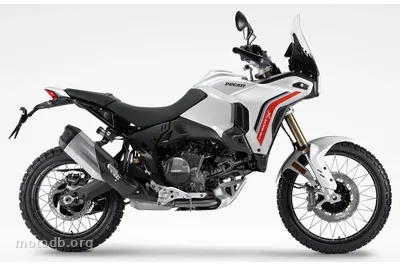
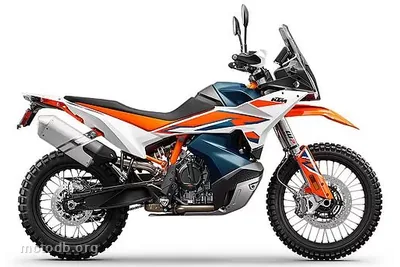
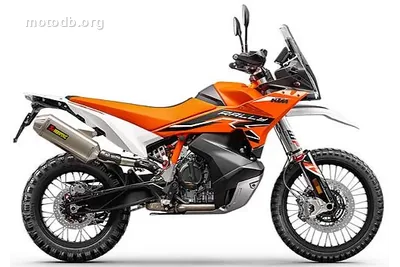
890 Adventure R Rally
Reviews & comments
No reviews yet. Be the first to share your opinion!