Key performance
Technical specifications
Engine
- Displacement
- 399 cc
- Power
- 80.0 ch (58.8 kW)
- Engine type
- 4 cylindres en ligne, 4 temps
- Cooling
- liquide
- Compression ratio
- 12.3 : 1
- Bore × stroke
- 57 x 39.1 mm
- Valves/cylinder
- 4
- Camshafts
- 2 ACT
- Fuel system
- injection Ø 34 mm
- Starter
- électrique
- Euro standard
- Euro 5+
Chassis
- Frame
- cadre treillis en tubes d'acier
- Gearbox
- boîte à 6 rapports
- Final drive
- Chaîne
- Front suspension
- Fourche téléhydraulique inversée Ø 41 mm
- Rear suspension
- Mono-amortisseur
Brakes
- Front brakes
- Freinage Brembo, monobloc Stylema
- Rear brakes
- Freinage 1 disque Nissin
Dimensions
- Fuel capacity
- 15.00 L
- New price
- 12 000 €
Overview
When Rimini sneezes, enthusiasts of rare displacements catch a chill. Bimota, that satellite orbiting in Kawasaki's gravitational field, builds machines that divide opinion as much as they fascinate. The KB399 Espresso is no exception to the rule, and it arrives on terrain the Italian house has rarely trodden: the small-displacement four-cylinder sportbike.
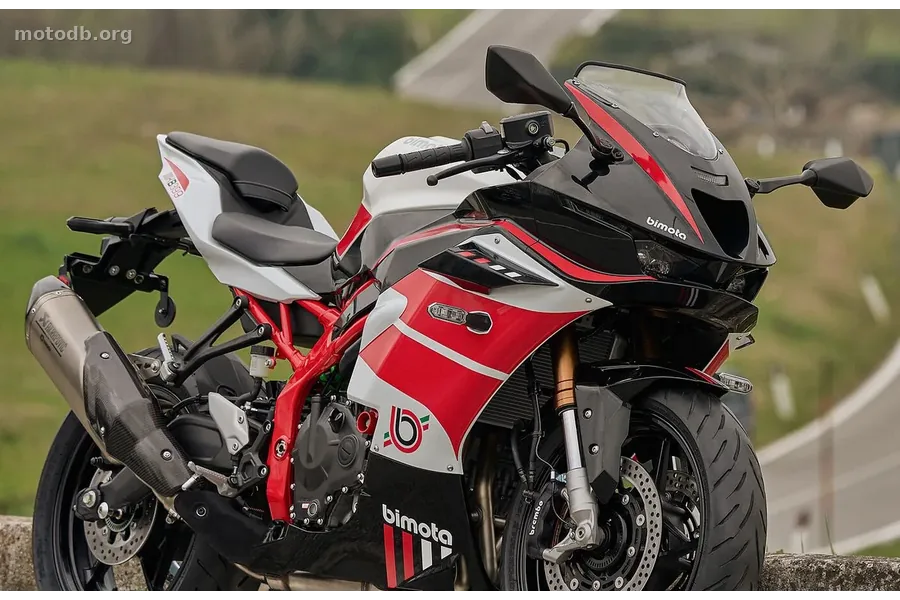
The engine is pure concentrated ZX-4RR DNA. This 399cc inline four-cylinder, with a short bore of 57mm and a stroke of 39.1mm, compression ratio of 12.3:1, delivers 80 horsepower. But those 80 horsepower don't politely show up at mid-range. You have to hunt them down, chase them through the rev range, push the machine until it finally decides to express itself. That's where the entire flavor of the concept lies: an engine that screams, that climbs, that demands the rider invest physically in the relationship. To amplify this soundtrack, Bimota commissioned a custom-made titanium Akrapovic exhaust. The sonic result should live up to the invoice.
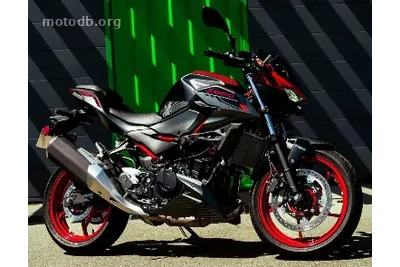
The styling doesn't betray its origins. The fairing draws inspiration from the KB998 Rimini, with a closed face, more pronounced vertical lines than on the Japanese Ninja it's cousins with, and winglets that signal membership in the sporting clan. The design is convincing, the front-end work meticulous. The inverted forks grow from 37 to 41mm in diameter, gaining rigidity to better handle the Brembo Stylema calipers — monoblock units clearly superior to the ZX-4RR's Tokicos. The machined aluminum fork caps complete a front end that delivers on its promises of precision.
Out back, enthusiasm fades somewhat. The red-painted tubular trellis frame represents a surprising choice for a brand that built its legend on bold architectures, machined plates, and structural innovation. Here the solution is conventional, functional, but lacking the technical signature one would expect. The standard rear suspension relies on a Showa BFRC Lite, identical to the Kawasaki's. Only the ES version escapes this kinship with an Öhlins STX 46. More troubling still: rubber brake lines and road-oriented tires on a machine sold at €12,000 with openly displayed sporting pretensions. These savings on consumables sting, especially when you know the brand's stated ambitions.
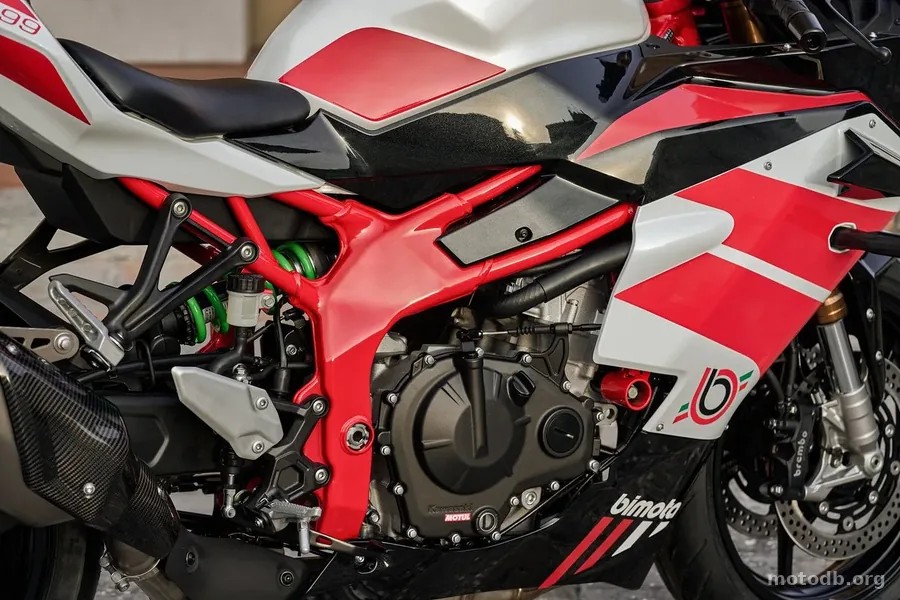
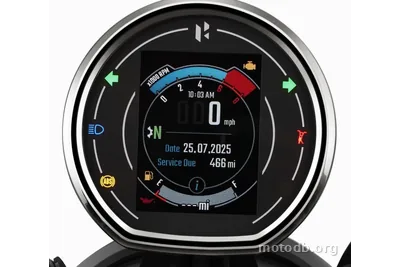
The electronics carry over the Kawasaki package, which is logical and pragmatic: three-level traction control, four riding modes, bidirectional quickshifter, two power modes, ABS. The 4.3-inch TFT screen offers two display layouts, one of them track-oriented. Nothing original, everything functional. The rear of the machine — tank, switchgear, and instrument cluster — smells more of Akashi than Rimini, which neatly sums up the duality of this project.
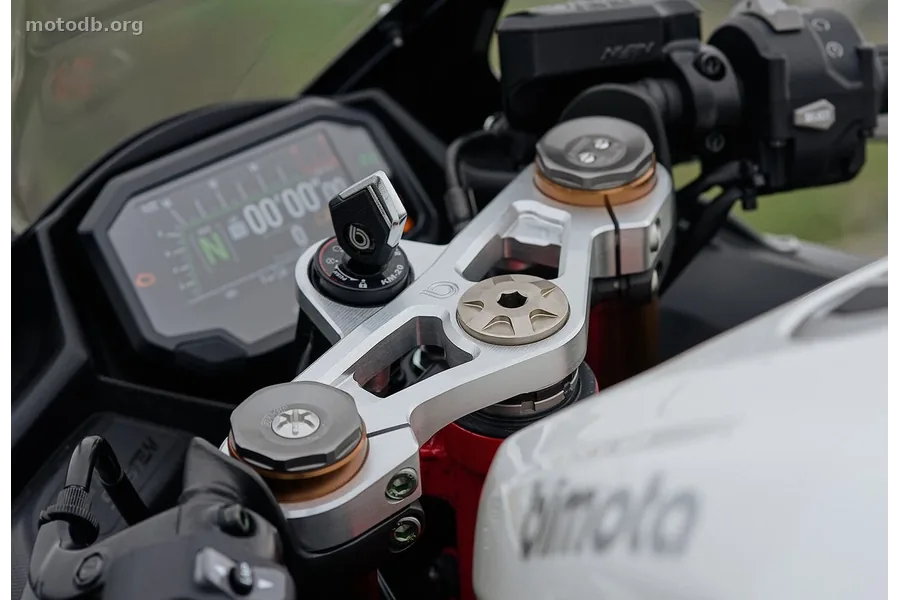
The KB399 Espresso targets a narrow and unapologetic audience: small-displacement enthusiasts who want to stand out from the crowd, who know what a rev range is and don't mistake a Bimota for a family sportbike. This segment is niche, and the Italian take on the ZX-4RR recipe makes it even more exclusive. At €12,000, the gap over the Kawasaki is substantial. For those who want even more, the ES version adds carbon bodywork, Öhlins suspension, clip-ons, and machined footpegs for approximately €5,000 extra. An investment for the converted, by a brand that has never pretended to aim for the mainstream.
Standard equipment
- Assistance au freinage : ABS
- Echappement Akrapovic
- Shifter
- Contrôle de traction
- Bluetooth
- Embrayage anti-dribble
- Indicateur de vitesse engagée
- Winglets
Practical info
- La moto est accessible aux permis : A
- Pays de fabrication : Italie
Reviews & comments
No reviews yet. Be the first to share your opinion!