Key performance
Technical specifications
Engine
- Displacement
- 399 cc
- Power
- 44.9 ch @ 8500 tr/min (33.0 kW)
- Torque
- 39.0 Nm @ 7000 tr/min
- Engine type
- Monocylindre, 4 temps
- Cooling
- liquide
- Compression ratio
- 12.6 : 1
- Bore × stroke
- 89 x 64 mm
- Valves/cylinder
- 4
- Camshafts
- 2 ACT
- Fuel system
- Injection Ø 46 mm
- Starter
- électrique
- Euro standard
- Euro 5+
Chassis
- Frame
- cadre treillis en tubes d'acier
- Gearbox
- boîte à 6 rapports
- Final drive
- Chaîne
- Front suspension
- Fourche téléhydraulique inversée WP Ø 43 mm, déb : 150 mm
- Rear suspension
- Mono-amortisseur WP, déb : 150 mm
Brakes
- Front brakes
- Freinage 1 disque White Power (WP) Ø 320 mm, fixation radiale, étrier 4 pistons (WP FCR4)
- Rear brakes
- Freinage 1 disque Ø 240 mm, étrier simple piston
- Front tyre
- 110/70-17
- Rear tyre
- 150/60-17
Dimensions
- Seat height
- 820.00 mm
- Seat type
- Selle biplaces
- Fuel capacity
- 15.00 L
- Weight
- 165.00 kg
- New price
- 6 299 €
Overview
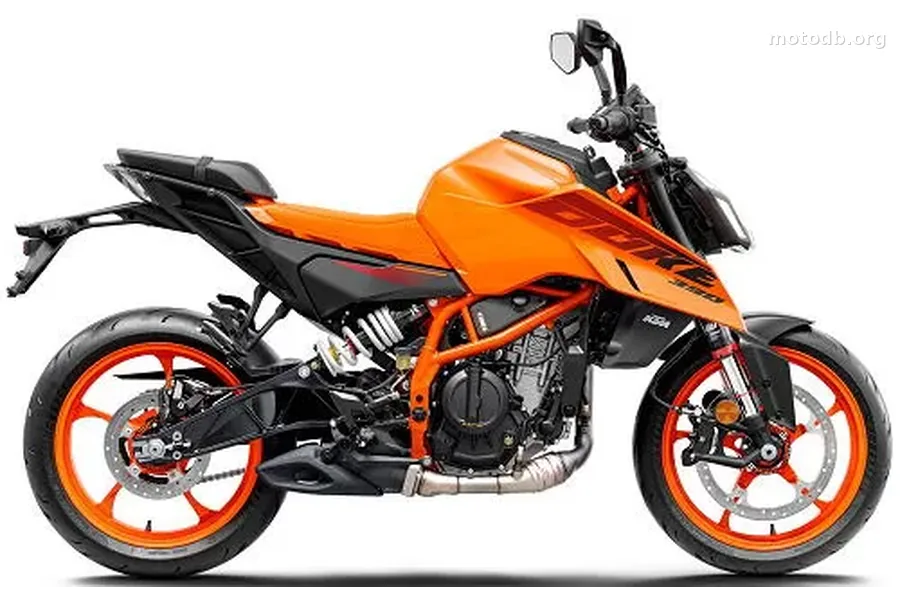
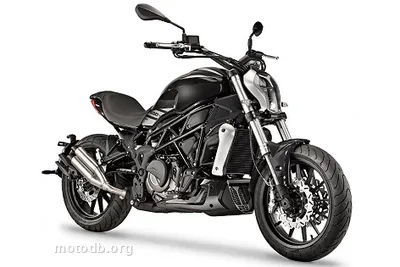
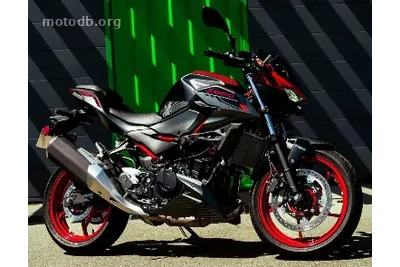
A roadster in the 400/500 class has been appreciated in many ways recently. Rather smart alongside the Triumph 400 Speed, a bit manga facing the Kawasaki Z 500, “robotic” with the MT-03, impertinent with the G 310 R, tempting with the 450 NK, bloodthirsty with the Tuono 457 – and edgy with the KTM 390 Duke. We are witnessing its 3rd major evolution, and certainly the most important since its creation a decade ago. This evolution is complemented in 2026 by a few improvements: new colors and a WP FCR4 brake caliper.
But the essence of its identity dates back to 2024: its face is no deception. Even more tense, sheared by appendages in the style of Ultron (a villain from the Avengers), disturbed and venomous, the Austrian’s face symbolizes madness. It could be no other for a member of a family of hysterics. The aura and the marketing identify the machine as a rascal.
Generally, this kind of progression begins with more watts. It’s a bit the case. The engine gains slightly in displacement thanks to an increase in its stroke. 4 mm of movement more, a few cm3 gained to reach 398.7 cm3 and slightly improve performance. The real purpose of this extra space is not so much the extra horsepower (now 45 horsepower in the mono) or the 2 Nm more. It’s rather to be ready for the Euro5+ standard. While at it, KTM optimizes the cylinder head and gearbox.
The change is much more spectacular on the chassis side. The tubular steel trellis frame is completely redesigned, with a particular mounting for the shock absorber. Because it is now mounted on the side of the frame, like on the Ducati Panigale V2, Kawasaki Versys 650 and...125 Duke; the 390 and the 125 share almost the same chassis. The swingarm is also completely new, with mounting points no longer on the outside but inside the frame and a banana shape.
However, the rear structure no longer wants to hear about steel. It demands a molded aluminum structure, like on the Superduke 1290 R. A desire for mimicry that has also led to much larger side panels. The suspensions also move up a notch. The 43 mm APEX inverted fork can be adjusted in rebound and compression. The twin-piston shock offers preload and rebound adjustment. Katoche insists that pilots on the big “little-Duke” should have a very accomplished machine, in the style of the “king of 400 roadsters.”
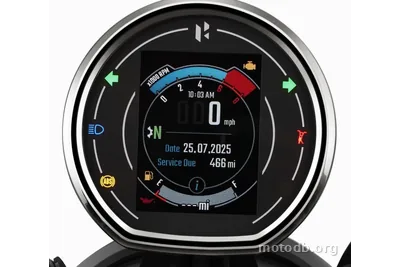
It’s also surely for this that the electronic equipment moves up a notch. The 390 Duke gains 2 Riding Modes, “Rain” and “Street,” acting on the engine response while an anti-wheelie and angle-sensitive ABS watch over things. The kind of bonus...relatively useless when the bike is shod with good tires. No worries on that level, with a factory fitment of Michelin Power 6. But don’t forget that it’s a 45 hp 400, not a fire pump. Common sense has its limits that marketing and fashion ignore. There is also the “Track” mode, displaying on the 5-inch TFT screen a chronograph, more space for the engine speed and a launch control system. A Superbike-style Launch Control for a 45 hp roadster!? The quickshifter remains an option. Katoche has not installed the “fun” mode but it is implied with the Supermoto ABS which allows disabling the rear anti-lock.
The Duke also gains new wheels with fewer spokes and lighter, a front brake disc without a hat (still at 320 mm), 10 mm more on the rear disc (240 mm), new calipers, forged aluminum footrests, a two-tone seat duo, improved ergonomics, a metal tank, loses its engine guard, reduces its seat height by 10 mm (820 mm standard) and hides its exhaust under the engine. It’s nice for lowering the center of gravity. Despite its efforts on the engine, the wheels and the chassis, Katoche has not managed to control the massive inflation of the Duke. It goes from about 160 kilos (150 dry) to 165 kilos.
KTM specifies that the dashboard is new. It is larger, displaying new graphics and is associated with a relifted thumb control pad. Connectivity is standard, allowing control of calls, music, and simplified GPS navigation “Turn-by-turn” with the house app.
Mattighofen has revised the price of the 390 Duke III, less close than before to that of the first 700 roadsters and in phase with a very active market. Also to limit the shocks of the Chinese and to face Triumph or BM; who have chosen a policy of prices more gentle for their cadets, corresponding to a less aggressive design, a little less electronics and power. The opportunity to choose a camp or a philosophy.
M.B - Photos manufacturer
Standard equipment
- Assistance au freinage : ABS
- Nombre de mode de conduite : 2
- Taille de l'écran TFT couleur : 12,70 cm / 5 pouces
- ABS Cornering
- Indicateur de vitesse engagée
- Bluetooth
- Aide au départ arrêté (Launch Control)
- Contrôle de traction
- ABS déconnectable
- Embrayage anti-dribble
Practical info
- La moto est accessible aux permis : A, A2
- Pays de fabrication : Inde
Reviews & comments
No reviews yet. Be the first to share your opinion!