Key performance
Technical specifications
Engine
- Displacement
- 997 cc
- Power
- 98.0 ch @ 8250 tr/min (71.5 kW)
- Torque
- 97.0 Nm @ 6250 tr/min
- Engine type
- V2, four-stroke
- Cooling
- Liquid
- Compression ratio
- 10.4:1
- Bore × stroke
- 97.0 x 67.5 mm (3.8 x 2.7 inches)
- Valves/cylinder
- 4
- Camshafts
- 2 ACT
- Fuel system
- Injection. Integrated electronic engine management system. Indirect multi-point electronic injection.
- Lubrication
- Dry sump with separate oil reservoir.
- Ignition
- Digital electronic ignition with TSI (Twin Spark Ignition) with two spark plugs per cylinder. Ignition timing integrated in the injection control system.
- Starter
- Electric
Chassis
- Frame
- Double Wave Twin Beam in aluminium-magnesium alloy
- Gearbox
- 6-speed
- Final drive
- Shaft drive (cardan) (final drive)
- Clutch
- Multiple disk in oil bath with patented PPC power-assisted hydraulic control. Freudenberg clutch line.
- Front suspension
- Marzocchi 50 mm hydraulic action telescopic fork.
- Rear suspension
- Aluminium alloy swing-arm. APS (Aprilia Progressive System) linkage.
Brakes
- Front brakes
- Double disc. ABS- brakes available.
- Rear brakes
- Single disc
- Front tyre
- 110/80-19
- Front tyre pressure
- 2.20 bar
- Rear tyre
- 150/70-17
- Rear tyre pressure
- 2.50 bar
Dimensions
- Seat height
- 820.00 mm
- Length
- 2310.00 mm
- Width
- 876.00 mm
- Height
- 1436.00 mm
- Fuel capacity
- 25.00 L
- Weight
- 253.00 kg
- Dry weight
- 215.00 kg
- New price
- 11 499 €
Overview
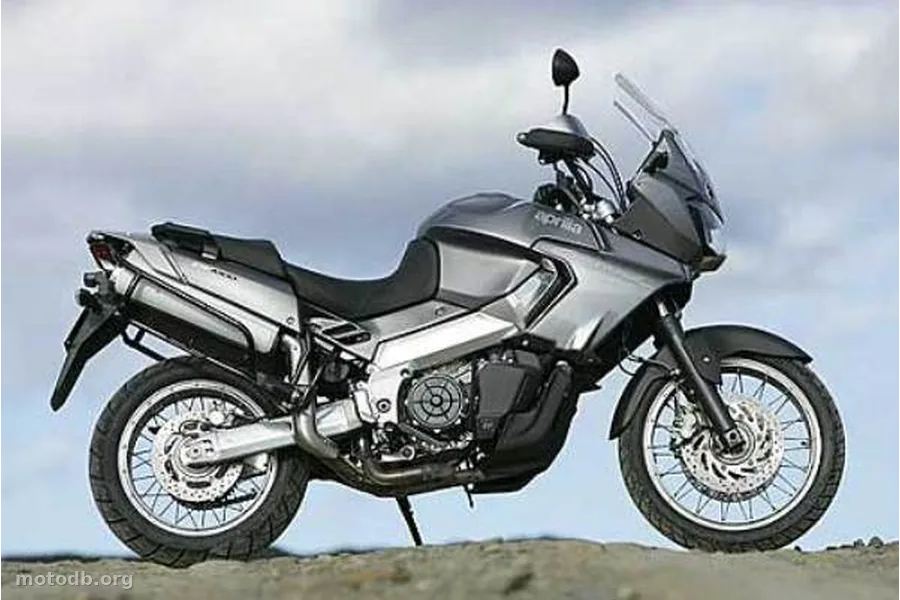
It's easy to forget, but in the early 2000s, Aprilia dared to shake up the world of road trails with a machine with a strong character: the ETV 1000 Caponord. Faced with the often-wise Japanese references, the Capo arrived with its Raptor-like look and its perimeter frame made of aluminum-magnesium alloy, a rarity in the category. This wasn't just an aesthetic bluff. This architecture, coupled with a low engine position, gave it a remarkably low center of gravity. From the first few meters, in the city or during slow maneuvers, handling surprised with its ease, despite a 32-inch seat height and a curb weight approaching 253 kg. For an Aprilia ETV 1000 Caponord test, it was a first pleasant surprise.
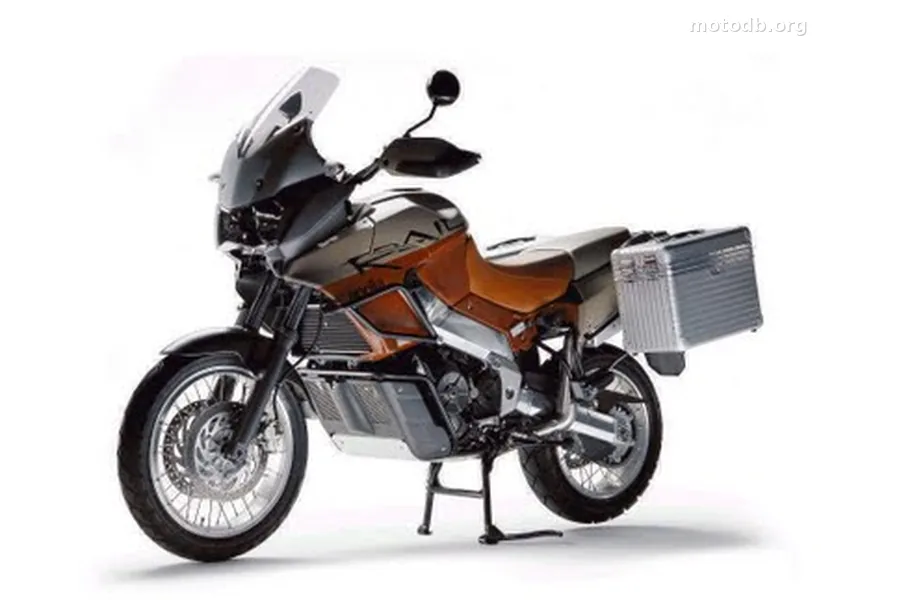
Under the 25-liter tank, the mechanics are a familiar sight: the 60° V2 from the RSV Mille, but seriously reworked for touring. The priority was given to torque, with 97 Nm available from 6250 rpm, and to elasticity. The result? An engine that breathes freely between 4000 and 7000 rpm, perfect for swallowing up national roads without touching the gearbox. On the other hand, don't ask it for sporty acceleration. Beyond that, it runs out of breath, and in sixth gear, you have to wait until 3500 rpm, or about 80 km/h, to feel the surge become frank. With 98 horsepower, purely linear performance is not its strong point, with the top speed limited to just over 210 km/h. But that’s the price to pay for this locomotive flexibility, a typical compromise of bikes from that era.
Where the 2005 Aprilia ETV 1000 Caponord surprises even more is in its road behavior. The chassis, with exemplary rigidity, offers it agility that is nothing to be ashamed of compared to some sportbikes. In the switchbacks, it leans with a precision and stability that is astonishing for a machine of this size. It’s light, direct, almost playful. Alas, the picture is not perfect. The 50 mm Marzocchi fork, not adjustable, quickly shows its limits with handling that becomes floaty when the pace accelerates or the road degrades. This is the major weakness of this generation, a defect often mentioned on Aprilia ETV 1000 Caponord forums. The braking, on the other hand, is solid, and ABS, which became optional from 2004, provided a welcome safety feature, as confirmed by the few tests of the Aprilia ETV 1000 Caponord ABS.
On the Aprilia ETV 1000 Caponord used market, it is now positioned as a charismatic and often better-value alternative to the benchmark of the time, the Honda Varadero. Its main competitor at its launch was the Suzuki V-Strom 1000, often considered more versatile and easier to access. The Caponord, on the other hand, is aimed at the touring rider who is looking for something other than a sanitized machine. It’s forgiving enough for a beginner on a large displacement bike, but its temperament requires a rider who knows how to manage its weight and its limited suspension to exploit its formidable chassis potential. At the time, at more than 11,000 euros new, it was a bold gamble. Today, it’s an opportunity that offers a lot of character for little, but requires carefully studying its technical specifications and history to avoid unpleasant surprises. A hurdle to overcome, but for some, the game is well worth the candle.
Standard equipment
- Assistance au freinage : ABS en option
Practical info
- La moto est accessible aux permis : A
Indicators & positioning
Similar bikes
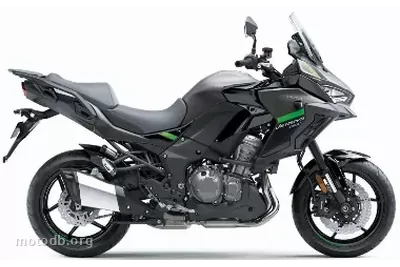
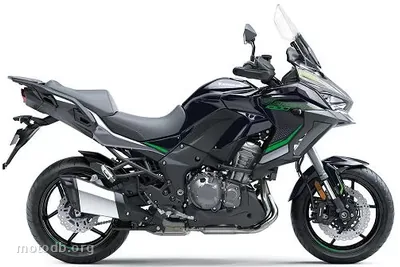
Versys 1000 SE
Reviews & comments
No reviews yet. Be the first to share your opinion!