Key performance
Technical specifications
Engine
- Displacement
- 998 cc
- Power
- 200.0 ch @ 13500 tr/min (147.1 kW)
- Torque
- 112.8 Nm @ 11500 tr/min
- Engine type
- 4 cylindres en ligne, 4 temps
- Cooling
- liquide
- Compression ratio
- 13 : 1
- Bore × stroke
- 79 x 50.9 mm
- Valves/cylinder
- 4
- Camshafts
- 2 ACT
- Fuel system
- Injection
Chassis
- Frame
- périmétrique Diamond en aluminium
- Gearbox
- boîte à 6 rapports
- Final drive
- Chaîne
- Front suspension
- Fourche téléhydraulique inversée Öhlins Ø 43 mm, déb : 120 mm
- Rear suspension
- Mono-amortisseur Öhlins, déb : 120 mm
Brakes
- Front brakes
- Freinage 2 disques Ø 320 mm, fixation radiale, étrier 4 pistons
- Rear brakes
- Freinage 1 disque Ø 220 mm, étrier simple piston
- Front tyre
- 120/70-17
- Front tyre pressure
- 2.50 bar
- Rear tyre
- 200/55-17
- Rear tyre pressure
- 2.90 bar
Dimensions
- Seat height
- 860.00 mm
- Fuel capacity
- 17.00 L
- Weight
- 200.00 kg
- Dry weight
- 180.00 kg
- New price
- 23 799 €
Overview
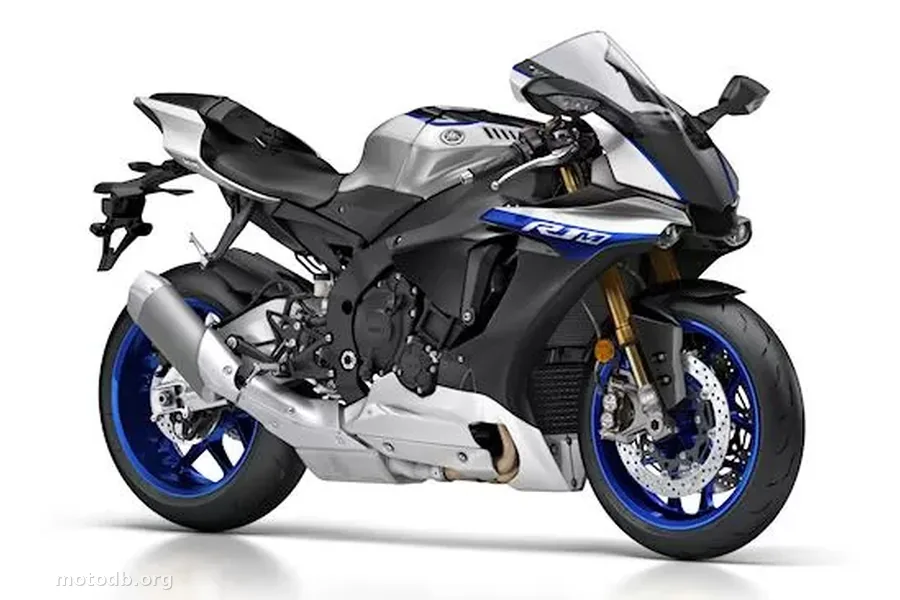
Is it still necessary to talk about raw power when you reach such a level of sophistication? The 2017 Yamaha YZF-R1M doesn't simply present itself as a 200-horsepower motorcycle; it positions itself as a precision instrument, a race tool almost ready to burn rubber at the starting line. This is the culmination of a philosophy: transforming a superbike already formidable into an exceptional machine, reserved for those who consider the track their natural terrain.
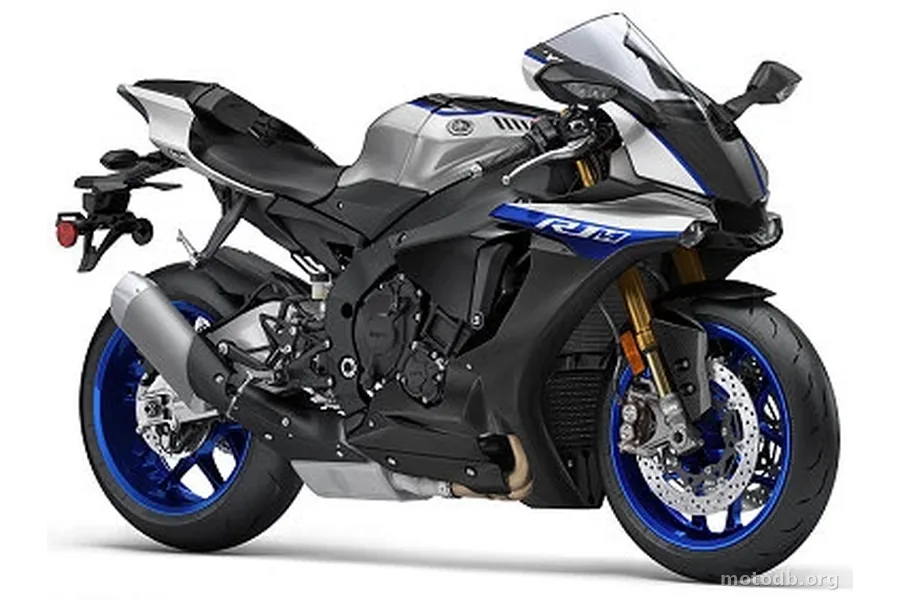
The essence of this M lies in its treatment. The base, an already radical R1 with its cross-plane 998 cc engine and 200 horsepower at 13,500 rpm, serves as a foundation. But Yamaha has grafted onto it the equivalent of a factory option. The most obvious external sign is the gold finish on the Öhlins suspensions, but it's not just a badge. These are pilot ERS suspensions, connected to the machine's brain, a 6-axis inertial sensor. This system analyzes dynamics 125 times per second and adjusts compression and rebound in real time. This is a fundamental difference from a simple superbike: the motorcycle thinks with you, it adapts its behavior to every micro-situation. The carbon fiber fairing, the polished aluminum fuel tank, and the swingarm treated in the same way are not cosmetic; they underline a desire for exclusivity and pure performance.
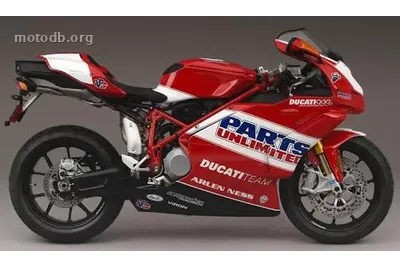
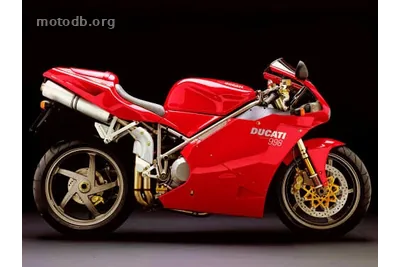
At this point, the comparison with a Ducati Panigale R or a Honda CBR1000RR Fireblade SP becomes almost theoretical. The R1M operates in a different sphere, that of a track-ready motorcycle. Its quasi-slicks Bridgestone tires, its wider 200 rear tire, and its integrated telemetry that records everything – lap times, lean angle, GPS data – make it a companion for analysis as much as a performance tool. It is this dimension that justifies its price of 23,799 euros, an amount that places the machine in an ultra-niche segment.
The target audience is unambiguous: the confirmed track rider, the one who is not looking for the most powerful motorcycle in the parking lot, but the most consistent and communicative one. Yamaha even accompanies him with the Yamaha Racing Experience, a training course on major European circuits supervised by experts and former champions. It is a complete package, a proposal that goes far beyond the simple sale of an object.
One could point out a few paradoxes, such as its weight of 200 kg fully fueled, slightly higher than the standard version despite the use of carbon fiber, or the fact that its power remains aligned with that of the base R1. But these considerations are secondary to the coherence of the project. The R1M is not a motorcycle for seeking extra horsepower; it is a motorcycle for exploiting each horsepower with maximum efficiency, thanks to its intelligent chassis, its omnipresent electronics, and its competition-oriented equipment. It doesn't ask you to be a pro, but it gives you the means to get closer to that level. Ultimately, the question is not whether it is better than its competitors, but whether you are ready to enter its very particular universe, where the motorcycle becomes a technological partner of your passion for the track.
Standard equipment
- Assistance au freinage : ABS de série
Practical info
- La moto est accessible aux permis : A
Reviews & comments
No reviews yet. Be the first to share your opinion!