Key performance
Technical specifications
Engine
- Displacement
- 890 cc
- Power
- 119.0 ch @ 10000 tr/min (87.5 kW)
- Torque
- 93.2 Nm @ 7000 tr/min
- Cooling
- liquide
- Compression ratio
- 11.5 : 1
- Bore × stroke
- 78 x 62.1 mm
- Valves/cylinder
- 4
- Camshafts
- 2 ACT
- Fuel system
- Injection
- Starter
- électrique
- Euro standard
- Euro 5+
Chassis
- Frame
- périmétrique Deltabox en aluminium
- Gearbox
- boîte à 6 rapports
- Final drive
- Chaîne
- Front suspension
- Fourche téléhydraulique inversée Ø 41 mm, déb : 130 mm
- Rear suspension
- Mono-amortisseur, déb : 131 mm
Brakes
- Front brakes
- Freinage 2 disques Sumitomo Ø 298 mm, fixation radiale, étrier 4 pistons
- Rear brakes
- Freinage 1 disque Sumitomo Ø 267 mm, étrier simple piston
- Front tyre
- 120/70-17
- Rear tyre
- 180/55-17
Dimensions
- Seat height
- 845.00 mm
- Seat type
- Selle biplaces
- Fuel capacity
- 19.00 L
- Weight
- 227.00 kg
- New price
- 15 799 €
Overview
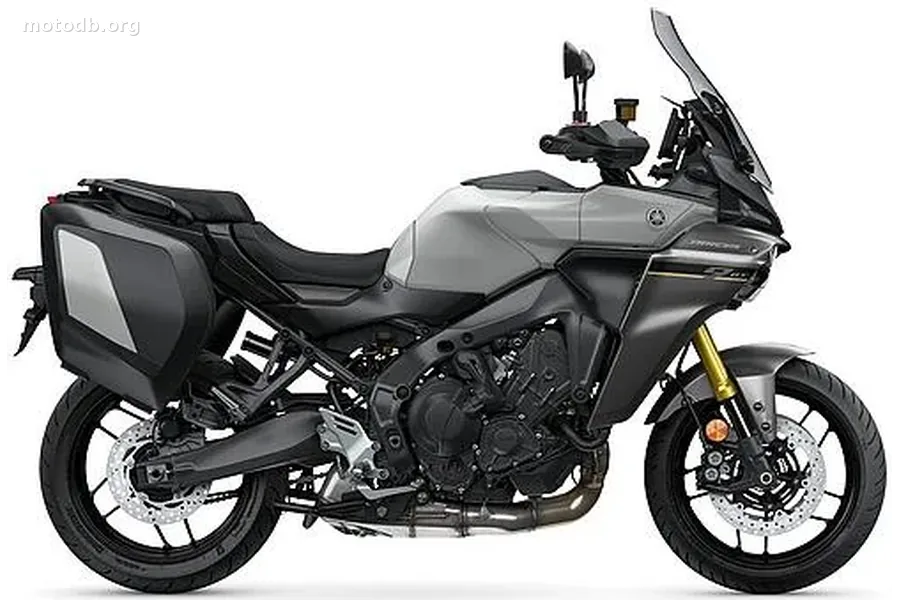
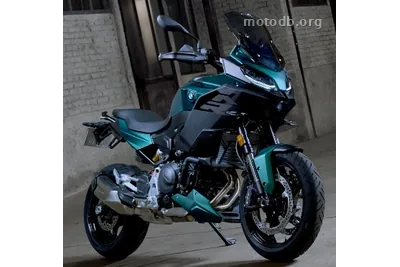
The Tracer 9 is increasingly taking its role as a GT within the Yamaha lineup seriously. The days are long gone when the 900 Tracer mixed trail, roadster, and Sport-GT in a hybrid and unrestrained machine. Today, its distant descendant wants to consume road and puts forward strong technological arguments to do so.
When this crossover became the Tracer 9 (in 2021), its appearance changed direction. The road profile then truly took precedence. The 2025 model confirms this trend while its design may surprise. Its mischievous little front end moves towards greater refinement as its cheekbones gain prominence. The polygamy of headlights assembles like small bricks installed by Jacky Tuning.
Although the overall appearance is very similar to the previous model, the entire line has evolved following numerous improvements. The shoulders are stricter, the tank fairing has been reworked, and the rear frame is stretched. But once faced with the big Tracer, it’s impossible not to wrinkle your nose at its own.
And then, what is all that? Yamaha has installed adaptive cornering headlights on all Tracer 9 models and specifically matrix headlights on the GT and GT+. DAC, but what’s that for? To adapt the lighting to the environment. How? In the middle of its face, the Tracer 9 GT has slipped a camera to see light sources, the weather, and car headlights. Thus, and aided by the inertial measurement unit to compensate for the motorcycle’s movements, the system adapts the headlight beam, its level, and its distribution to illuminate optimally and without dazzling those coming in front. Matrix headlights are a step further in adaptive technology. Not only in corners but also in distribution. They are fully automatic but the rider can choose 3 levels of sensitivity when desired.
A major change on the interior. The Tracer 9 abandons its dual screen (sometimes controversial and regularly misunderstood) to install a single, practical, simpler, functional... and much larger screen. A 7-inch color TFT panel, the readability of which will be much more convincing. The layout is distinguished by its simplicity, its 3 display themes, the impeccable presentation of the driving Mode settings, and the integration of the Garmin Motorize GPS navigation system. For smartphone connectivity, it’s done via USB, Wi-Fi, or Bluetooth. The MyRide app allows you to control music, calls, messages, and motorcycle riding assistance settings.
The Tracer is less disconcerting thanks to this new interface, and welcomes the rider better from its seat. The rear loop has been lengthened and lightened to offer more space for the passenger. The rider also gets a new saddle, flatter between the legs and more generous for the buttocks... but also higher. The seat reaches 845 mm at its lowest. Or 860 mm in the upper position. Values close to a KTM Adventure. But Yamaha (re)assures us that the design of the front part of the saddle should facilitate the life of all riders.
Comfort is one of the priority work axes of this new generation of Tracer. The handlebars and footrests (adjustable in height) are revised according to this idea, as is the installation of an electric bubble offering 100 mm of travel, the arrival of a storage compartment with a USB socket on the right side of the tank, and the possibility of supporting the engine of the automatedY-AMT* gearbox. If you take these elements and add them to the renewed package of the ex-Tracer9, you get a road bike (a little trail) with 30-liter luggage cases, heated grips, handguards, a center stand, and plenty of electronics.
With the 17.8 cm instrument panel, the new generation commodos, a keyless system, a speed limiter, multi-function turn signals, hill-start assist, and matrix headlights... These elements are the additions of this Tracer. In addition, there are the Kayaba KADS semi-active suspensions, the quickshifter, the cruise control, the traction, slide, braking, and wheelie controls, cornering ABS, and 5 riding modes. Were there not 4 before? Just so. Yamaha added one and revised their names. The D-Mod system identifies them as more than 1 but complies with a more universal process: 3 with common names, Sport / Street / Rain, to which are added 2 customizable modes Custom 1 / 2.
However, the upgrade to Euro5+ does that change anything about the engine? Nothing at all. The fiery CP3 of 890 cc retains its 119 horsepower and a good dose of torque of 9.5 mkg. Whatever the machine it is mounted in and whatever the use, this three-cylinder is a delight to use. To channel its energy, the cycle frame is ad hoc and identical to previous years. A pressed aluminum Deltabox frame, surrounded by a 41 mm inverted fork, a mono-shock absorber, and 17-inch Spinforged lightweight rims. Yamaha asked Bridgestone to design T32 tires specifically for the Tracer, to boost its handling. Indeed, this new Tracer9 turns a little better. Not thanks to the new tires or a chassis retouch but thanks to the reworked fork support. Still a good-caliber braking with 4-piston radial calipers biting 298 mm tracks. The rear disc has grown, from 245 mm to 267 mm.
Like many other brands, Yamaha no longer has a large GT in its lineup but is putting a lot of effort into its Tracer to offer quality comfort and equipment. The Tracer 9 GT is even more loaded, as a worthy representative of the road. One step above, the GT+ allows you to have a radar, adaptive cruise control, the Y-AMT system as standard, tire pressure monitoring, a more durable chain, blind spot detection, and backlit commodos.
M.B- photos constructeur
KADS: This semi-active system is integrated into the motorcycle’s electronics and automatically adjusts the damping by using real-time data detected by the six-axis IMU, such as the tilt angle, load, acceleration, amplitude, and speed of suspension travel, thus offering sporty riding without compromising comfort. The rider can choose between different modes with a simple button press, and the dynamics are determined by the selected YRC riding mode, offering a firmer, sportier setting in Sport mode, while comfort is prioritized in Street and Rain modes.
Standard equipment
- Assistance au freinage : ABS
- Nombre de mode de conduite : 5
- Volume de rangement : 60 litres
- Taille de l'écran TFT couleur : 17,78 cm / 7 pouces
- ABS Cornering
- Jantes aluminium
- Shifter
- Béquille centrale
- Indicateur de vitesse engagée
- Régulateur de vitesse
- Bluetooth
- Prise USB
- Démarrage sans clé
- Contrôle de traction
- Poignées chauffantes
- Pare brise réglable électriquement
- Suspensions réglables électroniquement
- Contrôle anti wheeling
- Valises
- Jantes forgées
- Contrôle de glisse
- Embrayage anti-dribble
- Selle réglable
- Phares adaptatifs en virage
- Contrôle du frein moteur
Practical info
- La moto est accessible aux permis : A
Indicators & positioning
Similar bikes
Multistrada V2 890
Multistrada V2 S 890
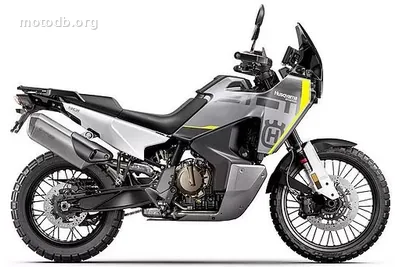
Norden 901
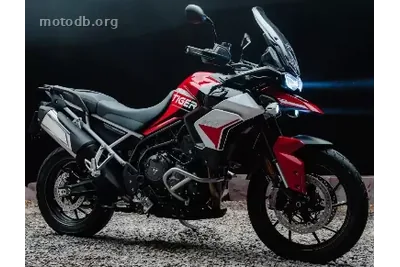
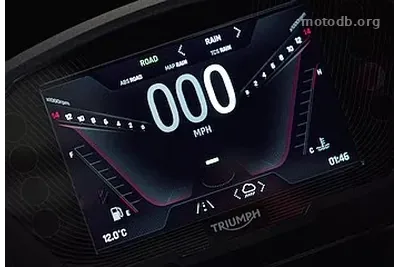
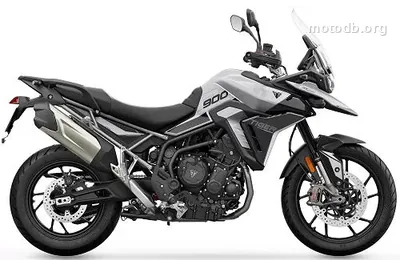
Reviews & comments
No reviews yet. Be the first to share your opinion!