Key performance
Technical specifications
Engine
- Displacement
- 890 cc
- Power
- 115.0 ch @ 10750 tr/min (84.6 kW)
- Torque
- 92.0 Nm @ 8250 tr/min
- Engine type
- Bicylindre en L à 90°, 4 temps
- Cooling
- liquide
- Compression ratio
- 13.1 : 1
- Bore × stroke
- 96 x 61.5 mm
- Valves/cylinder
- 4
- Camshafts
- 2 ACT
- Fuel system
- Injection Ø 52 mm
- Starter
- électrique
- Euro standard
- Euro 5+
Chassis
- Frame
- Monocoque en aluminium
- Gearbox
- boîte à 6 rapports
- Final drive
- Chaîne
- Front suspension
- Fourche téléhydraulique inversée Ø 45 mm, déb : 170 mm
- Rear suspension
- Mono-amortisseur, déb : 170 mm
Brakes
- Front brakes
- Freinage 2 disques Brembo Ø 320 mm, fixation radiale, étrier 4 pistons (Brembo M4.32)
- Rear brakes
- Freinage 1 disque Brembo Ø 265 mm, étrier 2 pistons
- Front tyre
- 120/70-19
- Rear tyre
- 170/60-17
Dimensions
- Seat height
- 830.00 mm
- Seat type
- Selle biplaces
- Fuel capacity
- 19.00 L
- Weight
- 199.00 kg
- New price
- 16 390 €
Overview
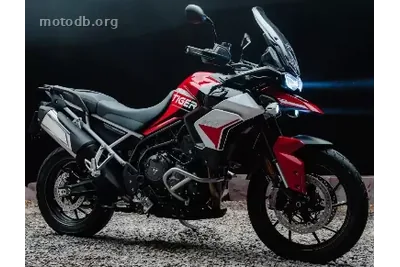
The Ducati Multistrada V2 continues to uphold the tradition of the road-going twin. While the V4 flagship accumulates advantages – power, prestige, superior sales figures – a twin remains essential to the range. However, the 890 MTS has been so modified that only the number of cylinders remains the same. Like many Ducatis, it changes state and principle while extending the spirit.
Let’s address the anxieties of some immediately. The desmodrome and trellis frame? They are gone. Whether you want it or not, these iconic elements are becoming marginal in Bologna. The time has come to rationalize engine production, to say goodbye to certain principles, and to think about the future. That's what the Multistrada does with its new V2.
An entirely new engine, already shared with the Streetfighter and the Panigale. While these fiery machines have lost some of their growl, the trail bike will be much more cheerful to welcome this twin full of new promises. It already extracts a few extra horsepower. With 115 bhp, its power increases by 2 units. Torque is slightly down, from 9.6 to 9.4 mkg. But the most interesting aspect for the Multistrada V2 is the introduction of variable valve timing. With this technology, we always have at least 3/4 of the maximum torque between 3,500 rpm and 11,000 rpm.
This 890 cm³ block is designed to be lightweight (only 54.9 kg), compact, future-proof, and receives some adaptations for the use the MTS desires. The first two gears are shortened to facilitate low-speed maneuvers. The design of this new twin cylinder also allows for the installation of a 2.0 quickshifter with a more pleasant feel and increased efficiency.
As the technology in this new Multistrada V2 saga shakes up some conventions, Ducati modernizes the machine's design by judiciously leveraging change. At first glance, the identity is preserved, although a sense of trickery quickly emerges. It has changed more than it says, and its fleeting traits betray it little. Its gaze is finer, its beak less aggressive, its shoulders lighter, its torso more imposing, its fuel tank more massive... The lady seems to suggest that she has gained importance. We discover a lot of plastic, turn signals that no longer want to buddy up with the mirrors and take place on the flanks, ducts in front of the knees to bring fresh air to the rider, a redesigned bubble, and a subtle sense of weight gain.
A totally false idea. Because while the Multistrada V2 has grown in span, it has done so in parallel with a serious diet. Combining a few figures, we see that its dry weight-free fuel is the same as that of the previous generation (199 kg). A few more calculations later, it would be almost 9 kg that have flown away. But the parent company announces 18. Always very optimistic, the Italians.
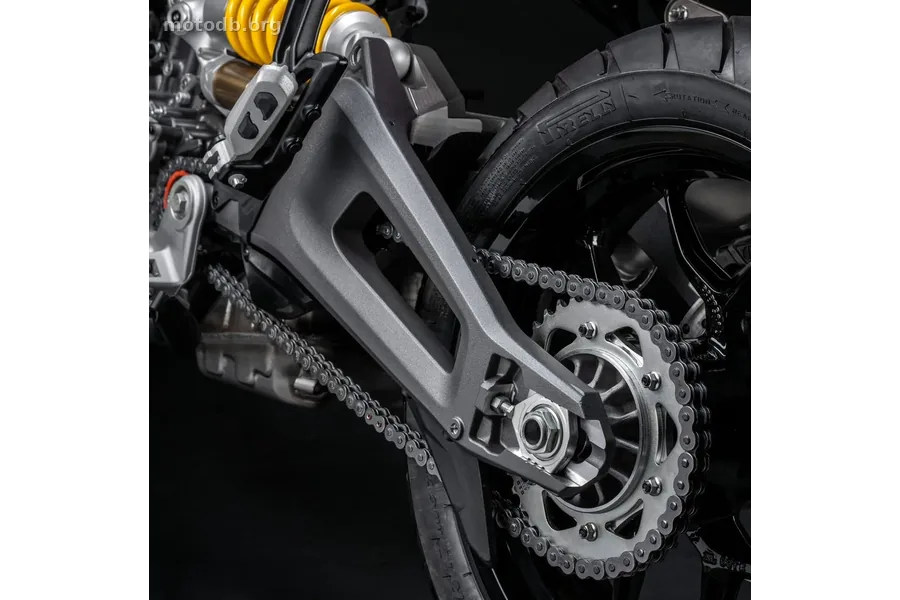
The engine has certainly contributed to this change. But so has the new aluminum monocoque frame. A lightweight and minimalist structure anchored to the engine, allowing for a significant weight reduction and less clutter between the legs – fewer tubes, fewer plates, just a cylinder head and the bottom of the fuel tank. The manufacturer takes the opportunity to revise the subframe and the swingarm. The fork diameter is reduced but remains robust with its 45 mm. The other peripherals (19 and 17 inch wheels, 320 mm brakes, Brembo M4.32 calipers) are carried over from the previous Multistrada and will not disappoint.
The Italian trail bike takes a step further towards on-board comfort. The seat height remains the same (830 mm) but is now adjustable and can be raised to 850 mm. The entire seat has been redesigned and there is a little more legroom. Then, once on board, we perceive a whole new interface. The Multistrada had more than had enough of seeing the S version flaunt a TFT screen – now, there is a new 5-inch screen for everyone, with new graphics and three types of display.
Electronics are more comprehensive with cruise control, a USB socket, new switches, the Coming Home function that leaves the headlights on for 30 seconds, and a new WET riding mode. Consequently, the Multistrada V2 has 5 riding modes (Sport – Touring – Urban – Enduro – Wet) to orchestrate the various riding assistance systems: cornering ABS, 4 levels of power, traction control DTC, wheelie control DWC, and engine brake control EBC; all adjustable on several levels. Let's not forget to mention the turn signals that stop automatically, the automatic warning in case of heavy braking, LEDs for everything that lights up... and the disappearance of the HADC - hill-start assist.
On the S version, you will also have semi-active Skyhook suspensions, the Minimum Preload function to lower the rear, multimedia connectivity, and twice as many color options to choose from.
With its new V2, the Multistrada has seen the opportunity to (almost) completely renew itself without losing its multi-map spirit. The engine character will certainly change but the comfort should be improved. However, we still don't understand why heated grips are an option on a motorcycle that is intended to be both road-worthy and everyday.
M.B - Manufacturer Media
The riding modes of the 890 Multistrada V2:
Sport: delivers the full 115 bhp with a direct and fiery response. Ducati Traction Control and Ducati Wheelie Control are reduced to a minimum and ABS, set to level 2, allows for controlled rear wheel lift to maximize braking performance, while maintaining Cornering function.
Touring: releases its 115 bhp power, but delivery is smoother and more progressive. Higher levels of intervention from DTC and DWC satisfy the needs of tourist use. ABS is set to level 3, the safest and most prudent thanks to rear wheel lift detection.
Urban: power reduced to a maximum of 95 bhp with a particularly smooth and progressive response (Low Engine Mode). DTC and DWC are set to high levels, while ABS is set to level 3.
Enduro: limits engine power to 95 bhp with a dedicated Engine Mode (Offroad), for a more dynamic and direct response compared to the Urban mode, at equal power. The DTC and DWC systems are set to the specific offroad level, while ABS is set to level 1, suitable for off-road use on low-grip terrain. In this case, the functionality of ABS in cornering and intervention on the rear wheels are all deactivated.
Wet: designed for riding on wet roads. This mode limits maximum power to 95 bhp with a particularly smooth throttle response (Low Power Mode). The preset level of electronic controls is set to provide maximum safety on wet roads.
Standard equipment
- Assistance au freinage : ABS
- Nombre de mode de conduite : 5
- Taille de l'écran TFT couleur : 12,70 cm / 5 pouces
- ABS Cornering
- Shifter
- Indicateur de vitesse engagée
- Régulateur de vitesse
- Prise USB
- Contrôle de traction
- Contrôle anti wheeling
- Embrayage anti-dribble
- Centrale inertielle
- Contrôle du frein moteur
Practical info
- Véhicule accessible au permis A2 ou bridable à 47.5ch / 35 Kw
- La moto est accessible aux permis : A, A2
- Pays de fabrication : Italie
Indicators & positioning
Similar bikes
Niken 900 GT
Tracer 9 GT
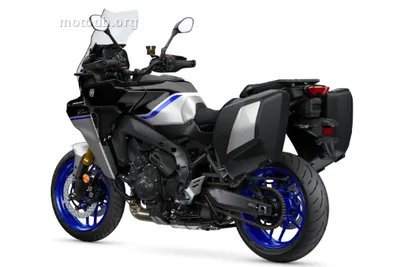
Tracer 9 GT Plus
Reviews & comments
No reviews yet. Be the first to share your opinion!