Key performance
Technical specifications
Engine
- Displacement
- 124 cc
- Power
- 15.0 ch @ 8000 tr/min (11.0 kW)
- Torque
- 13.0 Nm @ 8000 tr/min
- Engine type
- Monocylindre, 2 temps
- Cooling
- liquide
- Compression ratio
- 6.7 : 1
- Bore × stroke
- 56 x 50.7 mm
Chassis
- Frame
- simple berceau dédoublé en acier
- Gearbox
- boîte à 6 rapports
- Final drive
- Chaîne
- Front suspension
- Fourche téléhydraulique Ø 41 mm, déb : 200 mm
- Rear suspension
- Mono-amortisseur, déb : 230 mm
Brakes
- Front brakes
- Freinage 1 disque Ø 298 mm, étrier 2 pistons
- Rear brakes
- Freinage 1 disque Ø 220 mm, étrier simple piston
- Front tyre
- 120/70-17
- Rear tyre
- 140/70-17
Dimensions
- Seat height
- 886.00 mm
- Fuel capacity
- 10.70 L
- Weight
- 132.00 kg
- Dry weight
- 122.00 kg
- New price
- 4 115 €
Overview
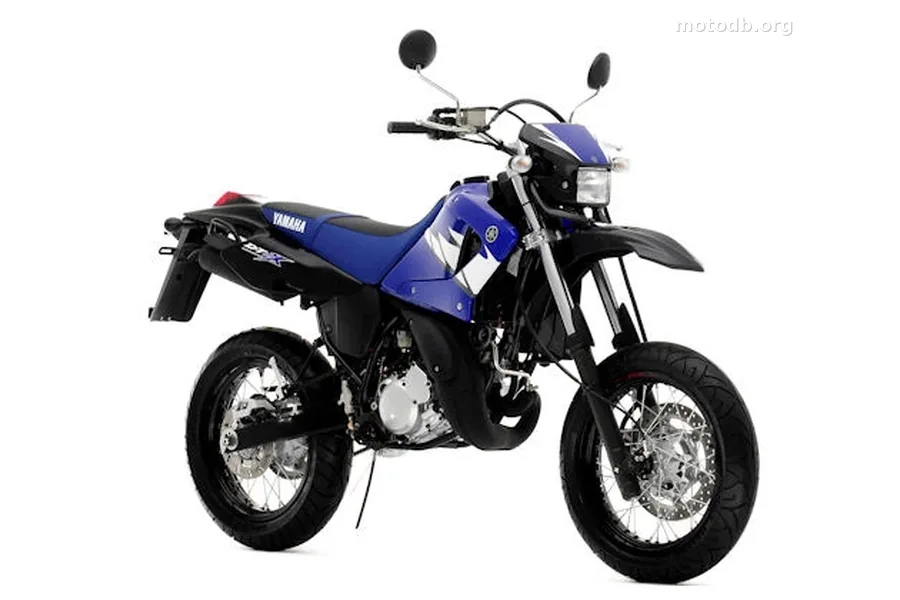
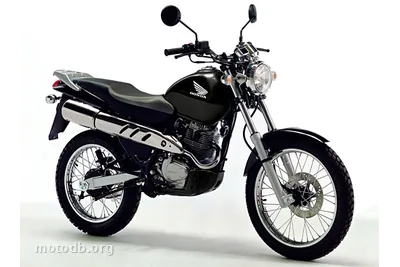
When Yamaha decided to fit its DTR with 17-inch wheels and dress it in supermoto clothing, the question wasn't about the concept, but about the execution. The recipe is well known: wide road tires, large front disc, sharp geometry. The result is the Yamaha DTX 125, a small tarmac-bred machine that traded muddy trails for wet cobblestones.
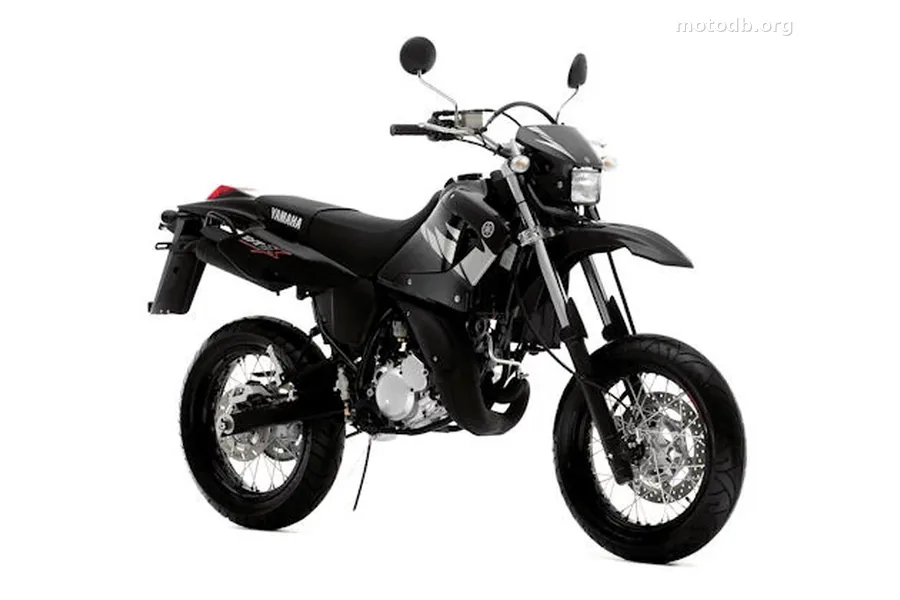
Under the Yamaha DTX 125's bodywork, there's nothing revolutionary: the 124cc two-stroke single-cylinder is borrowed from the DTR, with its 56mm bore, 50.7mm stroke, and a modest compression ratio of 6.7:1. Restricted as required, the Yamaha DTX 125 engine produces 15 horsepower at 8,000 rpm — 11 kW — with 13 Nm of torque at the same rev range. These figures are enough to push past 130 km/h on the speedometer, placing the Yamaha DTX 125's top speed in the upper-middle range of its category. The 6-speed gearbox pairs well with the engine, even if sixth gear feels a little tall for purely urban use, naturally encouraging riders to stay in the intermediate ratios. The two-stroke is still a two-stroke: expect around 6 litres per 100 km from the 10.7-litre tank. Range management is straightforward.
What genuinely changes compared to its off-road ancestor is the on-tarmac behavior. The 41mm telescopic hydraulic fork with 200mm of travel and the rear mono-shock with 230mm of travel deliver a healthy compromise between compliance and support in corners. On twisty back roads, the DTX proves precise without being twitchy, and its dry weight of 122 kg — 132 kg fully fuelled — contributes to an impression of manageable lightness. In the city, this compact size is a clear advantage. The front brake, a 298mm disc clamped by a twin-piston caliper, does its job seriously. The 220mm rear disc with a single-piston caliper remains discreet, almost incidental. Riding style instinctively becomes front-biased, which is entirely consistent with the supermoto philosophy.
The riding position makes no attempt to impress. A stripped-back instrument cluster, spartan instrumentation, unassuming build quality. Some will see this as a shortcoming; others will read it as consistency with the machine's spirit. The high 886mm seat height can be a challenge for shorter riders, especially since the Yamaha DTX 125 used market often puts the bike in the hands of young A1 licence holders discovering the supermoto genre. For them, it's an excellent riding school, provided they accept the fuel consumption and a certain dependency on Yamaha DTX 125 parts, which can become harder to source with age.
At a new price of €4,115, the Yamaha DTX 125 sat at the top end of the 125cc segment at the time. Against a KTM Duke 125 or a Derbi Supermotard, the Yamaha argument rested primarily on perceived reliability and a distinctive look. Those interested in Yamaha DTX 125 tuning will find a solid base and a parts market that remains reasonably active. Yamaha DTX 125 derestriction is a classic step for riders moving up to an A2 licence, with genuine gains in mid-range response. Proven mechanicals, lines that have aged well: the DTX remains a coherent choice for anyone seeking a 125cc supermoto with character — as long as they don't mind frequent fuel stops.
Practical info
- La moto est accessible aux permis : A
Reviews & comments
No reviews yet. Be the first to share your opinion!