Key performance
Technical specifications
Engine
- Displacement
- 955 cc
- Power
- 130.0 ch @ 9300 tr/min (95.6 kW)
- Torque
- 100.0 Nm @ 8500 tr/min
- Cooling
- liquide
- Compression ratio
- 11.2:1
- Bore × stroke
- 79 x 65 mm
- Valves/cylinder
- 4
- Camshafts
- 2 ACT
- Fuel system
- Injection
Chassis
- Frame
- multitubulaire en alu
- Gearbox
- boîte à 6 rapports
- Final drive
- Chaîne
- Front suspension
- Fourche téléhydraulique Ø 45 mm, déb : 120 mm
- Rear suspension
- Mono-amortisseur, déb : 140 mm
Brakes
- Front brakes
- Freinage 2 disques Ø 320 mm, étrier 4 pistons
- Rear brakes
- Freinage 1 disque Ø 220 mm, étrier 2 pistons
- Front tyre
- 120/70-17
- Front tyre pressure
- 2.50 bar
- Rear tyre
- 190/50-17
- Rear tyre pressure
- 2.90 bar
Dimensions
- Seat height
- 800.00 mm
- Fuel capacity
- 22.00 L
- Weight
- 223.00 kg
- Dry weight
- 198.00 kg
- New price
- 12 195 €
Overview
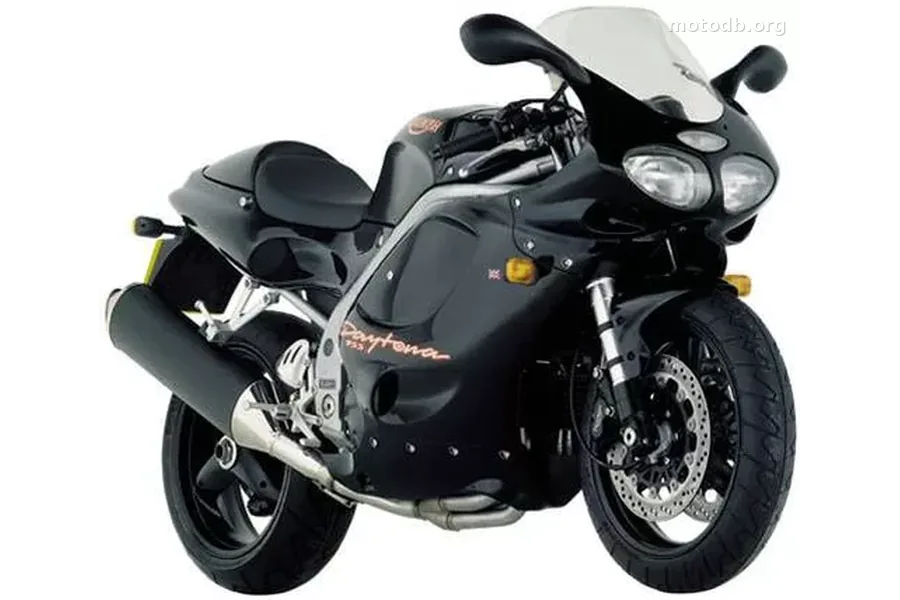
At the end of the 1990s, when talking about sportbikes, everyone's eyes were fixed on Japan and its furious four-cylinder machines. And then came this English bike, the Triumph Daytona 955i, with its three-cylinder engine that dared to shake up the established order. It wasn't just a simple evolution of the T595; it was a statement, a bold mechanical gamble in a landscape dominated by screaming inline-fours.
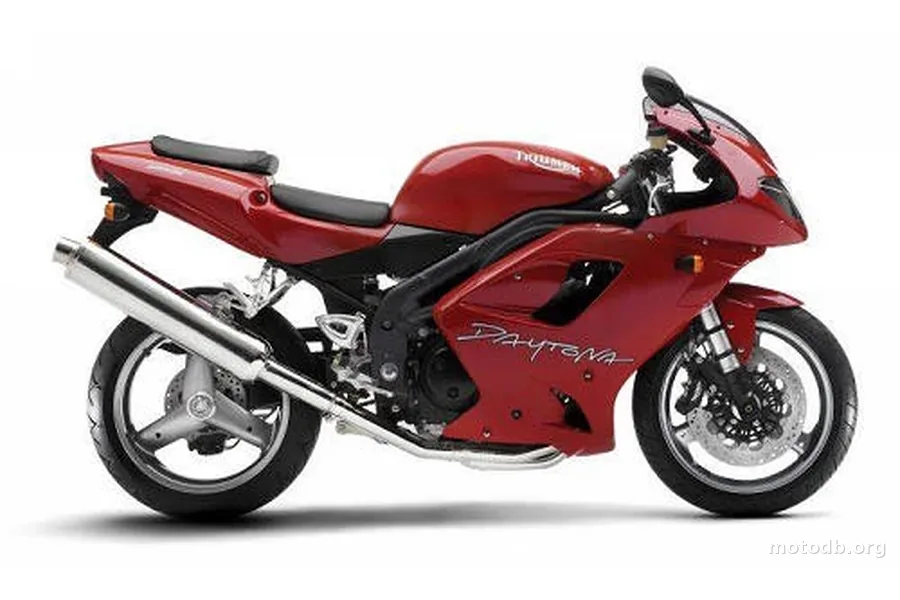
At the heart of the matter is, of course, this 955 cc triplex engine. With 130 horsepower at 9300 rpm, the figures may seem modest compared to a Honda CBR900RR of the time. But the magic happens elsewhere, in this torque curve that pulls strongly from the mid-range, offering a suppleness that four-cylinder engines are incapable of. We perhaps lose a bit of the raw character of the early versions, but we gain versatility and this characteristic long stroke, accompanied by a deep and enveloping sound that is unique to it. That's what makes a used Triumph Daytona 955i charming today, an engine that makes riding fun without requiring you to constantly live in the high RPMs.
The chassis is just as unique. Forget massive aluminum perimeter frames; here Triumph opted for a multi-tubular architecture as light as it is effective, coupled with a sublime single-sided swingarm. This gives a confident bike, with a short wheelbase and improved ground clearance from 1999. As a result, despite its 223 kg fully fueled, the Daytona 955i proves surprisingly agile and precise in corners. The braking, with its two 320 mm front discs, is up to its performance, offering good bite and feel. It's not the most radical sportbike, but it clearly communicates its intentions.
Today, finding a Triumph Daytona 955i from 2000 or a model from the following years, up to 2006, is a quest for character. It is aimed at the rider who is looking for a sportbike with a different soul, more touring than pure track. It doesn't crush its opponent on a circuit, but it charms on a mountain road with its available torque and overall balance. It's a motorcycle that has aged gracefully, and whose specialist forums are still full of enthusiasts sharing tips and workshop manuals to maintain it. Between the relentless Japanese sportbike and the European brute, the Daytona 955i forged its own path, and that's why we still love it.
Practical info
- La moto est accessible aux permis : A
Indicators & positioning
Similar bikes
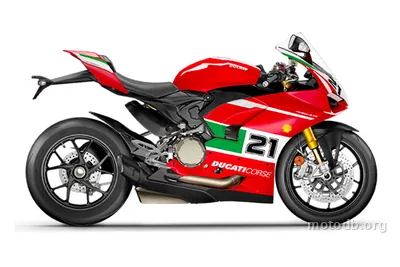
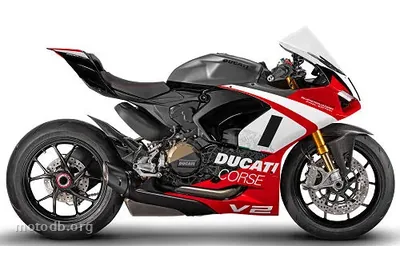
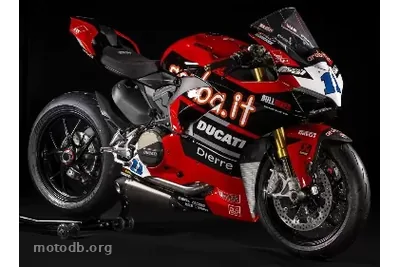
Panigale V2 Bayliss
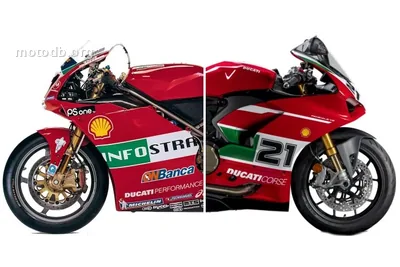
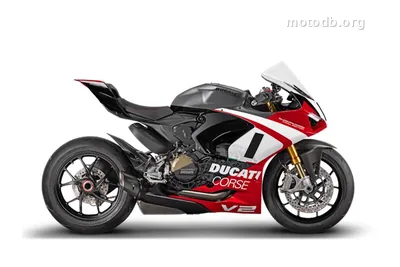
Panigale V2 Bayliss 1st Championship 20th Anniversary
Reviews & comments
No reviews yet. Be the first to share your opinion!