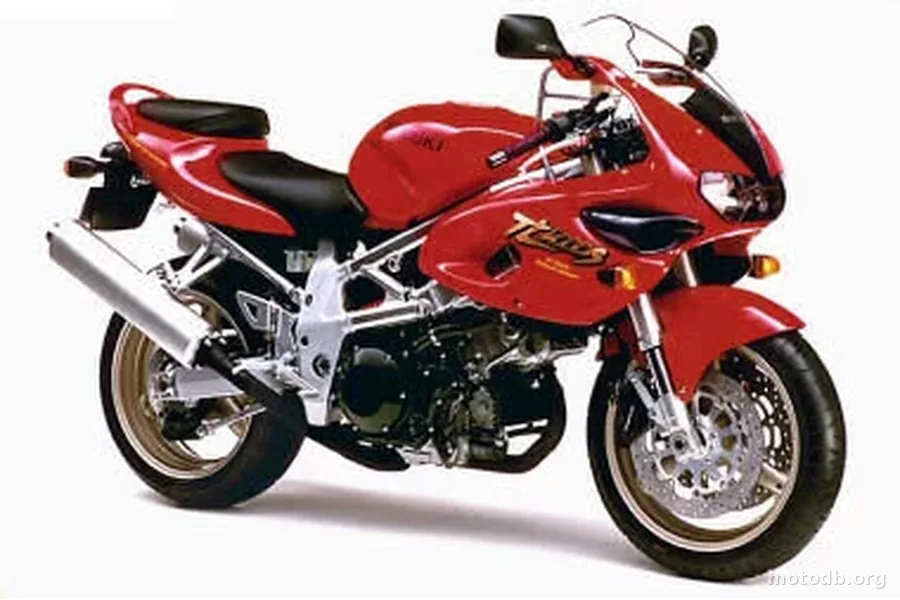
Key performance
Technical specifications
Engine
- Displacement
- 996 cc
- Power
- 120.0 ch @ 9200 tr/min (88.3 kW)
- Torque
- 98.1 Nm @ 7000 tr/min
- Engine type
- Bicylindre en V, 4 temps
- Cooling
- liquide
- Compression ratio
- 11.3:1
- Bore × stroke
- 98 x 66 mm
- Valves/cylinder
- 4
- Camshafts
- 2 ACT
- Fuel system
- Injection Ø 52 mm
Chassis
- Frame
- multitubulaire en alu
- Gearbox
- boîte à 6 rapports
- Final drive
- Chaîne
- Front suspension
- Fourche téléhydraulique Ø 46 mm, déb : 120 mm
- Rear suspension
- Mono-amortisseur, déb : 130 mm
Brakes
- Front brakes
- Freinage 2 disques Ø 310 mm, étrier 4 pistons
- Rear brakes
- Freinage 1 disque Ø 220 mm, étrier simple piston
- Front tyre
- 120/70-17
- Front tyre pressure
- 2.50 bar
- Rear tyre
- 180/55-17
- Rear tyre pressure
- 2.50 bar
Dimensions
- Seat height
- 800.00 mm
- Fuel capacity
- 17.00 L
- Dry weight
- 189.00 kg
- New price
- 9 499 €
Overview
We’ve all known that era when the world of Japanese sport twins was a battlefield. On one side, the Honda VTR 1000 Firestorm, robust and stable. On the other, the notorious Suzuki TL 1000 S, a wild thing with an explosive character and legendary handling quirks that long stained its reputation. Amidst this duel, Suzuki made a bold bet with the SV 650, an accessible and charismatic twin that won hearts. But in the shadows, a question burned: what if we did the same, but bigger? The answer is the Suzuki SVS 1000 of 2003, a machine that attempts to channel the fury of the old TL into a more civilized setting.
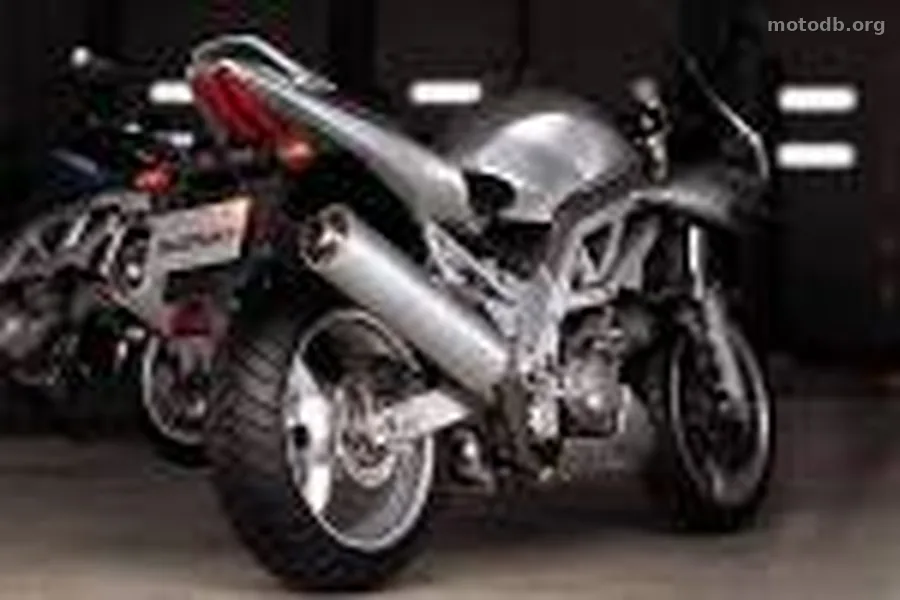
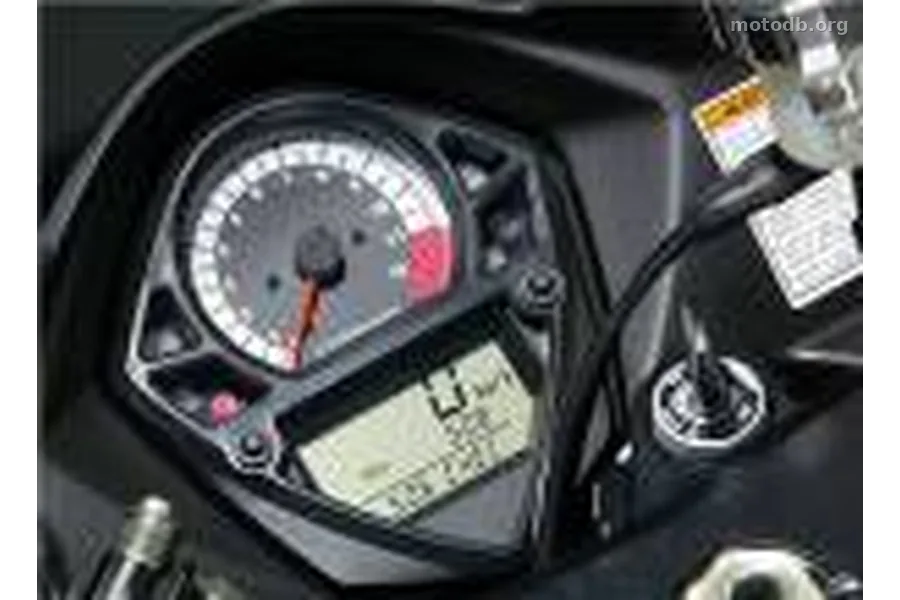
At first glance, the SVS 1000 adopts an angular design, far from the curves of its little sister. It stands proud, with a 80 cm seat height that may intimidate those of smaller stature. You mount it like a 90s sportbike, a strange feeling for a roadster. The dashboard is clean, but the absence of a fuel gauge remains an irritating curiosity. Then you start the engine. That sound, that deep and pulsed rumble, is a direct inheritance from the TL’s V2, a promise of temperament. And on the road, it keeps its word. The 120 horsepower and 98 Nm of torque are released with a brutal generosity, typical of a big twin. Acceleration is frank, meaty, less hysterical than that of the old TLS, but still just as enjoyable. It swallows the gears with a suppleness that makes it very accessible, even if you feel it prefers muscular bursts to stratospheric revs.
But where the shoe pinches is in its dynamic behavior. The 46 mm fork and the mono-shock are firm, very firm, tuned for smooth roads. As soon as the asphalt becomes winding, a detail is annoying: the steering damper opposes a slight resistance to engagement, a fleeting but recurring sensation that weighs down the initial inputs. You get used to it, of course, and it brings a certain stability at high speed, but it reminds you that you are not dealing with a pure sportbike. The braking, on the other hand, is a pleasant surprise. The two front discs of 310 mm bite with a ferocity worthy of a Kawasaki Z1000 of the time, offering an impressive stopping power that inspires confidence.
So, who is the SVS 1000 for? For the touring rider who seeks the sensations of a big twin without the excesses of a radical sportbike. It is easier to live with daily than a Honda VTR, less unpredictable than a TL-S, but it requires some concessions on comfort and agility in tight curves. Its new price was 9499 euros, a positioning clearly in the race against the competition. Today, the **price of a used Suzuki SVS 1000** varies greatly depending on its condition, often between 2500 and 4000 euros, which makes it an interesting option for a temperamental twin. As for **the fuel consumption of the Suzuki SVS 1000**, count between 6 and 7 liters per 100 km in mixed use, a reasonable figure for a machine of this caliber.
Ultimately, the big SV is not the show stealer we might have hoped for. It has traded a part of its madness for a form of maturity. It doesn't dazzle you in five minutes, but it seduces you with its mechanical frankness and its omnipresent torque. It is a solid and exciting road companion, which proves that the charm of a big Japanese V2 can also reside in its relative restraint.
Practical info
- La moto est accessible aux permis : A
Reviews & comments
No reviews yet. Be the first to share your opinion!