Key performance
Technical specifications
Engine
- Displacement
- 1064 cc
- Power
- 91.0 ch @ 7800 tr/min (66.9 kW)
- Torque
- 94.1 Nm @ 6000 tr/min
- Engine type
- Bicylindre en V transversal à 90°, 4 temps
- Cooling
- par air
- Compression ratio
- 9.8 : 1
- Bore × stroke
- 92 x 80 mm
- Valves/cylinder
- 2
- Fuel system
- Injection Ø 45 mm
Chassis
- Frame
- poutre et double berceau interrompu en acier
- Gearbox
- boîte à 6 rapports
- Final drive
- Cardan
- Front suspension
- Fourche téléhydraulique inversée Öhlins Ø 43 mm, déb : 120 mm
- Rear suspension
- Mono-amortisseur Öhlins, déb : 128 mm
Brakes
- Front brakes
- Freinage 2 disques Ø 320 mm, étrier 4 pistons
- Rear brakes
- Freinage 1 disque Ø 282 mm, étrier 2 pistons
- Front tyre
- 120/70-17
- Front tyre pressure
- 2.20 bar
- Rear tyre
- 180/55-17
- Rear tyre pressure
- 2.40 bar
Dimensions
- Seat height
- 800.00 mm
- Fuel capacity
- 20.70 L
- Weight
- 243.00 kg
- Dry weight
- 226.00 kg
- New price
- 12 990 €
Overview
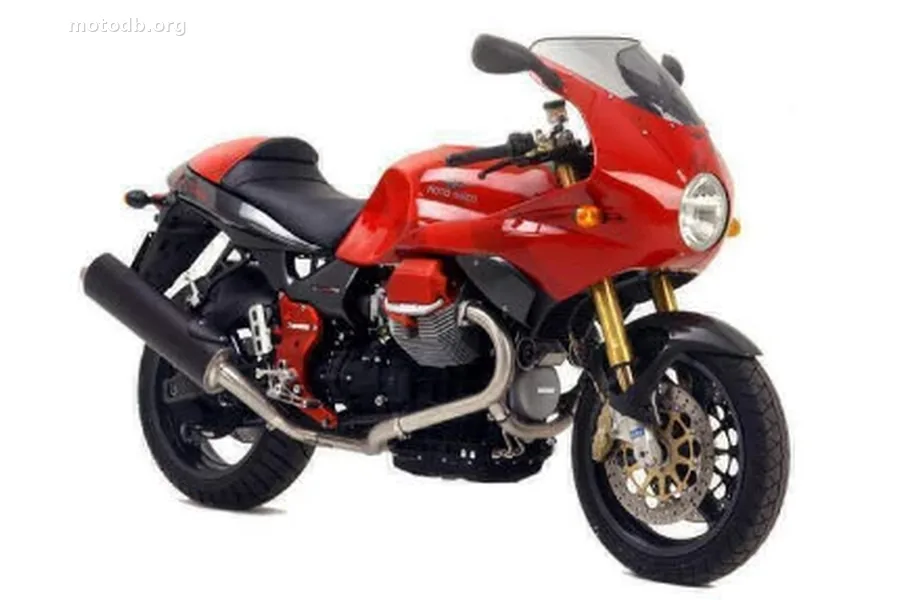
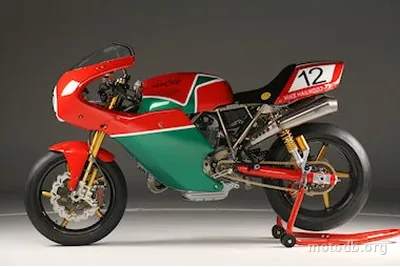
Imagine that someone hands you the keys to a machine whose very presence immobilizes passersby. The blood red and deep black of the V11 Le Mans Rosso e Nero Corsa strike before the engine even coughs its first explosion. This is not a sportbike in the way Toyota understands the term "sport" on its body stickers. It is a work signed Mandello del Lario, with all that implies in terms of raw character and assumed intransigence.
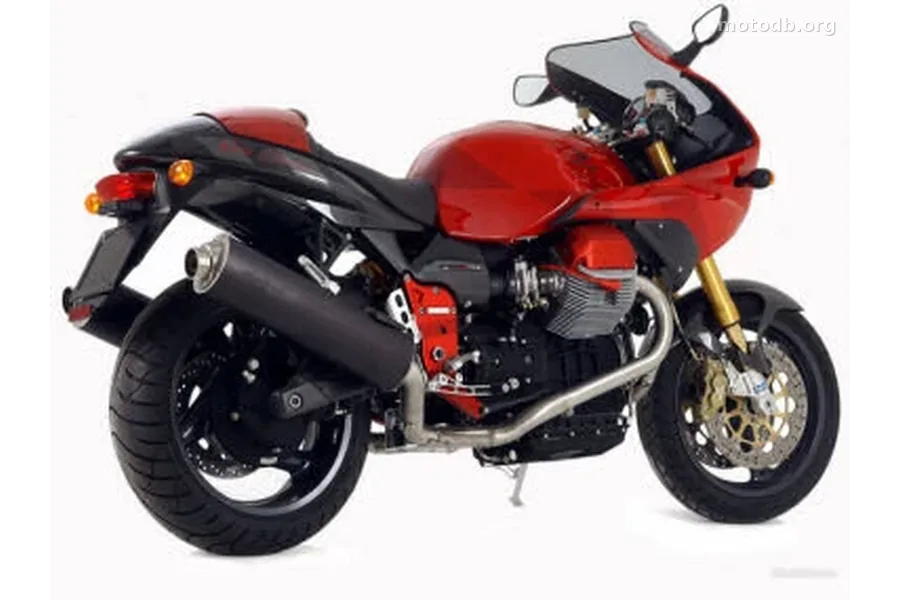
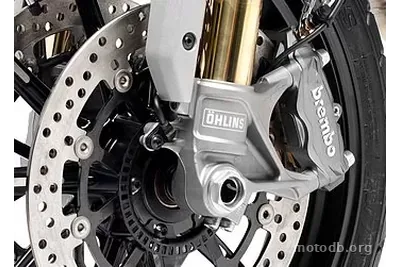
The 90-degree transverse V-twin protrudes from the flanks like a muscle too large for its shirt. Its 1064 cc breathes freely, the two cylinders clearly visible, almost insolent. On paper, 91 horsepower at 7800 rpm and 94 Nm of torque from 6000 rpm, for a machine that weighs 243 kilograms fully fueled. The 43 mm Öhlins inverted fork and the Öhlins mono-shock at the rear promise a certain dynamic seriousness, confirmed by the 320 mm Brembo double discs at the front. Faced with a Ducati 999 or a Honda CBR1100XX of the same era, the technical specifications don’t cause embarrassment, even if the battle is clearly not fought on the same terrain.
In the saddle, the 800 mm of height are accommodating for an average build, and the 20.7-liter fuel tank reassures for long journeys. But don't look for the lightness of a Japanese sportbike in the first few kilometers. The 6-speed gearbox requires patience and gentleness to find its bearings, the shaft drive adding its own signature to each change of engine speed. You quickly learn to tame it rather than to rush it. Below 6000 rpm, the V11 rolls with a smoothness that smells of coffee and Italian mountain roads, the characteristic vibrations of the twin rising into the hands and feet like a permanent dialogue between the machine and its rider.
Beyond that threshold, the character changes. The bike contracts, the horsepower is unleashed, and you understand why the name Le Mans appears on the fairing. The Öhlins fork, reassuring at first, shows its limits as soon as you firmly push on the brakes entering a corner. The chassis follows with commitment but demands anticipation. This is not a bike that forgives late decisions, and the inexperienced rider will quickly be overwhelmed by events. On the other hand, those who take the time to establish a true complicity with it will be rewarded with sensations that no machine from a Japanese assembly line offers.
At 12,990 euros in 2003, the V11 Le Mans Rosso e Nero Corsa was aimed at an informed public, sensitive to mechanical authenticity more than to raw, timed performance. This is not the Sunday track bike nor the bike for a new A license holder. It is the bike for the enthusiast who wants to ride something with a soul, who accepts compromises in exchange for emotions that figures do not capture. Twenty years after its release, this Guzzi retains its ability to provoke that rare feeling: you get on it to ride, and you get off it with the smile of someone who has just finished reading a good book.
Practical info
- La moto est accessible aux permis : A
Indicators & positioning
Similar bikes
Scrambler 1100 Sport Pro
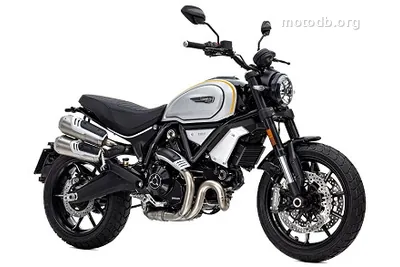
Scrambler 1100 Pro
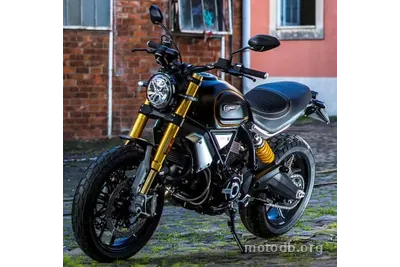
Scrambler 1100 Sport
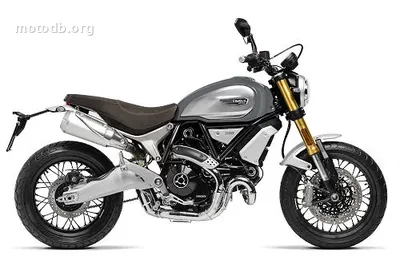
Scrambler 1100 Special
Reviews & comments
No reviews yet. Be the first to share your opinion!