Key performance
Technical specifications
Engine
- Displacement
- 296 cc
- Power
- 39.0 ch @ 11000 tr/min (28.7 kW)
- Torque
- 27.5 Nm @ 10000 tr/min
- Engine type
- Bicylindre en ligne, 4 temps
- Cooling
- liquide
- Compression ratio
- 10.6 : 1
- Bore × stroke
- 62 x 49 mm
- Valves/cylinder
- 4
- Camshafts
- 2 ACT
- Fuel system
- Injection Ø 32 mm
Chassis
- Frame
- tubulaire en acier
- Gearbox
- boîte à 6 rapports
- Final drive
- Chaîne
- Front suspension
- Fourche téléhydraulique Ø 37 mm, déb : 120 mm
- Rear suspension
- Mono-amortisseur, déb : 132 mm
Brakes
- Front brakes
- Freinage 1 disque en pétale Ø 290 mm, étrier 2 pistons
- Rear brakes
- Freinage 1 disque en pétale Ø 220 mm, étrier 2 pistons
- Front tyre
- 110/70-17
- Front tyre pressure
- 2.00 bar
- Rear tyre
- 140/70-17
- Rear tyre pressure
- 2.25 bar
Dimensions
- Seat height
- 785.00 mm
- Fuel capacity
- 17.00 L
- Weight
- 172.00 kg
- New price
- 4 999 €
Overview
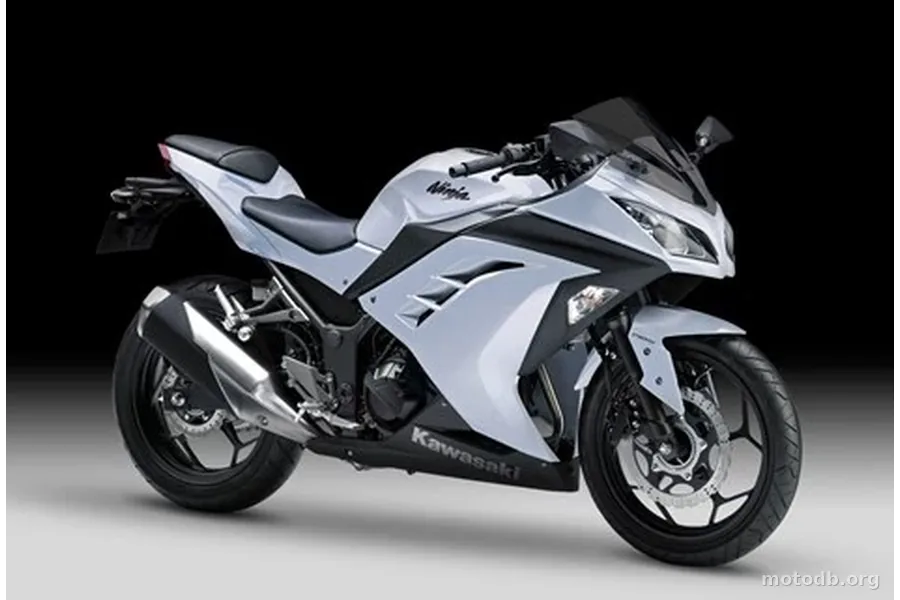
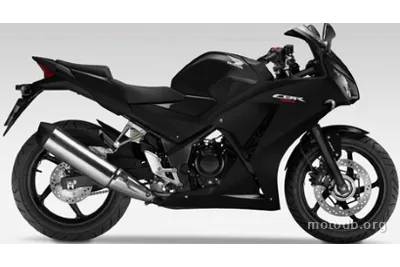
When Kawasaki decided to replace its Ninja 250 R, the Akashi-based manufacturer didn't settle for a cosmetic facelift. No redesigned mirrors or new color scheme to justify a model year update. No, the 2014 Ninja 300 R started from a virtually clean sheet. New engine block, new chassis, revised instrumentation, sharper lines. The message was clear: this small sportbike intended to shake up the entry-level hierarchy and take on the Honda CBR 300 R head-to-head.
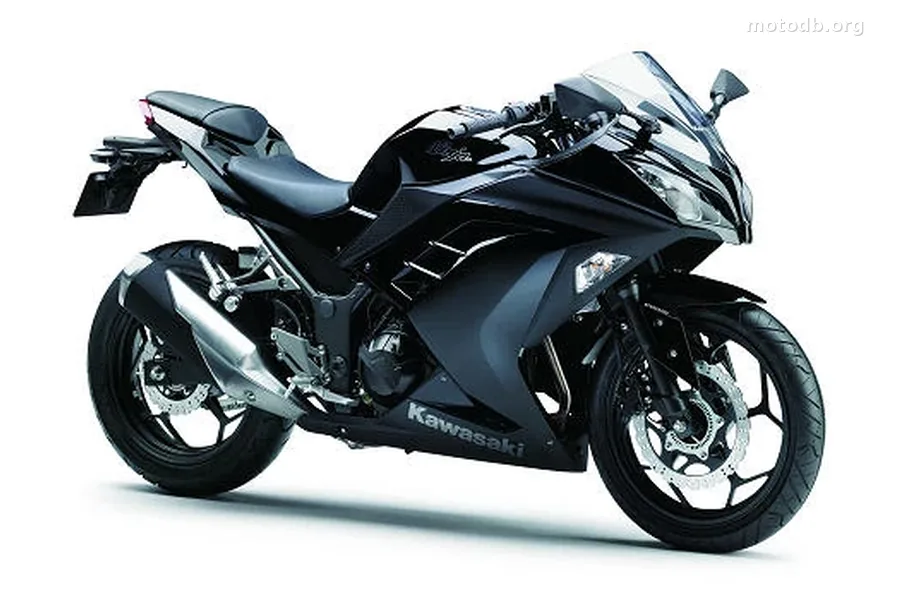
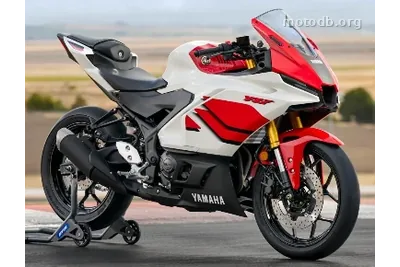
Style-wise, the Ninja 300 R unapologetically borrows from the top-tier sportbikes in Kawasaki's lineup. Its sharp lines recall the ZX-6R and ZX-10R, with fairing-integrated turn signals and a floating windscreen that give it a visual presence well above its displacement class. Parked in a lot, it could easily pass for a 600. That's Kawasaki's particular talent in this segment: offering a beginner rider or A2 license holder a machine that doesn't look like a toy. The tubular steel frame houses a rear end fitted with a 140/70-17 tire — serious rubber for a 296 cc motorcycle. The seat, set at 785 mm, remains accessible to most rider heights, and the 172 kg wet weight is quickly forgotten within the first few meters.
Beneath the fairing, the inline twin four-stroke retains the architecture of the former 250, but gains stroke to reach 296 cc (62 mm bore, 49 mm stroke). The increase translates to 39 horsepower at 11,000 rpm and, more importantly, 27.5 Nm of torque at 10,000 rpm. On paper, it's modest. In practice, it's enough to push the bike to 160 km/h tucked behind the windscreen and to deliver brisk acceleration in the city and on back roads alike. Dual-throttle-valve injection and a slipper clutch — technologies typically found on far more expensive sportbikes — provide a smoothness of operation that's genuinely appreciated in daily riding. The work on vibration reduction and thermal management, with fairing scoops designed to dissipate heat, shows that Kawasaki paid as much attention to comfort as to performance.
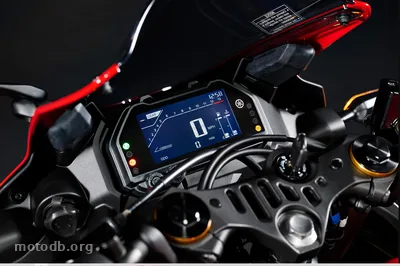
The instrumentation is a far cry from the basic gauge cluster of the previous generation. A central analog tachometer flanked by a digital display showing speed, fuel gauge, dual trip meters, and an eco-riding indicator — you'd think you were at the controls of a machine from a class above. Braking relies on a 290 mm petal disc up front and a 220 mm disc at the rear, clamped by twin-piston calipers. Adequate without being sporty, this setup can be supplemented with optional ABS — a compelling argument for newly licensed riders. The 37 mm fork and rear monoshock, with 120 and 132 mm of travel respectively, deliver predictable handling without pretending to rival adjustable suspensions.
At 4,999 euros, the Kawasaki Ninja 300 R positions itself as a credible gateway into the sportbike world. It targets A2 license holders, urban riders who want a bit of character without breaking the bank on insurance and fuel, and aspiring track riders dreaming of budget-friendly track days. Against Honda's CBR 300 R, it plays the temperament and style card. Against the 400 cc machines starting to emerge, it counters with a competitive price tag and a well-spaced six-speed gearbox. Its main drawback remains its positioning in the French market, where mid-range displacements still struggle to convince riders accustomed to 600 or even 1000 cc machines. Yet, with rising running costs and tightening regulations, this compact format has some very real arguments in its favor.
Standard equipment
- Assistance au freinage : ABS en option
Practical info
- Véhicule accessible au permis A2 ou bridable à 47.5ch / 35 Kw
- La moto est accessible aux permis : A, A2
Reviews & comments
No reviews yet. Be the first to share your opinion!