Key performance
Technical specifications
Engine
- Displacement
- 296 cc
- Power
- 39.0 ch @ 11000 tr/min (28.7 kW)
- Torque
- 27.5 Nm @ 10000 tr/min
- Engine type
- Bicylindre en ligne, 4 temps
- Cooling
- liquide
- Compression ratio
- 10.6 : 1
- Bore × stroke
- 62 x 49 mm
- Valves/cylinder
- 4
- Camshafts
- 2 ACT
- Fuel system
- Injection Ø 32 mm
Chassis
- Frame
- tubulaire en acier
- Gearbox
- boîte à 6 rapports
- Final drive
- Chaîne
- Front suspension
- Fourche téléhydraulique Ø 37 mm, déb : 120 mm
- Rear suspension
- Mono-amortisseur, déb : 132 mm
Brakes
- Front brakes
- Freinage 1 disque en pétale Ø 290 mm, étrier 2 pistons
- Rear brakes
- Freinage 1 disque en pétale Ø 220 mm, étrier 2 pistons
- Front tyre
- 110/70-17
- Front tyre pressure
- 2.00 bar
- Rear tyre
- 140/70-17
- Rear tyre pressure
- 2.25 bar
Dimensions
- Seat height
- 785.00 mm
- Fuel capacity
- 17.00 L
- Weight
- 172.00 kg
- New price
- 4 999 €
Overview
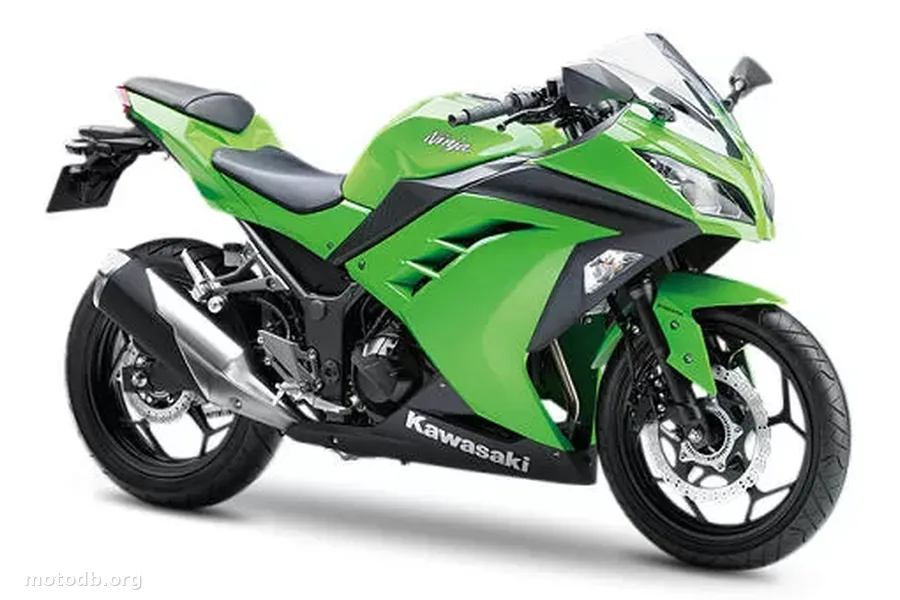
When Kawasaki decides to replace a motorcycle, the Akashi brand doesn't do things by halves. The Ninja 250 R is out, making way for a 300 that goes far beyond a simple cosmetic facelift. New engine block, redesigned chassis, modernized instrumentation, thoroughly overhauled styling. The 2013 Ninja 300 R is a brand-new machine, and it makes that clear from the very first glance.
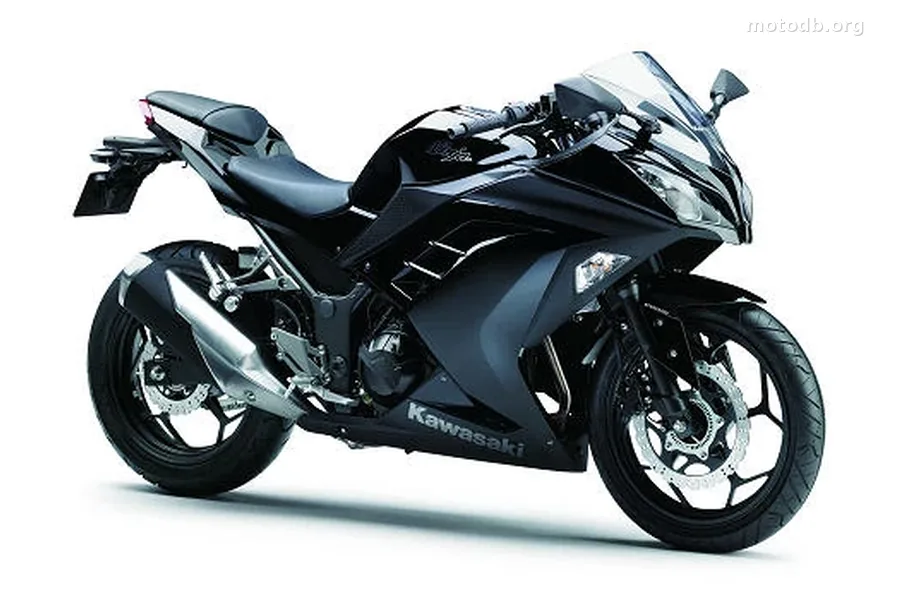
In terms of styling, the small Kawasaki borrows unashamedly from its bigger siblings' catalog. You'll spot the sharp-eyed look inherited from the ZX-6R, a floating windscreen reminiscent of the ZX-10R, and fairing lines borrowed from the ZZR 1400. The result is stunning. Parked in a lot, this Ninja gives the impression of a much larger displacement than what actually sits beneath the bodywork. The aluminum footpegs and side-integrated turn signals complete the look of a fully-fledged sportbike. For a motorcycle priced at 4,999 euros, the level of presentation commands respect.
Beneath the fairing, the inline twin four-stroke engine grows from 250 to 296 cc, not through a rebore but by lengthening the piston stroke (62 x 49 mm). A technical choice that directly benefits torque, now rated at 27.5 Nm at 10,000 rpm. Power climbs to 39 horsepower at 11,000 rpm, enough to leave the Honda CBR 250 R in the rearview mirror on paper. The dual-throttle-valve fuel injection and slipper clutch are refinements typically found on higher-class sportbikes. Kawasaki also addressed vibrations and thermal management, with optimized fairing scoops to evacuate engine heat. On paper, the claimed top speed of 160 km/h hints at thrilling sensations, especially for A2 license holders who will find a perfectly suited mount here.
The instrumentation ditches the dull needle gauge in favor of a far more modern hybrid cluster. A central analog tachometer sits alongside a digital display combining speed, fuel gauge, clock, and dual trip meter. An eco-riding indicator rounds out the package, quite relevant given the 17-liter tank that promises comfortable range. The tubular steel frame is entirely new, the 37 mm hydraulic telescopic fork offers 120 mm of travel up front while the rear monoshock works through 132 mm of travel. The rear end now wears a 140/70-17 tire, ensuring greater stability. And the pleasant surprise: ABS is available as an option, still a rarity in this segment at the time. At 172 kg wet and with a seat height of 785 mm, the Ninja 300 R aims to be approachable and reassuring for smaller riders.
This Kawasaki is clearly aimed at new license holders and urban riders who want a versatile sportbike without breaking the bank on insurance and fuel. Against Honda's CBR 250 R or Yamaha's upcoming YZF-R3, it plays the equipment and character card. The small-displacement sportbike segment gains credibility with machines this refined, and the Ninja 300 R proves that serious technical content can be delivered under the 5,000-euro mark. Whether the French market, traditionally drawn to larger displacements, will give it the reception it deserves remains to be seen.
Standard equipment
- Assistance au freinage : ABS en option
Practical info
- Véhicule accessible au permis A2 ou bridable à 47.5ch / 35 Kw
- La moto est accessible aux permis : A, A2
Reviews & comments
No reviews yet. Be the first to share your opinion!