Key performance
Technical specifications
- Fuel system
- Injection. DFI with 43mm Keihin throttle body and dual injectors → Injection. 43 mm x 1 (Keihin) with dual injection
- Lubrication
- — → Forced lubrication, semi and #8209;dry sump
- Starter
- — → Kick
- Frame
- Aluminum perimeter → Perimeter, aluminium
- Front suspension
- 48mm inverted Showa SFF telescopic fork with 40-way spring preload adjustability and 22 position compression and 20 position rebound damping adjustability/ 12.4 in. → 48 mm inverted telescopic Separate Function front Fork (SFF) Type 2. Compression damping: 22-way. Rebound damping: 20-way. Spring preload: 40-way
- Rear suspension
- Uni-Trak linkage system and Showa shock with 9 position low-speed and stepless high-speed compression damping, 22 position rebound damping and fully adjustable spring preload / 12.2 in. → Uni-Trak. Compression damping: 19-way (low-speed), 4-turns (high-speed). Rebound damping: 22-way. Spring preload: Fully adjustable
- Front wheel travel
- — → 310 mm (12.2 inches)
- Rear wheel travel
- — → 310 mm (12.2 inches)
- Seat height
- 945.00 mm → 940.00 mm
- Width
- — → 820.00 mm
- Height
- — → 1265.00 mm
- Weight
- 106.00 kg → 104.50 kg
- New price
- 7 999 € → 8 119 €
Engine
- Displacement
- 249 cc
- Power
- 43.0 ch (31.6 kW)
- Engine type
- Single cylinder, four-stroke
- Cooling
- Liquid
- Compression ratio
- 13.8:1
- Bore × stroke
- 77.0 x 53.6 mm (3.0 x 2.1 inches)
- Valves/cylinder
- 4
- Camshafts
- 2 ACT
- Fuel system
- Injection. 43 mm x 1 (Keihin) with dual injection
- Valve timing
- Double Overhead Cams/Twin Cam (DOHC)
- Lubrication
- Forced lubrication, semi and #8209;dry sump
- Ignition
- Digital DC-CDI
- Starter
- Kick
Chassis
- Frame
- Perimeter, aluminium
- Gearbox
- 5-speed
- Final drive
- Chain (final drive)
- Front suspension
- 48 mm inverted telescopic Separate Function front Fork (SFF) Type 2. Compression damping: 22-way. Rebound damping: 20-way. Spring preload: 40-way
- Rear suspension
- Uni-Trak. Compression damping: 19-way (low-speed), 4-turns (high-speed). Rebound damping: 22-way. Spring preload: Fully adjustable
- Front wheel travel
- 310 mm (12.2 inches)
- Rear wheel travel
- 310 mm (12.2 inches)
Brakes
- Front brakes
- Single disc. Petal disc with 2-piston caliper
- Rear brakes
- Single disc. Petal disc with single-piston caliper
- Front tyre
- 80/100-21
- Rear tyre
- 100/90-19
Dimensions
- Seat height
- 940.00 mm
- Wheelbase
- 1476.00 mm
- Ground clearance
- 330.00 mm
- Length
- 2169.00 mm
- Width
- 820.00 mm
- Height
- 1265.00 mm
- Fuel capacity
- 6.09 L
- Weight
- 104.50 kg
- New price
- 8 119 €
Overview
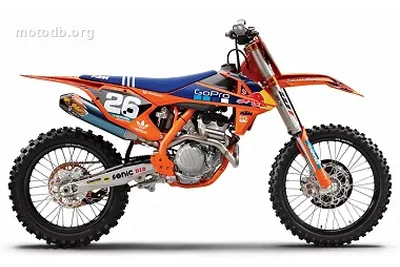
Do you remember the feeling of opening the fuel tap on a rutted track? In 2017, Kawasaki reworked precisely this alchemy with its KX 250F. It wasn't a shattering revolution, but a targeted evolution, a machine honed to a razor's edge for those hunting the hundredth of a second in motocross. With an advertised weight of 104.5 kilograms fully fueled and 43 horsepower under the 6-liter tank, the promise was clear: more agility, less fatigue.
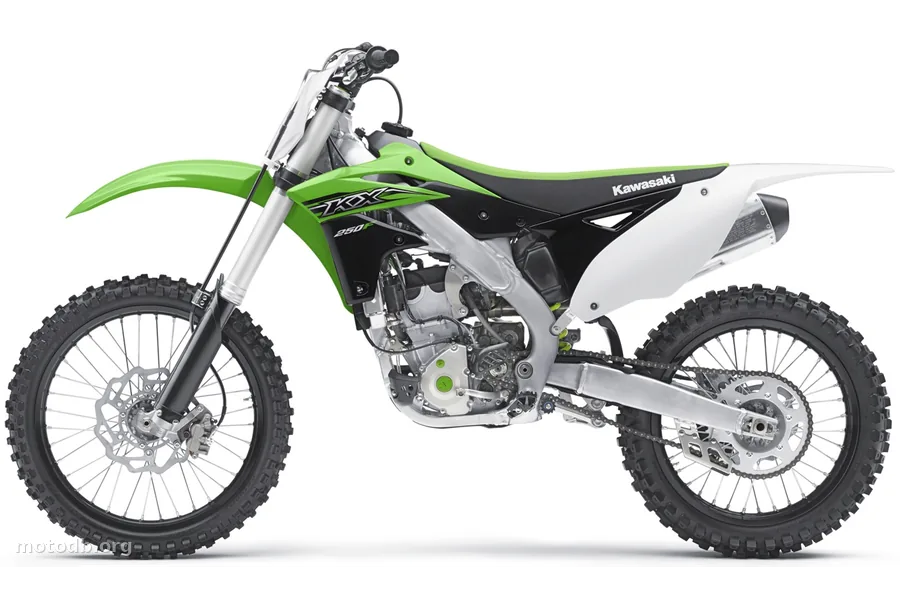
The heart of the matter is this 249 cm³ four-stroke single-cylinder engine. Kawasaki played the role of surgeons, offsetting the cylinder, lightening the piston, and adopting a more vertical intake coupled with a double injector. The result? A more direct response, an acceleration of the mixture that translates into a quicker punch as soon as you twist the throttle. They even drew from the high-end catalog, with cylinder surface treatment and specific connecting rod bearings, recipes straight from the Ninja ZX-10R to gain endurance and reduce friction. Every gram counted: the engine block loses 800 grams, a philosophy that permeates the entire chassis.
Because that's where the magic truly happens. The perimeter aluminum frame has been refined, literally, gaining 6 mm in thickness and nearly a kilo in weight reduction. Combined with a SFF Type 2 fork and a Uni-Trak rear suspension with reworked settings for more progressiveness, the vehicle becomes disconcertingly clear. It swallows bumps with less nervousness and communicates with metronome-like precision. The redesigned, thinner swingarm contributes to this overall impression of coherence and agility. For around €8100 at the time, you bought a true production weapon, ready for the starting gate.
It’s a motorcycle that makes no compromises. It targets the serious motocross rider, the one who lines up training sessions and aims for the top 10 in their regional series, or even higher. It doesn't have the primary brutality of a two-stroke, but it offers linear and exploitable power, a real asset on technical circuits. Compared to its European rivals, often more refined from the factory, the Kawa relies on its legendary reliability and adjustability, with its three integrated engine maps. The drawback? Perhaps this constant need to keep it in the revs to stay in the game, a characteristic inherent to the category.
Ultimately, the 2017 KX 250F perfectly fulfilled its role: consolidating the green dynasty in MX2. It didn't crush the competition with a splashy move, but with a sum of relevant details and remarkable homogeneity. It was proof that to beat specialists, sometimes you just needed a machine that would never let you down, from the first lap to the checkered flag. A lesson in Japanese efficiency.
Indicators & positioning
Similar bikes
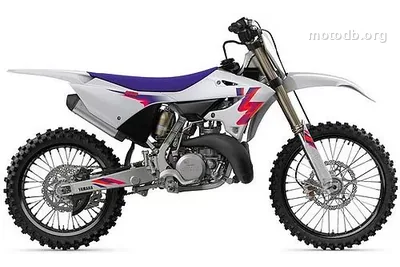
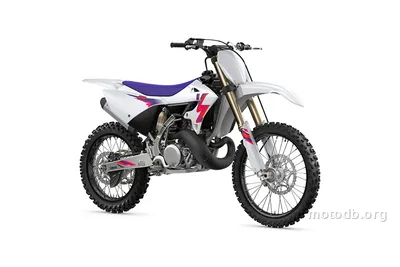
YZ 250 50eme anniversaire
Reviews & comments
No reviews yet. Be the first to share your opinion!