Key performance
Technical specifications
- Power
- — → 43.0 ch (31.6 kW)
- Front suspension
- 48mm inverted Showa SFF telescopic fork with 40-way spring preload adjustability and 22 position compression and 20 position rebound damping adjustability/ 12.4 in. → 48mm inverted Showa SFF telescopic fork with 40-way spring preload adjustability and 22 position compression and 20 position rebound damping adjustability
- Rear suspension
- Uni-Trak linkage system and Showa shock with 9 position low-speed and stepless high-speed compression damping, 22 position rebound damping and fully adjustable spring preload / 12.2 in. → Uni-Trak linkage system and Showa shock with 9 position low-speed and stepless high-speed compression damping, 22 position rebound damping and fully adjustable spring preload
- Front wheel travel
- — → 315 mm (12.4 inches)
- Rear wheel travel
- — → 310 mm (12.2 inches)
- Width
- 820.00 mm → —
- Height
- 1270.00 mm → —
Engine
- Displacement
- 249 cc
- Power
- 43.0 ch (31.6 kW)
- Engine type
- Single cylinder, four-stroke
- Cooling
- Liquid
- Compression ratio
- 13.8:1
- Bore × stroke
- 77.0 x 53.6 mm (3.0 x 2.1 inches)
- Valves/cylinder
- 4
- Camshafts
- 2 ACT
- Fuel system
- Injection. DFI with 43mm Keihin throttle body and dual injectors
- Valve timing
- Double Overhead Cams/Twin Cam (DOHC)
- Ignition
- Digital DC-CDI
Chassis
- Frame
- Aluminum perimeter
- Gearbox
- 5-speed
- Final drive
- Chain (final drive)
- Front suspension
- 48mm inverted Showa SFF telescopic fork with 40-way spring preload adjustability and 22 position compression and 20 position rebound damping adjustability
- Rear suspension
- Uni-Trak linkage system and Showa shock with 9 position low-speed and stepless high-speed compression damping, 22 position rebound damping and fully adjustable spring preload
- Front wheel travel
- 315 mm (12.4 inches)
- Rear wheel travel
- 310 mm (12.2 inches)
Brakes
- Front brakes
- Single disc. Petal disc with 2-piston caliper
- Rear brakes
- Single disc. Petal disc with single-piston caliper
- Front tyre
- 80/100-21
- Rear tyre
- 100/90-19
Dimensions
- Seat height
- 945.00 mm
- Wheelbase
- 1476.00 mm
- Ground clearance
- 330.00 mm
- Length
- 2169.00 mm
- Fuel capacity
- 6.09 L
- Weight
- 106.00 kg
- New price
- 7 999 €
Overview
Can a motocross bike be too sophisticated? At a time when some prefer raw simplicity, Kawasaki launches a KX 250F in 2015 that resembles a catalog of racing technologies. With its 43 horsepower drawn from a 249 cc single-cylinder engine, it is not the most powerful in the category, but it plays the card of finesse and adaptability. Its perimeter aluminum frame and announced weight of 106 kg fully fueled position it in the middle of the pack, but it is in the details that the green brand demonstrates its expertise.
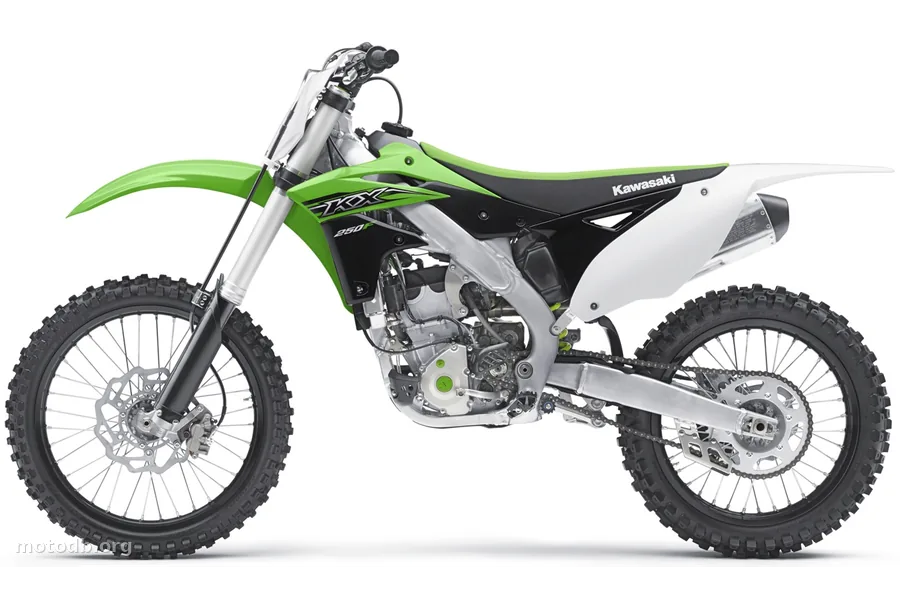
The engine benefits from a dual injector, a first for a production motocross bike at the time. The objective is clear: to improve response at low and mid-range, where a rider seeks traction and control. The bridge-box piston and the programmable electronic control unit, with its three plug and play maps, make this machine an adaptable tool. Compared to a Yamaha YZ250F of the time, perhaps more instinctive, the Kawasaki is intended to be an intelligent motorcycle, almost configurable. Launch control for standing starts is another argument for serious riders.
The chassis is a festival of adjustments. The Showa SFF air fork with separate functions, with its preload, compression, and rebound settings on each side, promises improved front grip. The Uni-Trak rear suspension follows the same philosophy, with endless tuning possibilities. The new petal disc brakes, notably the oversized 270mm front brake, aim for maximum power and progressiveness. One feels that Kawasaki wanted to give the rider all the keys to fine-tune his machine, a bit like a semi-factory kit at €7999.
This 2015 KX 250F is not for beginners. It is the weapon of the experienced motocrosser who understands mechanics and seeks to optimize every parameter for his style and terrain. The seat height of 945 mm and the ergonomic adjustments of the handlebars and footrests confirm this highly customizable vocation. On the other hand, its only 6-liter tank and its pure competition orientation make it unsuitable for recreational use.
Kawasaki is betting on technology to stand out in the 250 4-stroke war. Is this a good calculation? For the technical rider who likes to tweak his settings, this bike is a formidable work platform. For those who just want to get on and go, it may seem too complex. Its track record in championships, with titles in 2011 and 2012, however, proves its potential. This KX 250F is not a simple bike, but it is a deeply effective machine when you know how to communicate with it.
Indicators & positioning
Similar bikes
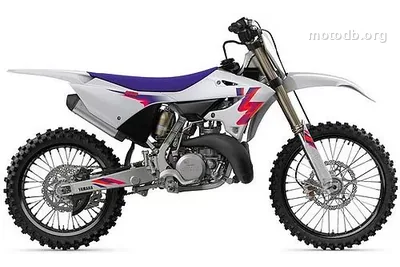
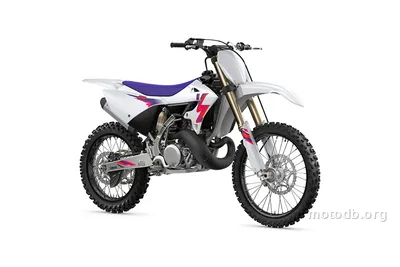
YZ 250 50eme anniversaire

Reviews & comments
No reviews yet. Be the first to share your opinion!