Key performance
Technical specifications
Engine
- Displacement
- 1834 cc
- Power
- 126.0 ch (92.7 kW)
- Torque
- 178.0 Nm @ 3800 tr/min
- Engine type
- Bicylindre en V à 60°, 4 temps
- Cooling
- liquide
- Compression ratio
- 11.4 : 1
- Bore × stroke
- 110 x 96.5 mm
- Valves/cylinder
- 4
- Camshafts
- 1 ACT
- Fuel system
- injection Ø 52 mm
Chassis
- Frame
- structure en aluminium moulé
- Gearbox
- boîte à 6 rapports
- Final drive
- Courroie
- Front suspension
- Fourche téléhydraulique inversée Ø 43 mm, déb : 130 mm
- Rear suspension
- Mono-amortisseur, déb : 114 mm
Brakes
- Front brakes
- Freinage 2 disques Brembo Ø 320 mm, fixation radiale, étrier 4 pistons
- Rear brakes
- Freinage 1 disque Ø 298 mm, étrier 2 pistons
- Front tyre
- 130/60-19
- Front tyre pressure
- 2.48 bar
- Rear tyre
- 180/60-16
- Rear tyre pressure
- 2.83 bar
Dimensions
- Seat height
- 672.00 mm
- Fuel capacity
- 22.70 L
- Weight
- 388.00 kg
- Dry weight
- 372.00 kg
- New price
- 32 890 €
Overview
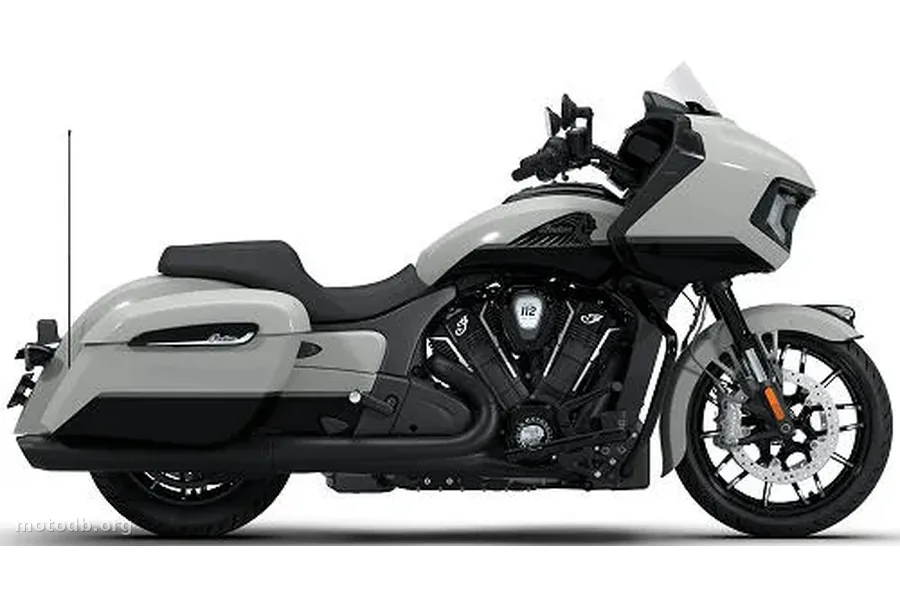
When Indian sends its Challengers racing in King of the Baggers, it's not just for show. These fairing-equipped bagger races on closed circuits serve a concrete purpose: they act as a laboratory. And the fruits of that work are measurable today down to the last millimeter. The PowerPlus V-twin gains two additional millimeters of bore, grows from 1769 to 1834cc, and emerges with 126 horsepower and 178 Nm of torque available from 3,800 rpm. This is no cosmetic revision; it's a deliberate, calculated, useful evolution on a machine tipping the scales at 388 kilograms fully loaded.
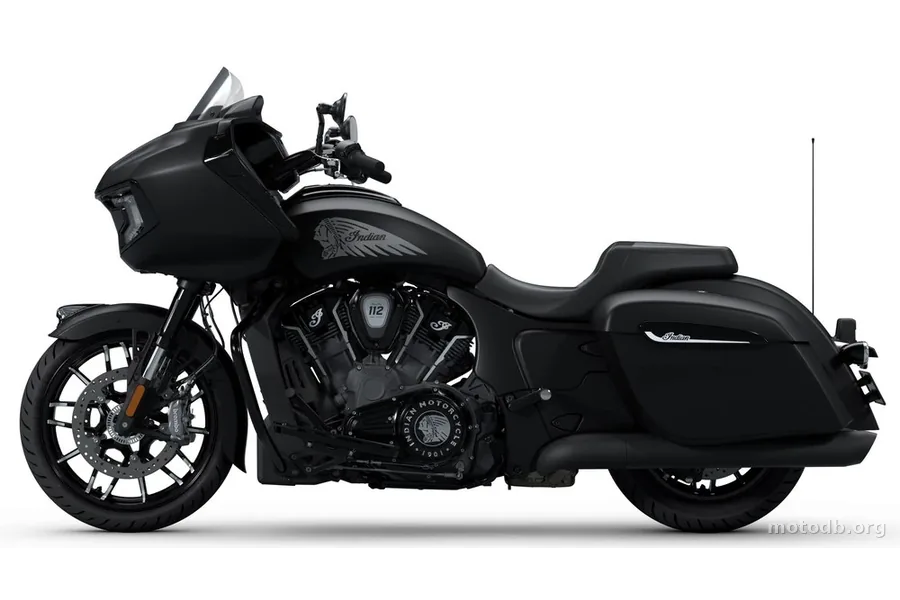
Because that weight deserves addressing. The Challenger doesn't cheat the scale, and no direct competitor can genuinely claim to be slimmer in this segment. Against the Harley-Davidson Road Glide, the Indian concedes nothing on mass, but it changes the rules of the game by cooling its twin with liquid rather than air. Four valves per cylinder, one overhead camshaft per cylinder, a cast aluminum frame that decouples the steering head from the handlebars: steering effort is mechanically reduced, exactly as Harley does with its Road Glide compared to the Electra and Street Glide. This engineering choice is no small matter on such a hefty machine, and you feel it from the very first low-speed maneuvers. The clutch, reworked in recent years, now requires less effort — something long-haul touring riders will appreciate over 800 kilometers.
The chassis makes no pretense of being sporty: it genuinely is. The 43mm inverted fork offers 130mm of travel, and the front calipers are Brembo units — radially mounted, four-piston, clamping 320mm discs. To put that in perspective, it's the same benchmark found on certain high-end Italian sportbikes. At the rear, a 298mm disc with a two-piston caliper handles the stopping duties. On a grand touring bagger, that level of braking inspires real confidence, especially when you consider the claimed top speed of 180 km/h and the inertia those 388 kilograms carry at highway speeds. The 130/60-19 front and 180/60-16 rear tires complete a geometry oriented toward high-speed stability rather than urban agility.
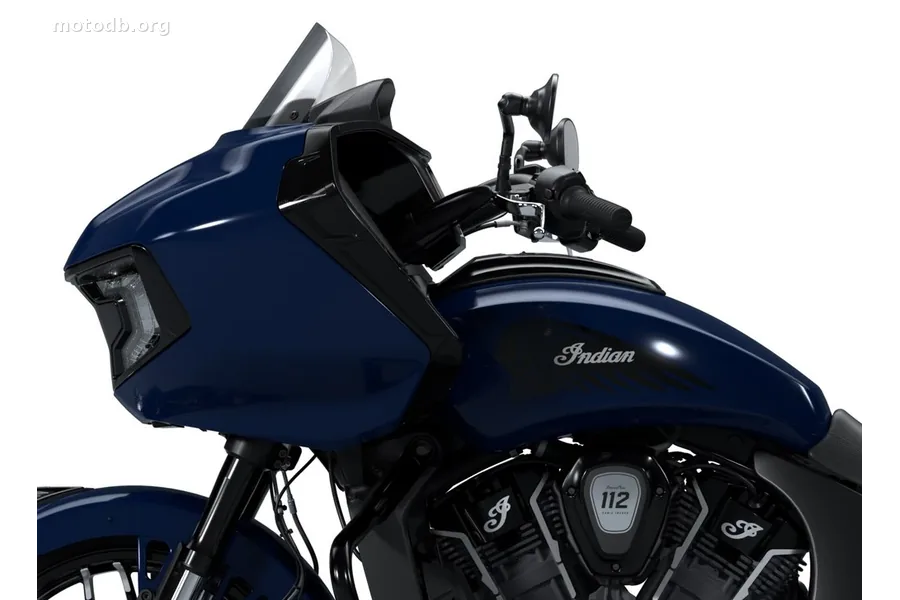
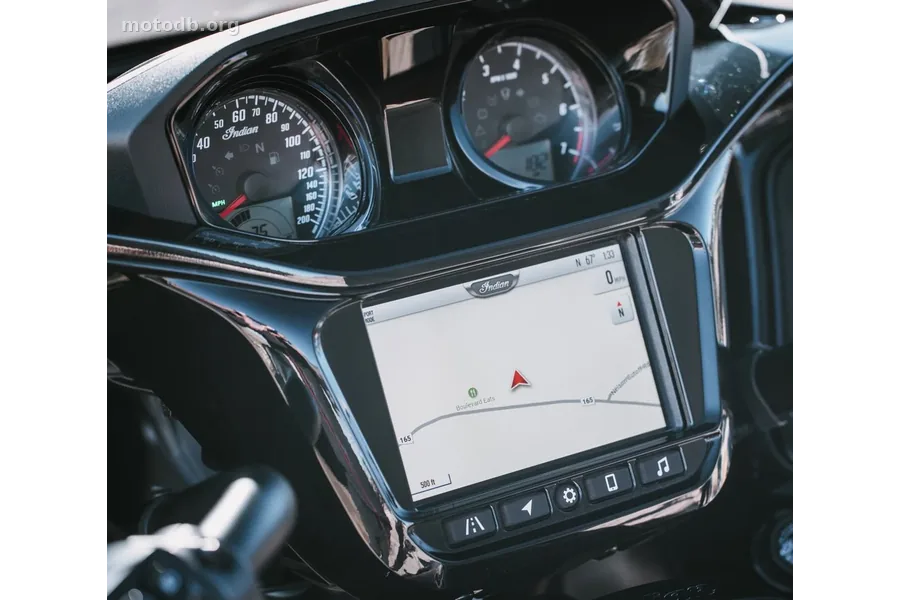
On the electronics front, Indian has gone all out. Three riding modes, traction control, IMU inertial measurement unit, cornering ABS, cruise control, tire pressure monitoring, and keyless ignition. The seven-inch Ride Command touchscreen integrates GPS, radio, Apple CarPlay, and Bluetooth connectivity. For 2025, radar technology makes its entrance: blind-spot monitoring, rear approaching vehicle alert, and anticipatory emergency brake lighting. These features, long reserved for premium sedans, are beginning to find their place on large tourers, and their usefulness on high-speed roads is hard to dispute. The 22.7-liter fuel tank and total 68-liter saddlebag capacity confirm the machine's long-distance calling. The electrically adjustable windshield and adjustable ventilation ports complete a picture aimed squarely at absolute comfort.
At €32,890, the Challenger Limited is not aimed at riders still undecided between a roadster and an adventure bike. It targets the experienced tourer — someone who crosses Europe or the United States in 600-kilometer stretches, who is looking for a serious alternative to the usual duopoly, and who refuses to sacrifice power on the altar of style. The low 672mm seat height eases the initial handling challenge despite the imposing build. The Dark Horse variant shares the same mechanical foundation, swapping chrome for blacked-out finishes, for those who prefer their bagger to stay under the radar until the next gear change. In either case, the proposition is coherent, the power is there, and the arguments against Milwaukee are solid.
Standard equipment
- Assistance au freinage : ABS en curvas
- Nombre de mode de conduite : 3
- Volume de rangement : 68 litres
- Taille de l'écran TFT couleur : 17,78 cm / 7 pouces
- Indicateur de vitesse engagée
- Régulateur de vitesse
- Freinage combiné
- Radio
- Bluetooth
- GPS
- Prise USB
- Aide au démarrage en côte (Hill Hold Control)
- Démarrage sans clé
- Contrôle de traction
- Poignées chauffantes
- Pare brise réglable électriquement
- Valises
- Crash Bars / Top Blocks
- Système radar
- Surveillance de la pression des pneus
Practical info
- La moto est accessible aux permis : A
Indicators & positioning
Similar bikes
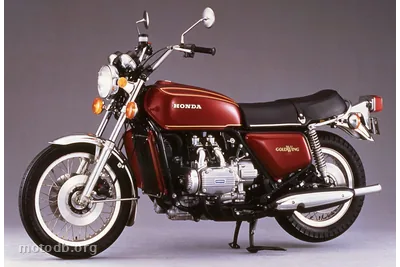
GL 1800 GOLDWING DCT 50ème anniversaire
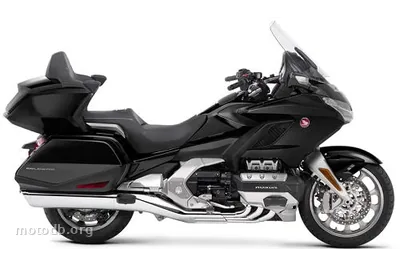
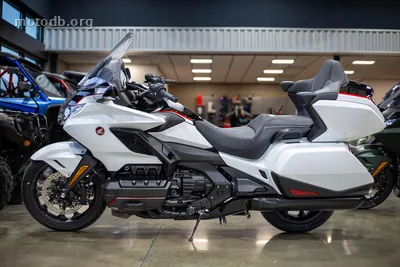
GL 1800 GOLDWING Tour DCT/Airbag
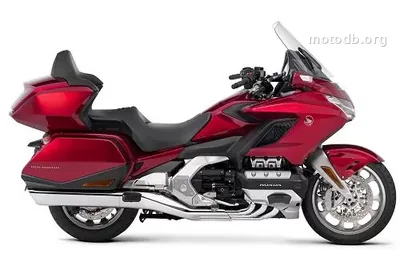
GL 1800 Gold Wing Tour
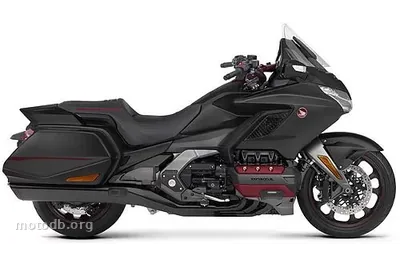
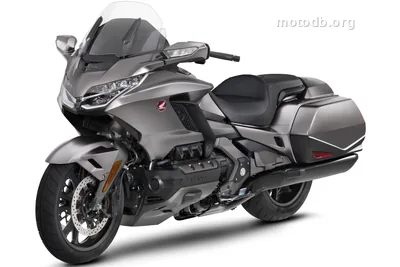
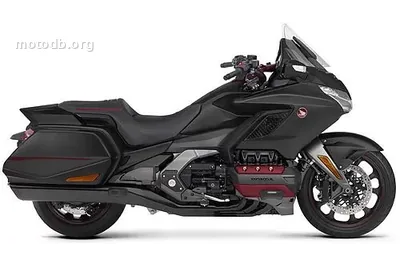
GL 1800 GOLDWING bagger
Reviews & comments
No reviews yet. Be the first to share your opinion!