Key performance
Technical specifications
Engine
- Displacement
- 1833 cc
- Power
- 126.0 ch @ 5500 tr/min (92.7 kW)
- Torque
- 169.7 Nm @ 4500 tr/min
- Cooling
- liquide
- Compression ratio
- 10.5 : 1
- Bore × stroke
- 73 x 73 mm
- Valves/cylinder
- 4
- Camshafts
- 1 ACT
- Fuel system
- Injection Ø 50 mm
Chassis
- Frame
- Double poutre alu, type Diamant
- Gearbox
- boîte à 6 rapports
- Final drive
- Cardan
- Front suspension
- Fourche quadrilatère double bras longitudinaux
- Rear suspension
- Mono-amortisseur
Brakes
- Front brakes
- Freinage 2 disques Ø 320 mm, fixation radiale, étrier 6 pistons
- Rear brakes
- Freinage 1 disque Ø 316 mm, étrier 3 pistons
- Front tyre
- 130/70-18
- Front tyre pressure
- 2.50 bar
- Rear tyre
- 200/55-16
- Rear tyre pressure
- 2.80 bar
Dimensions
- Seat height
- 745.00 mm
- Fuel capacity
- 21.10 L
- Weight
- 365.00 kg
- New price
- 25 999 €
Overview
How many riders grew up with the image of the golden ocean liner cruising down national roads, rear trunk loaded like a family station wagon? That era is fading. Honda has cut the cord with its pachydermic past by offering, alongside the Tour version, a bagger variant that proudly claims the bare Goldwing name. No more approaching travel as a transcontinental expedition. Here, the GL 1800 banks on a tightened silhouette, two side panniers in place of the top case, and an attitude that's resolutely more road-oriented than homebound.
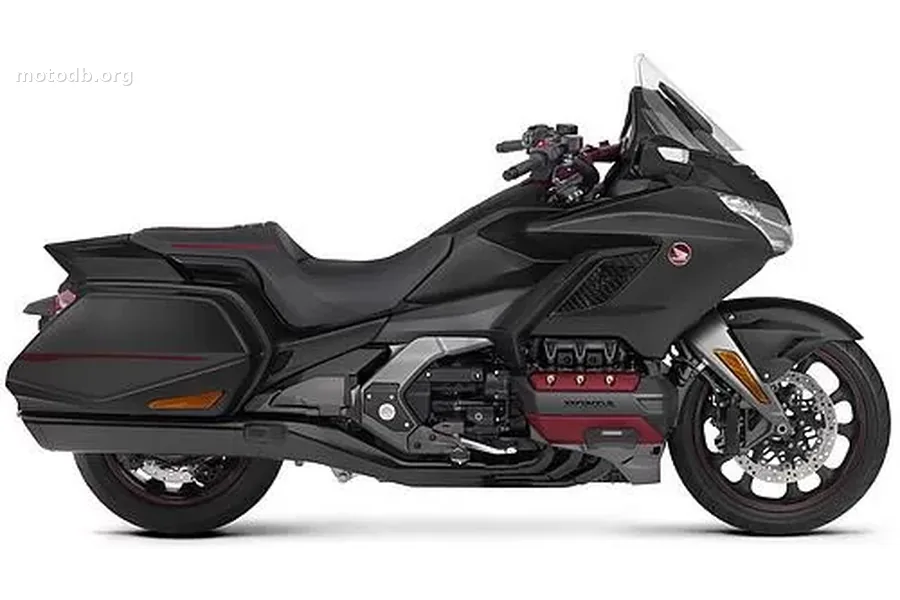
On the scales, the verdict is clear. 365 kg fully fueled, or 19 kg less than the departed F6B which peaked at 384 kg. This is no small matter when you consider you still have to maneuver this behemoth at walking pace in parking lots, even if the electric reverse gear is still there to relieve the rider. The seat sits at 745 mm, a surprisingly low height for the category, which makes the machine accessible to modest builds. The Japanese engineers trimmed everywhere, from the Diamond-type aluminum twin-spar frame to the swingarm, including an engine that lost 6.2 kg and was shortened by more than 3 cm. The front end finally abandons the telescopic fork for a double-wishbone quadrilateral fork with longitudinal arms, a deliberate move that is not unlike the Duolever found on BMW K 1600 GTs, itself an heir to Claude Fior's work. Agility benefits from it, as does ride comfort.
On the mechanical side, the 1833 cc flat-six remains the cornerstone. Four valves per cylinder now, 126 hp at 5500 rpm and 169.7 Nm of torque peaking as early as 4500 rpm, all transmitted by shaft drive through a six-speed gearbox. The numbers don't tell the whole story. This engine unfurls without a hitch, with a roundness of torque that turns the slightest acceleration into a glide. Four riding modes (Tour, Sport, Econ, Rain) recalibrate the engine response, linked braking and the now electronically controlled suspensions, but not semi-active, an important distinction for anyone dreaming of a system that reacts in real time as on certain premium competitors. The announced top speed caps out at 180 km/h, an honest figure for a machine designed to devour secondary roads in fifth and highways in sixth.
The cockpit plays the tech card without falling into the all-digital trap. 7-inch TFT screen, Apple CarPlay, Smart Key, full LED, advanced cruise control, USB and Bluetooth. Purists will appreciate the retention of two analog dials for speed and rpm, an elegant gesture that anchors the machine in its DNA. The drawback, however, is on the loading side. The panniers cap out at 30 liters each versus 51 on the F6B, and the tank drops to 21.1 liters. For a weekend ride with a passenger, you'll have to sort your belongings like before a low-cost flight. Long-distance travel will be reserved for the bigger sister Tour, which itself tops out at 110 liters of usable volume.
Priced at 25,999 euros, this Goldwing bagger positions itself as a credible alternative to the BMW K 1600 B, without seeking a head-on confrontation on the horsepower front. Honda embraces a repositioning towards light grand touring, almost an open GT, rather than towards the rolling pullman. The full-fledged long-distance rider will prefer the Tour or a more capacious competitor. The mature rider who wants six-cylinder comfort, high-end equipment and a bit more liveliness in the curves will find a coherent proposition here, not cheap but seriously argued.
Standard equipment
- Assistance au freinage : ABS
- Bluetooth
Practical info
- La moto est accessible aux permis : A
Indicators & positioning
Similar bikes
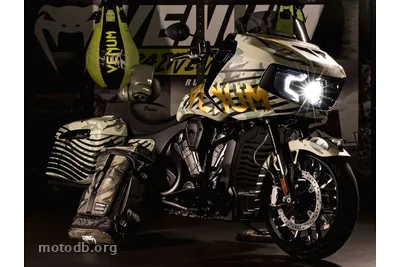
1830 Challenger Venum
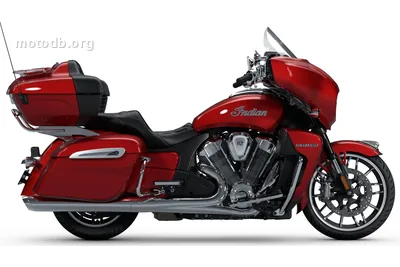
1830 Roadmaster Limited / Dark Horse
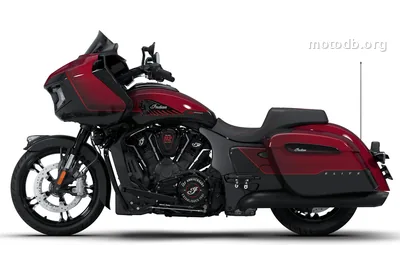
1830 Challenger 125th Anniversary Edition
Reviews & comments
No reviews yet. Be the first to share your opinion!