Key performance
Technical specifications
- Power
- 62.0 ch (45.6 kW) → 60.0 ch @ 9000 tr/min (38.7 kW)
- Torque
- — → 48.0 Nm @ 7000 tr/min
- Engine type
- Monocylindre, 4 temps → Single cylinder, four-stroke
- Cooling
- liquide → Liquid
- Compression ratio
- 13.5 : 1 → 13.5:1
- Bore × stroke
- 96 x 62.1 mm → 96.0 x 62.1 mm (3.8 x 2.4 inches)
- Fuel system
- Injection Ø 44 mm → Injection. PGM-Fi
- Valve timing
- — → Single Overhead Cams (SOHC)
- Ignition
- — → Fully transistorized with electronic advance
- Starter
- — → Kick
- Frame
- Double poutre et simple berceau dédoublé en aluminium → Aluminium twin tube
- Gearbox
- boîte à 5 rapports → 5-speed
- Final drive
- Chaîne → Chain (final drive)
- Clutch
- — → Multi plate wet clutch
- Front suspension
- Fourche téléhydraulique inversée Ø 49 mm, déb : 310 mm → 49mm inverted Showa fork with rebound and compression damping adjustability.
- Rear suspension
- Mono-amortisseur, déb : 310 mm → Pro-Link® Showa single shock with adjustable spring preload, rebound and compression damping adjustability.
- Front wheel travel
- — → 305 mm (12.0 inches)
- Rear wheel travel
- — → 312 mm (12.3 inches)
- Front brakes
- Freinage 1 disque Ø 260 mm, étrier 2 pistons → Single disc. Hydraulic. Two-piston calipers.
- Rear brakes
- Freinage 1 disque Ø 240 mm, étrier simple piston → Single disc. Hydraulic. Single-piston caliper.
- Front tyre
- 80/100-21 → 80/100-21
- Front tyre pressure
- 1.00 bar → —
- Rear tyre
- 120/80-19 → 120/80-19
- Rear tyre pressure
- 1.00 bar → —
- Seat height
- 961.00 mm → 953.00 mm
- Wheelbase
- — → 1492.00 mm
- Ground clearance
- — → 330.00 mm
- Length
- — → 2191.00 mm
- Width
- — → 827.00 mm
- Height
- — → 1271.00 mm
- Fuel capacity
- 6.30 L → 6.43 L
- Weight
- 113.00 kg → 110.20 kg
- Dry weight
- 108.50 kg → —
- New price
- 10 349 € → 9 399 €
Engine
- Displacement
- 450 cc
- Power
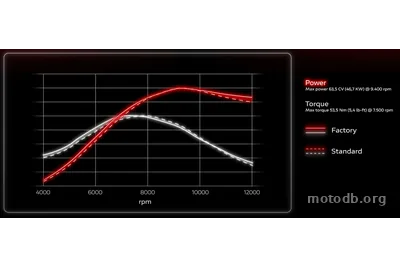
- 60.0 ch @ 9000 tr/min (38.7 kW)
- Torque
- 48.0 Nm @ 7000 tr/min
- Engine type
- Single cylinder, four-stroke
- Cooling
- Liquid
- Compression ratio
- 13.5:1
- Bore × stroke
- 96.0 x 62.1 mm (3.8 x 2.4 inches)
- Valves/cylinder
- 4
- Camshafts
- 1 ACT
- Fuel system
- Injection. PGM-Fi
- Valve timing
- Single Overhead Cams (SOHC)
- Ignition
- Fully transistorized with electronic advance
- Starter
- Kick
Chassis
- Frame
- Aluminium twin tube
- Gearbox
- 5-speed
- Final drive
- Chain (final drive)
- Clutch
- Multi plate wet clutch
- Front suspension
- 49mm inverted Showa fork with rebound and compression damping adjustability.
- Rear suspension
- Pro-Link® Showa single shock with adjustable spring preload, rebound and compression damping adjustability.
- Front wheel travel
- 305 mm (12.0 inches)
- Rear wheel travel
- 312 mm (12.3 inches)
Brakes
- Front brakes
- Single disc. Hydraulic. Two-piston calipers.
- Rear brakes
- Single disc. Hydraulic. Single-piston caliper.
- Front tyre
- 80/100-21
- Rear tyre
- 120/80-19
Dimensions
- Seat height
- 953.00 mm
- Wheelbase
- 1492.00 mm
- Ground clearance
- 330.00 mm
- Length
- 2191.00 mm
- Width
- 827.00 mm
- Height
- 1271.00 mm
- Fuel capacity
- 6.43 L
- Weight
- 110.20 kg
- New price
- 9 399 €
Overview
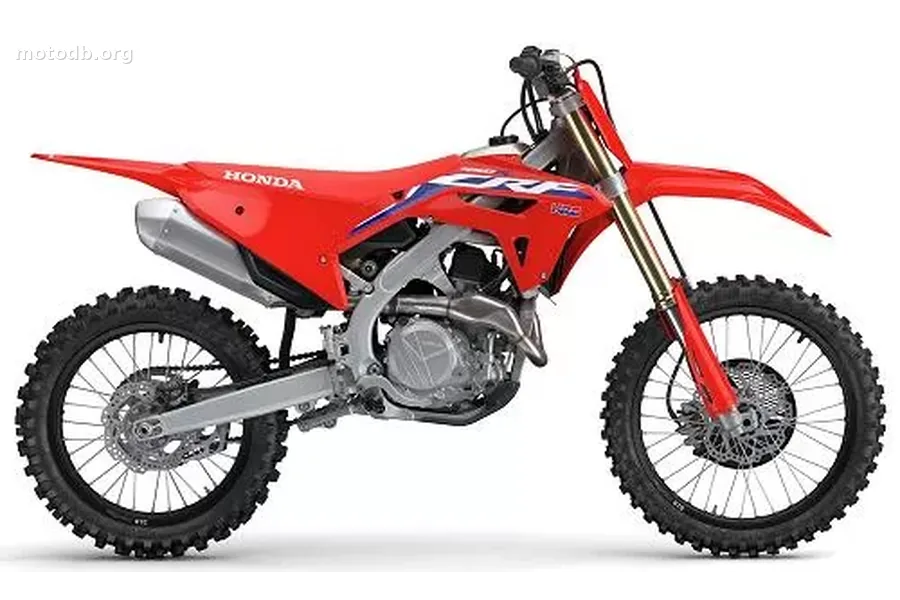
What drives a manufacturer as established as Honda to completely overhaul a bike that was already dominating the starting gates? The answer comes down to one number and one philosophy. The number is 11% more power. The philosophy is that of the "Absolute Holeshot," that moment when the gate drops and everything is decided in a few meters of churned-up dirt. With the 2018 Honda CRF450R, HRC engineers didn't try to polish an aging machine. They scrapped everything and rebuilt from scratch, from the 449 cc single all the way to the last bolt on the swingarm. The result is 60 hp at 9,000 rpm, 48 Nm of torque from 7,000 rpm, all wrapped up in 110 kg wet weight. On paper, the direct competition has nothing to be ashamed of: the 2019 Yamaha YZ450F sells for the same price as the Honda CRF450R and the Kawasaki KX450, around $9,299 stateside. In France, expect to pay €9,399 for the Honda. The matchup is tight, but this CRF plays a card the others don't hold with the same conviction.
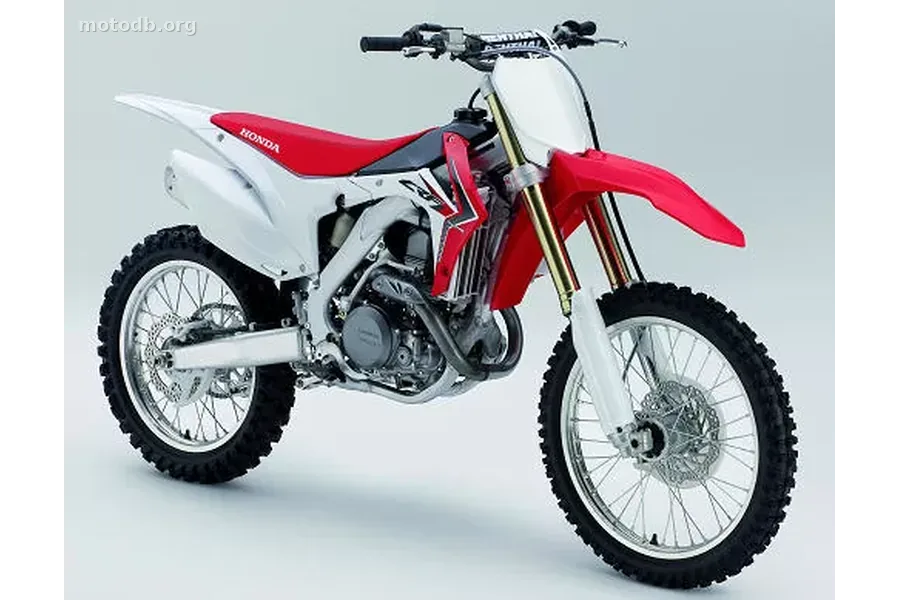
That card is the chassis. Honda is now on the seventh generation of its aluminum twin-spar frame, and this iteration adopts trapezoidal spars that radically alter front-end behavior. Torsional rigidity drops by nearly 7% without affecting lateral rigidity—a compromise that translates into sharper cornering precision and cleaner feedback through the palms. The center of gravity drops by almost 3 mm thanks to a 6.3-liter titanium fuel tank, a good half-kilo lighter than the old plastic component, and a rear Showa shock now repositioned along the bike's centerline. The wheelbase shortens, the swingarm becomes more compact, and the geometry shifts more mass onto the rear tire. The concrete result: corner-exit traction improves significantly, and the rider feels the bike pushing exactly where he decides. Tim Gajser, who raced the Honda CRF450R in MXGP, didn't choose this platform by chance.
On the suspension side, forget the Kayaba air fork from previous model years. Honda fits a 49 mm Showa inverted spring fork directly derived from the equipment supplied to Japanese MX championship teams. The cartridges are oversized compared to the old 48 mm fork, rebound and compression are finely adjustable, and track behavior is both supple and progressive. This is the kind of suspension that reassures an amateur rider on Saturday practice and doesn't hold back a competitor on Sunday race day. The Pro-Link rear shock follows the same logic with adjustable preload, rebound, and compression. For a rider looking for the Honda CRF450R service manual to fine-tune settings, the technical documentation is extensive—a sign that Honda embraces the complexity of the beast.
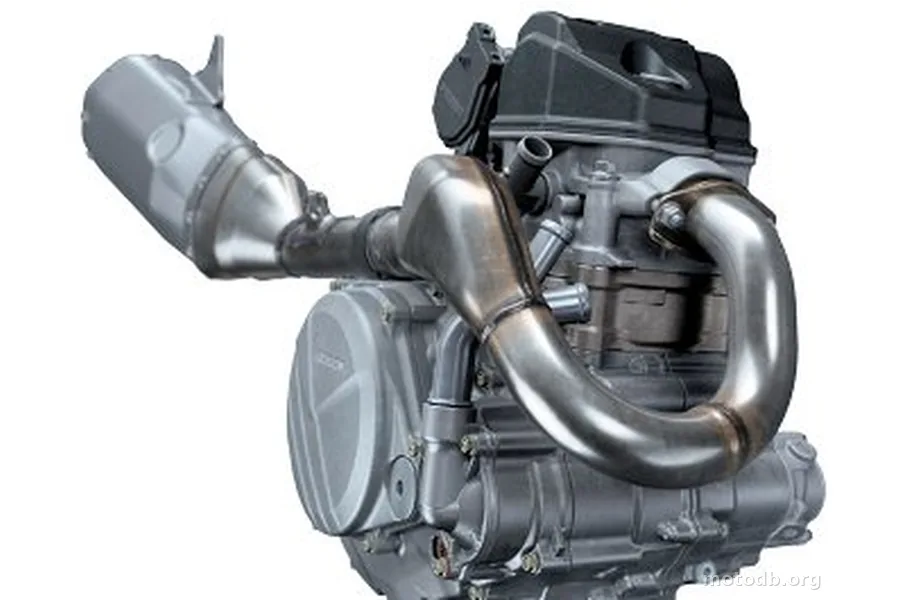
The four-valve Unicam single has been rethought down to the smallest detail. Compression ratio raised to 13.5:1, intake ports redesigned for a 19% efficiency gain, DLC coating on the piston pin to reduce friction. The five-speed gearbox has been re-spaced, the clutch loses one friction plate without sacrificing durability, and the EMSB system offers three engine maps selectable from the handlebar. Mode 1 provides a versatile balance, Mode 2 softens the response for muddy terrain or 450-class beginners, Mode 3 unleashes the engine's full aggression for starts and hard acceleration phases. It's a genuine customization tool that eliminates the need to touch fueling—a clear step forward from previous generations where you sometimes needed a carburetor rebuild kit to adapt the engine to conditions.
This 2018 Honda CRF450R is clearly aimed at committed motocross riders, whether they race at the regional championship level or string together practice sessions with the ambition of improving. Its 953 mm seat height and 330 mm ground clearance don't lie: this is a pure motocross machine, not a weekend trail bike. It's expensive, it demands maintenance, and it doesn't forgive complacency. But for the rider who wants a bike capable of winning the holeshot and going the distance, the CRF remains a safe bet in the Honda 450 CRF segment. Against the Yamaha YZ450F or the Kawasaki KX450, it delivers a level of mechanical finish and chassis-engine coherence that justifies every euro spent.
Indicators & positioning
Similar bikes
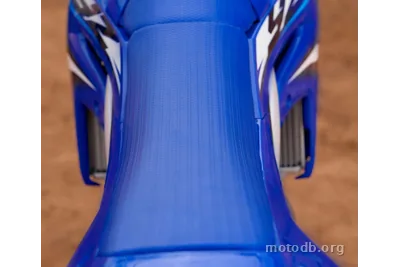
YZ 450 F
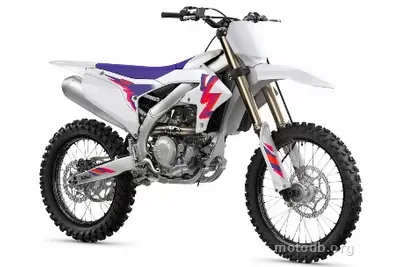
YZ 450 F 50eme anniversaire
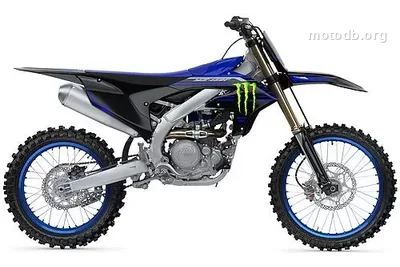
YZ 450 F Monster Energy Edition
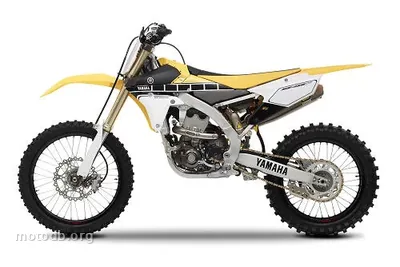
YZ 450 F edition 60eme anniversaire
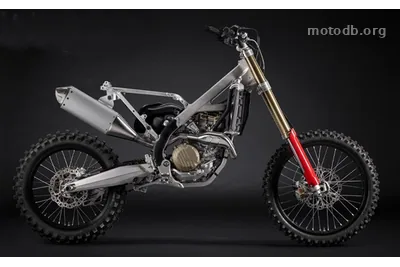
Desmo450 MX
Reviews & comments
No reviews yet. Be the first to share your opinion!