Key performance
Technical specifications
Engine
- Displacement
- 1000 cc
- Power
- 215.0 ch (158.1 kW)
- Engine type
- 4 cylindres en ligne, 4 temps
- Cooling
- liquide
- Bore × stroke
- 76 x 55,1 mm
- Valves/cylinder
- 4
- Fuel system
- Injection Ø 46 mm
Chassis
- Frame
- Double poutre aluminium composite type Diamond
- Gearbox
- boîte à rapports Boîte 6 vitesses kit HRC
- Final drive
- Chaîne
- Front suspension
- Fourche téléhydraulique inversée Öhlins FGR000 Ø 43 mm
- Rear suspension
- Mono-amortisseur Öhlins TTX36
Brakes
- Front brakes
- Freinage 2 disques Ø 320 mm, fixation radiale, étrier 4 pistons
- Rear brakes
- Freinage 1 disque Ø 220 mm, étrier simple piston
- Front tyre
- 120/70-17
- Rear tyre
- 190/50-17
Dimensions
- Fuel capacity
- 22.00 L
- New price
- 100 000 €
Overview
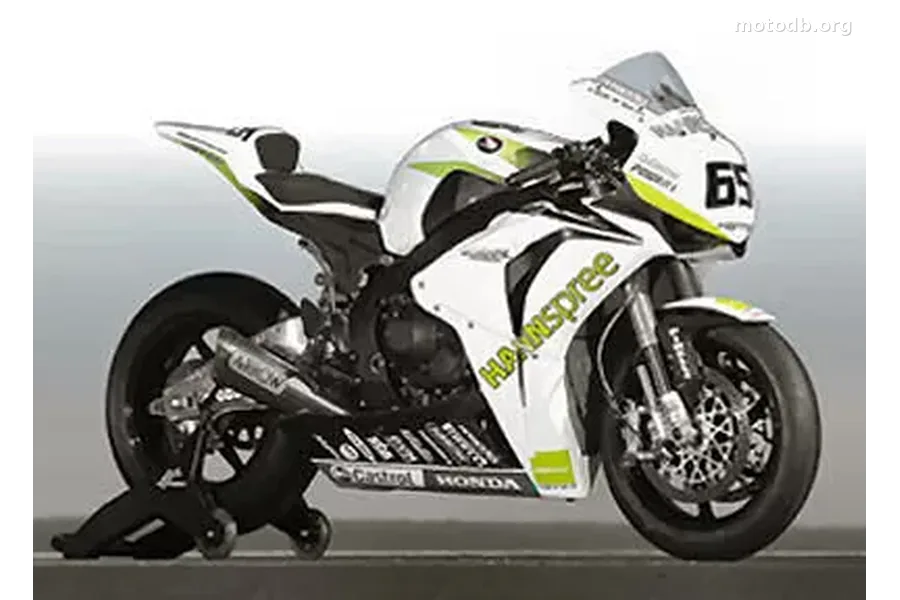
What does it take to transform a mass-produced Japanese sportbike into a Superbike weapon capable of fighting for top honors on the world stage? Ask the Dutch crew at Ten Kate Racing. Their track record speaks for itself: seven world championships in Supersport, two titles in WSBK. When Jonathan Rea climbs aboard their 2010-vintage Honda CBR 1000 RR, the machine regains a credibility that previous seasons had seriously undermined. The 999 cc inline four-cylinder, a modest 177 horsepower in stock trim, passes through the tuners' hands and emerges with over 215 hp. A colossal power gain that repositions the CBR against the Ducatis and Aprilias on the grid.
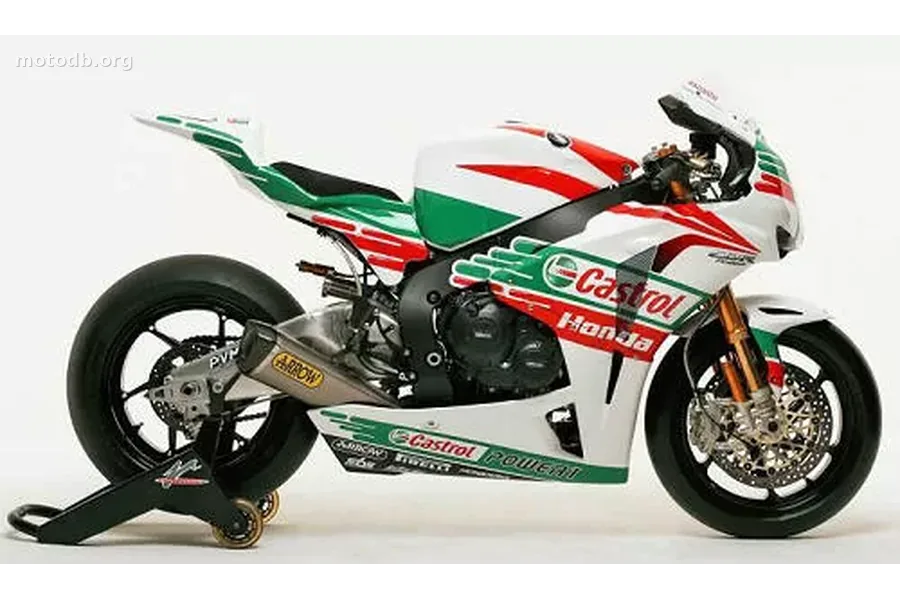
To handle this surge in horsepower, the transmission relies on a six-speed gearbox supplied by HRC, Honda's racing division. The swingarm is reworked and made more flexible to provide better traction control on the 16.5-inch forged magnesium rear wheel. On the suspension side, Ten Kate made a strategic switch mid-season 2009, dropping White Power in favor of Öhlins. The 43 mm FGR000 inverted fork and TTX36 rear shock required long months of development. Results were slow to come, but the 2010 Phillip Island round validated the choice in spectacular fashion. Braking follows the same pursuit of excellence: Nissin four-piston radial monoblock calipers bite 320 mm discs with fearsome stopping power.
The level of finish on this racing machine commands respect. The full carbon fiber fairing shaves every unnecessary gram, while each component looks custom-machined. The Arrow exhaust integrates so seamlessly into the package that it could have been designed by Honda's own engineering department. A high-capacity radiator, tucked discreetly behind the front wheel — also forged magnesium — keeps an engine pushed to its absolute limits properly cooled. Nothing on this CBR betrays makeshift assembly. This is far from a garage hack job: it is cutting-edge engineering applied to a production platform.
What sets Ten Kate apart is that this expertise isn't reserved for the paddock. The Dutch team sells a complete catalog of racing parts and even offers to build an exact replica of Rea's or Max Neukirchner's machine. The entry ticket? Around 100,000 euros — a budget that places the bike somewhere between a wealthy track day enthusiast's toy and a privateer team's investment. To give a sense of scale, the Öhlins fork alone costs more than a brand-new Suzuki Bandit 1250 from the dealership. This Honda CBR 1000 RR Ten Kate Superbike is therefore aimed at a select few deep-pocketed enthusiasts, capable of hitting 300 km/h at the end of a straight with the certainty of riding a genuine world championship machine. Not a toy. Not a watered-down replica. The very same bike that restored Honda's honor in WSBK.
Reviews & comments
No reviews yet. Be the first to share your opinion!