Key performance
Technical specifications
- Torque
- 154.9 Nm @ 3500 tr/min → 154.9 Nm @ 3000 tr/min
- New price
- 20 590 € → 20 110 €
Engine
- Displacement
- 1868 cc
- Power
- 93.0 ch @ 5020 tr/min (68.4 kW)
- Torque
- 154.9 Nm @ 3000 tr/min
- Engine type
- Bicylindre en V à 45°, 4 temps
- Cooling
- par air
- Compression ratio
- 10.5 : 1
- Bore × stroke
- 102 x 114.3 mm
- Valves/cylinder
- 4
- Fuel system
- Injection
Chassis
- Frame
- Double berceau en acier
- Gearbox
- boîte à 6 rapports
- Final drive
- Courroie
- Front suspension
- Fourche téléhydraulique inversée Ø 43 mm, déb : 130 mm
- Rear suspension
- Mono-amortisseur sous la selle, déb : 113 mm
Brakes
- Front brakes
- Freinage 2 disques Ø 300 mm, étrier 4 pistons
- Rear brakes
- Freinage 1 disque Ø 292 mm, étrier 2 pistons
- Front tyre
- 150/80-16
- Rear tyre
- 180/70-16
Dimensions
- Seat height
- 710.00 mm
- Fuel capacity
- 13.60 L
- Weight
- 306.00 kg
- Dry weight
- 296.00 kg
- New price
- 20 110 €
Overview
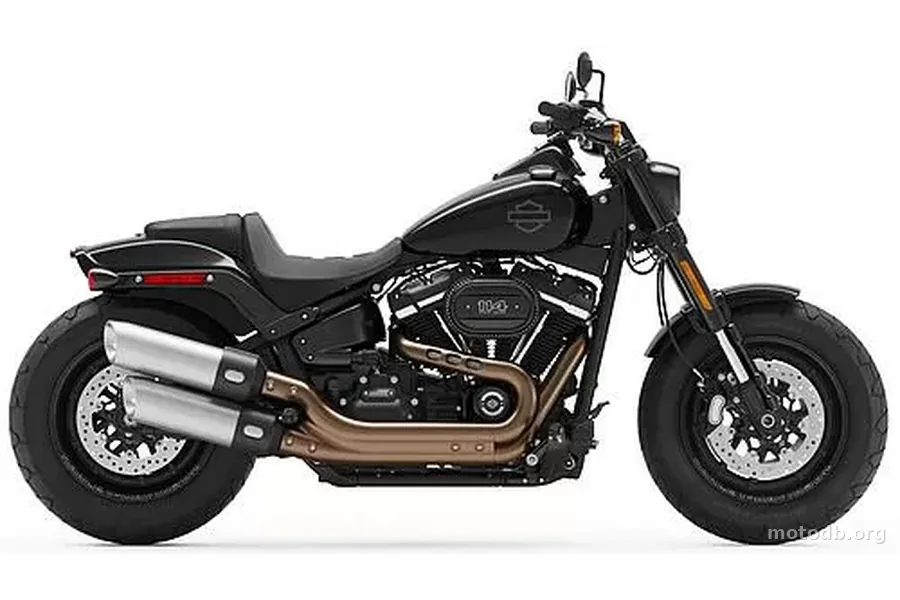
Who would have bet, ten years ago, that a Harley-Davidson could look like a set of brass knuckles on two wheels? The 2020 Fat Bob FXFBS makes no effort to blend into the background. With its knife-edged dual LED headlight, stocky lines, and dragbar handlebar that pitches your torso forward, this Softail is clearly playing on a different field than Milwaukee's chrome-laden baggers. It wants to shake things up, turn heads, and catch the eye of riders who would never have walked through a Harley dealership's door. And on that front, mission accomplished.
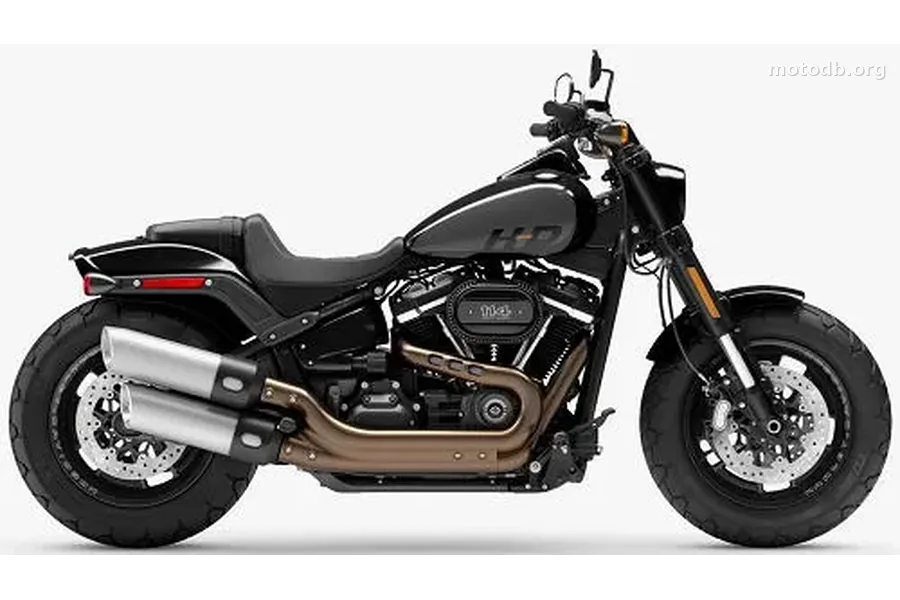
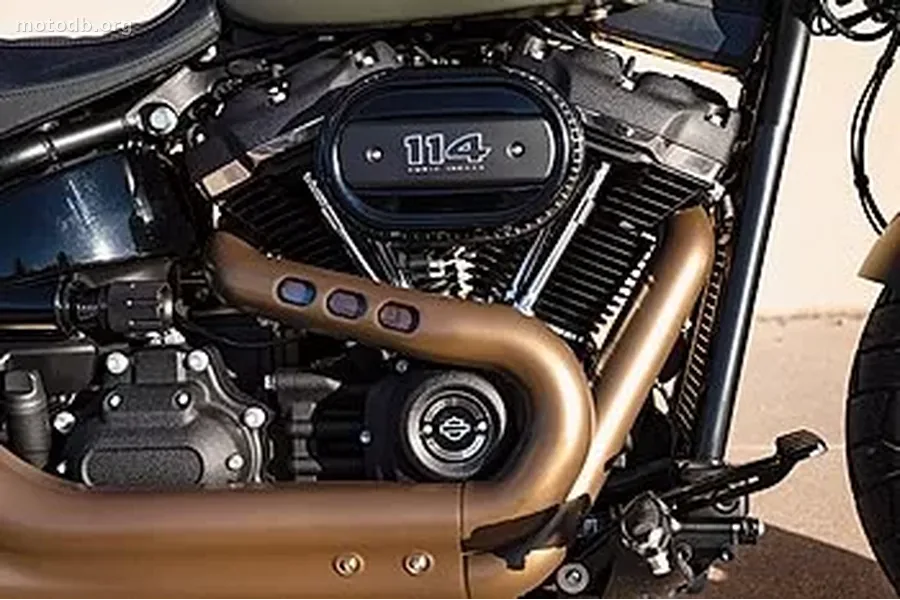
Beneath that bruiser physique beats the Milwaukee Eight 114, a 45-degree V-twin displacing 1868 cc that puts out 93 horsepower at 5020 rpm and, more importantly, 154.9 Nm of torque from just 3000 rpm. Those numbers will never rival a Ducati Diavel or a Triumph Rocket III on paper, but they tell a poor story of what it's actually like from the saddle. The Fat Bob isn't ridden on revs — it's ridden on torque. A twist of the throttle in third gear and the machine surges hard, with that signature feel of the big American twin: controlled vibrations, linear thrust, and a deep rumble rising from the depths. The move to the 114 over the old Twin Cam was a game changer. More displacement, more breath, and an engine character that finally matches the aggressive personality of the machine.
On the chassis side, Harley made genuine progress. The steel double-cradle frame now houses a 43 mm inverted fork up front — a rare choice for the manufacturer — and a hidden mono-shock beneath the seat at the rear. Suspension travel remains short, 130 mm at the front and 113 mm at the rear, and the 16-inch tires (150/80 front, 180/70 rear) aren't exactly benchmarks of precision through a string of corners. But handling has taken a real step forward compared to the old Dyna generation. You can now take the Fat Bob down twisty roads without feeling like you're negotiating every bend with a couch between your legs. The brakes — dual 300 mm discs up front with four-piston calipers — do an adequate job of hauling down the beast's 306 kg wet weight.
The downsides come in two areas. First, the 13.6-liter tank, which is tiny for a machine this size. On the road, expect barely 200 kilometers before you're hunting for a gas station. Then there's the price: €20,110 is no small ask for a bike with no fairing, no advanced electronics, and a token two-up seat. At that price, an Indian Scout Bobber Twenty plays in the same league with a different temperament, and a used Yamaha VMAX delivers superior raw performance for less money.
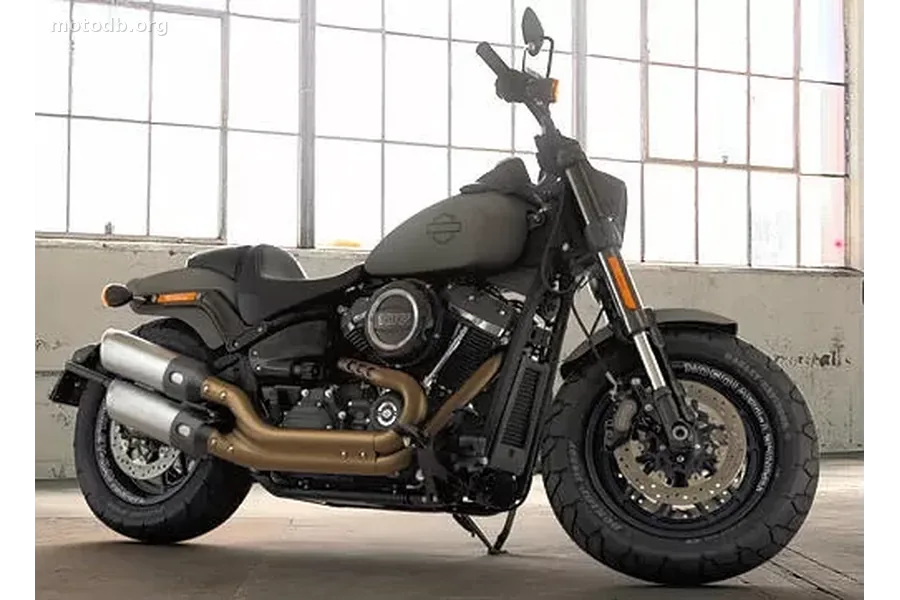
The Fat Bob is aimed at riders who want a Harley without the traditional folklore. An urban or suburban rider who goes by feel rather than lap times, who wants strong visual presence and generous torque under the right hand. The accessible 710 mm seat height and compact riding position make it approachable, even for average-sized riders. It's neither a tourer, nor a sportbike, nor a classic chopper. It's a statement on two wheels, with unapologetic limitations and a character that few competitors can claim.
Standard equipment
- Assistance au freinage : ABS de série
Practical info
- La moto est accessible aux permis : A
Indicators & positioning
Similar bikes
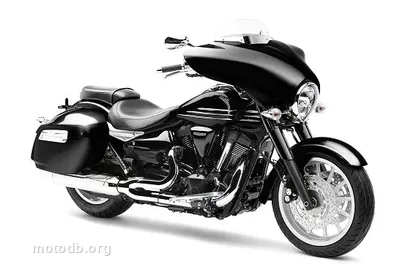
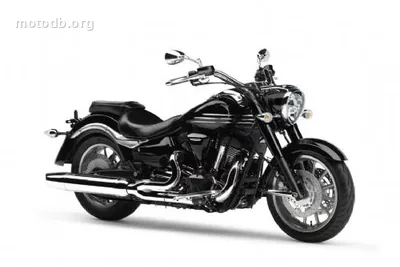
XV1900A Midnight Star
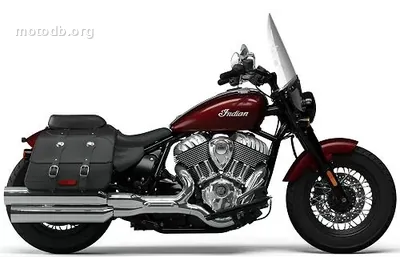
1890 Super Chief Limited / Dark Horse
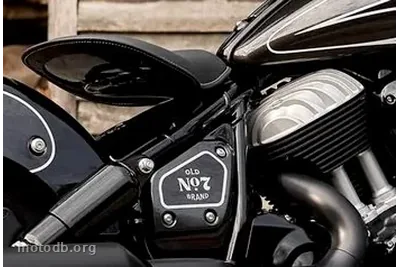
1890 Chief Bobber Dark Horse Jack Daniel's
Reviews & comments
No reviews yet. Be the first to share your opinion!