Key performance
Technical specifications
- Power
- 94.0 ch @ 5020 tr/min (69.1 kW) → 93.0 ch @ 5020 tr/min (68.4 kW)
Engine
- Displacement
- 1868 cc
- Power
- 93.0 ch @ 5020 tr/min (68.4 kW)
- Torque
- 154.9 Nm @ 3000 tr/min
- Engine type
- Bicylindre en V à 45°, 4 temps
- Cooling
- par air
- Compression ratio
- 10.5 : 1
- Bore × stroke
- 102 x 114.3 mm
- Valves/cylinder
- 4
- Fuel system
- Injection
Chassis
- Frame
- Double berceau tubulaire en acier
- Gearbox
- boîte à 6 rapports
- Final drive
- Courroie
- Front suspension
- Fourche telescopique Ø 49 mm, déb : 130 mm
- Rear suspension
- Mono-amortisseur sous la selle, déb : 86 mm
Brakes
- Front brakes
- Freinage 1 disque Ø 300 mm, étrier 4 pistons
- Rear brakes
- Freinage 1 disque Ø 292 mm, étrier 2 pistons
- Front tyre
- 130/60-21
- Rear tyre
- 240/40-18
Dimensions
- Seat height
- 665.00 mm
- Fuel capacity
- 13.20 L
- Weight
- 305.00 kg
- Dry weight
- 294.00 kg
- New price
- 24 110 €
Overview
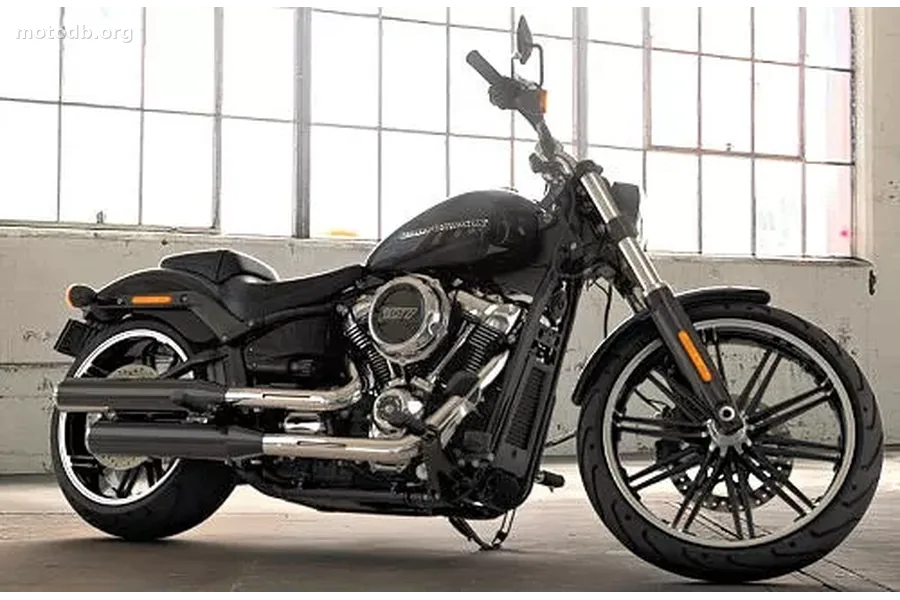
Who would have bet that a 305 kg custom could one day lay claim to any form of sportiness? With the 2020 Breakout FXBRS, Harley-Davidson is making exactly that wager. Beneath the redesigned tank — more sculptural but trimmed down to a mere 13.2 liters — beats the Milwaukee-Eight 114, a 45° V-twin displacing 1868 cc that pumps out 93 hp at 5020 rpm and, more importantly, 154.9 Nm of torque from just 3000 rpm. This four-valve-per-cylinder powerplant even surpasses the old Screamin' Eagle 110 from the early CVO editions in terms of raw torque. Compared to the 107 it replaces, the gains look modest on paper, but the difference is felt with every twist of the throttle. The deep rumble rising from the stacked exhausts — now piled on top of each other rather than side by side — serves as a reminder at every red light that this machine doesn't do subtle.
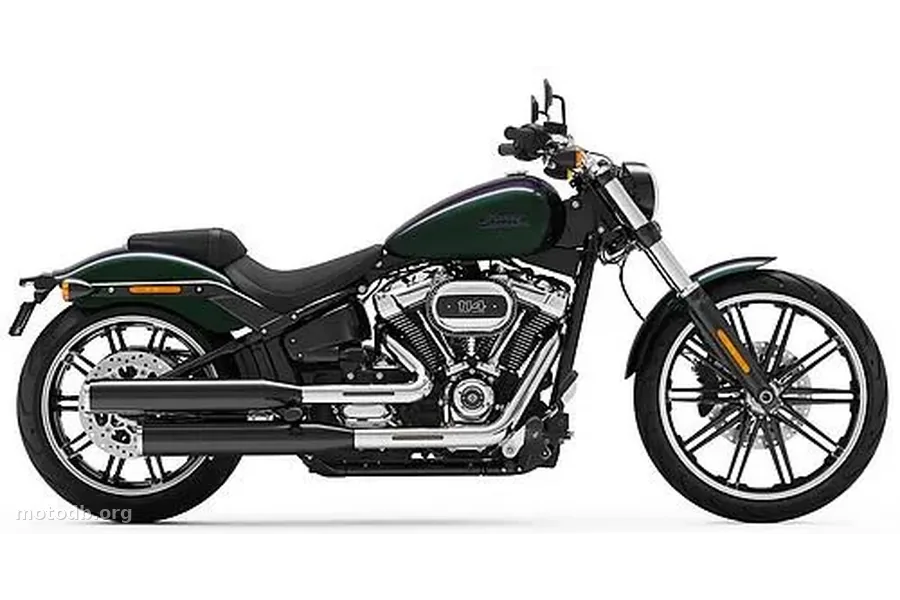
The Breakout has always cultivated an aesthetic of elegant brute force, somewhere between a parking-lot dragster and rolling sculpture. This generation pushes the envelope further. Daymaker LED headlight, blacked-out mirrors and triple clamps, split-spoke wheels, fully digital instrument cluster: every detail has been rethought to sharpen the look without tipping into caricature. The silhouette remains stretched taut between its 21-inch front wheel wrapped in 130/60 rubber and its massive 240/40-18 rear tire that flattens the asphalt like a steamroller. That contrast between front-end finesse and rear-end brutality is the Breakout's entire signature. Hard to stay indifferent, whether you love it or not.
Beneath the skin, the underlying engineering impresses more than the cosmetics. The Softail steel double-cradle frame underwent its most radical overhaul since the family's inception. Harley claims half the number of assembly parts, a fifth fewer welds, and a 34% increase in rigidity with the bike fully equipped. The concrete result: 17 kg off the scales. For a company that has never made lightweight a priority, that's a notable effort. The 49 mm telescopic fork with dual-rate damping valves, borrowed from the Touring lineup, delivers 130 mm of travel and noticeably more progressive damping than its predecessor. At the rear, the mono-shock hidden beneath the seat offers only 86 mm of travel — which remains tight — but its tool-free preload adjuster lets you adapt the behavior to the load. The seat, perched at just 665 mm, makes it easy to feel confident at a standstill — a genuine asset for a motorcycle of this size.
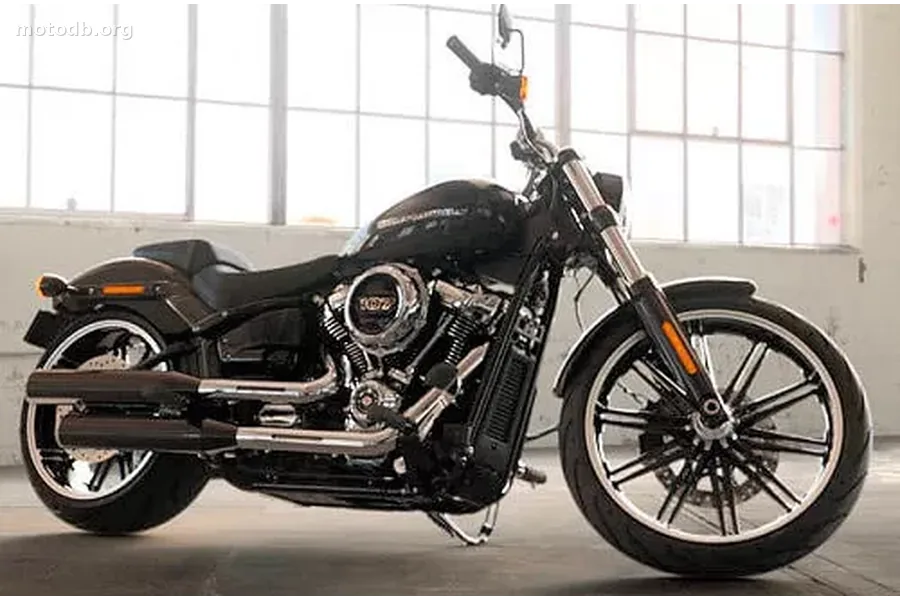
Then there's the question of positioning. At €24,110, the Breakout squares off against competitors like the Indian Chief Dark Horse or the Triumph Rocket 3 R, the latter offering an entirely different proposition with its 2500 cc triple. The Harley will never rival the Triumph in outright power, but it isn't chasing the same audience either. The Breakout is aimed at the rider who wants to cruise easy, park the bike outside a café, and collect glances without trying. The six-speed gearbox and belt final drive ensure low-maintenance operation, even if the small tank forces frequent stops on long hauls. Forget about 300 km non-stop runs.
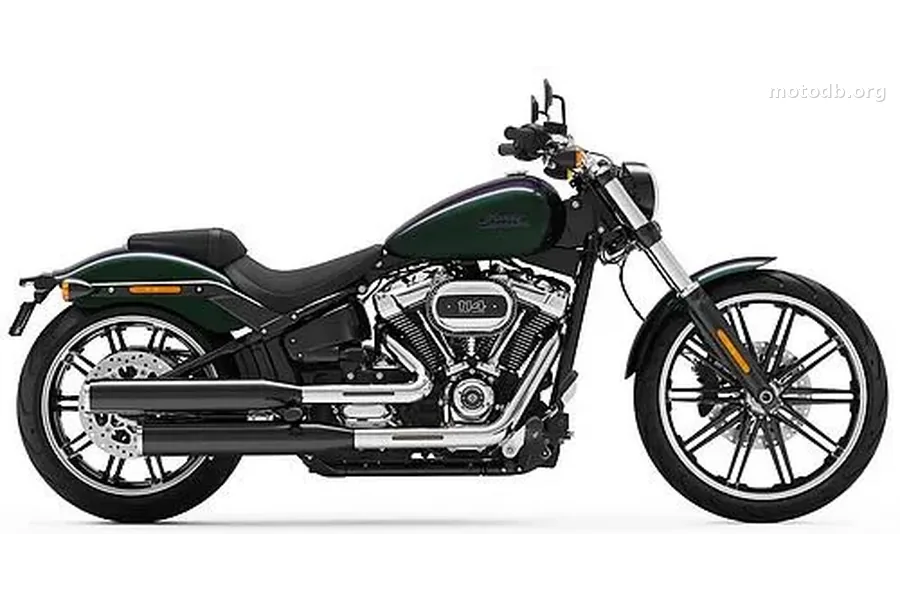
This 2020 Breakout ticks the boxes that previous versions left empty. The chassis finally delivers on its promises, the engine serves up its torque with a smoothness the old Twin Cams never knew, and the presentation flirts with premium without veering into bling. For an urban or suburban rider who prioritizes style and low-speed thrills over versatility, it's a coherent proposition. Not a do-it-all machine, but a machine that does what it does with conviction.
Standard equipment
- Assistance au freinage : ABS de série
Practical info
- La moto est accessible aux permis : A
Indicators & positioning
Similar bikes
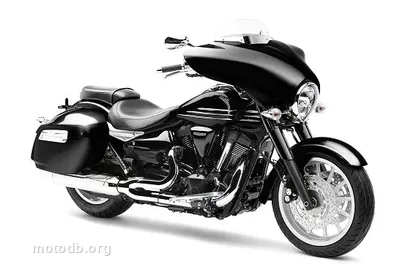
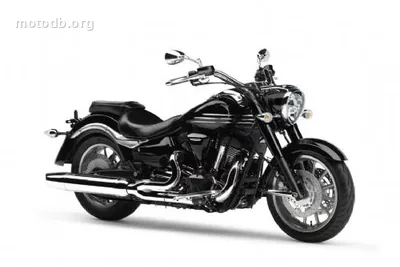
XV1900A Midnight Star
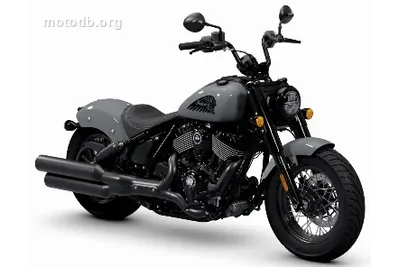
Chief Bobber Dark Horse
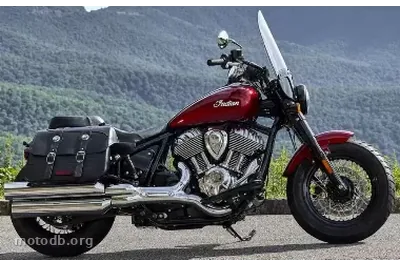
Super Chief Limited
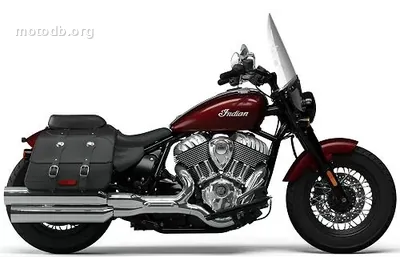
1890 Super Chief Limited / Dark Horse
Reviews & comments
No reviews yet. Be the first to share your opinion!