Key performance
Technical specifications
Engine
- Displacement
- 992 cc
- Power
- 92.0 ch @ 8000 tr/min (66.3 kW)
- Torque
- 91.3 Nm @ 9300 tr/min
- Engine type
- V2, four-stroke
- Cooling
- Air
- Compression ratio
- 10.0:1
- Bore × stroke
- 94.0 x 71.5 mm (3.7 x 2.8 inches)
- Valves/cylinder
- 2
- Camshafts
- 1 ACT
- Fuel system
- Injection. Marelli electronic fuel injection, 45 mm throttle body
- Valve timing
- Desmodromic valve control
Chassis
- Frame
- Tubular steel trellis frame
- Gearbox
- 6-speed
- Final drive
- Chaîne
- Clutch
- Wet multiplate with hydraulic control
- Front suspension
- 43 mm upside-down fork
- Rear suspension
- Twin fully adjustable shock absorber
- Front wheel travel
- 120 mm (4.7 inches)
- Rear wheel travel
- 130 mm (5.1 inches)
Brakes
- Front brakes
- Double disc
- Rear brakes
- Single disc
- Front tyre
- 120/70-R17
- Rear tyre
- 180/55-R17
Dimensions
- Seat height
- 825.00 mm
- Wheelbase
- 1425.00 mm
- Fuel capacity
- 15.00 L
- Dry weight
- 182.00 kg
- New price
- 11 000 €
Overview
Do you remember that era when Ducati, seized by a sudden nostalgia, launched the SportClassic range? Between the Paul Smart replica and the touring GT, there was this Sport 1000, a pure-bred café racer that made purists grind their teeth. In 2008, the Biposto version arrived, bringing a touch of sociability to a world of egoists. The solo seat and hidden monoshock were gone, replaced by a proper pillion and two traditional coil springs. It was a concession to practicality, a slight shift towards the real world for a machine born in reverie.
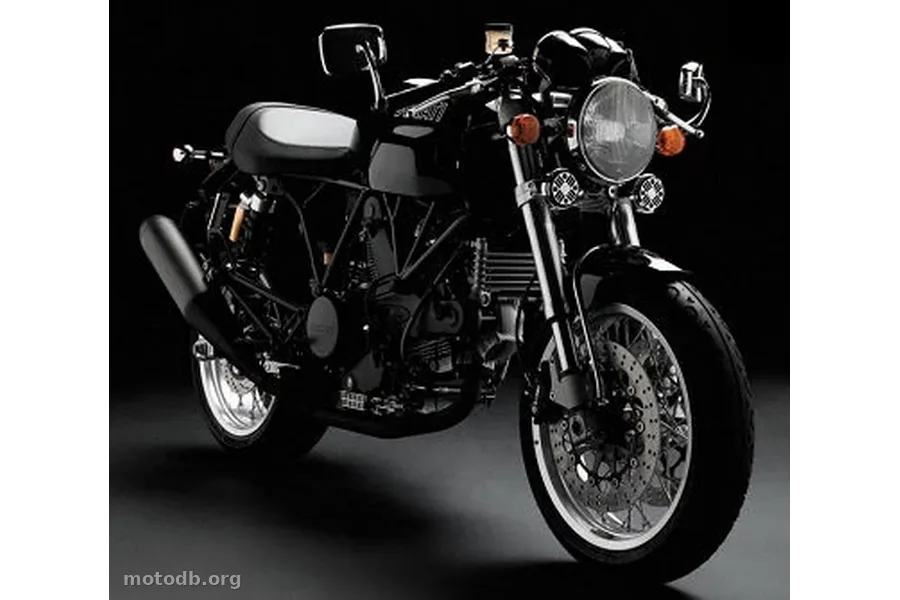
Under the 15-liter retro-design fuel tank lies the famous 90-degree V-twin of 992 cc, the very same that powered the 1000 SS. It delivers 92 horsepower at 8000 rpm, with a meaty torque of 91 Nm that arrives higher in the rev range, around 9300 rpm. It’s not a tractor engine; you have to make it sing. Coupled with a six-speed gearbox and a steel trellis frame, it propels the 182 kg dry weight to a theoretical top speed of 220 km/h. The riding position is committed, with a 825 mm seat height, and the 43 mm inverted fork announces the color: it's a sporty bike dressed in vintage style.
Compared to the English benchmark of the time, the Triumph Thruxton, the Ducati plays a different part. The Thruxton was smoother, more accessible. The Sport 1000, on the other hand, retains a track soul despite its seventies café racer looks. It is more nervous, more demanding, and its front dual-disc braking system is of a different effectiveness. It’s the choice of those who want retro style without compromising on Ducati character.
But this elegance comes at a price, and not just the 11,000 euros it cost back then. Some details are beauty traps. The magnificent polished spoked rims require tires with inner tubes, a heresy in 2008. The end-of-handlebar mirrors, incredibly chic, transform rear vision into a shaky film worthy of a bodycam. It’s the kind of flaws you accept out of love, or reject out of pragmatism.
So, who is it for? For the enthusiast looking for the unique object, the authentic café racer with the soul of a modern sportbike. It's not a bike for beginners, nor for the globetrotter who counts kilometers. It's a rideable collector's machine, for those who understand that the charm of the 1970s sometimes comes with vibrational discomfort and meticulous maintenance. If you want a perfect replica, the Paul Smart is waiting for you. If you want an Italian retro bike that still bites, the Sport 1000 Biposto was a fascinating compromise, and today, a piece of history in its own right.
Practical info
- La moto est accessible aux permis : A
Indicators & positioning
Similar bikes
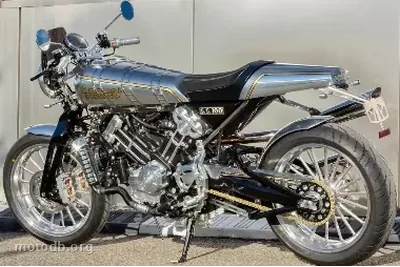
SS 100 Bert le Vack Golden Dream
Reviews & comments
No reviews yet. Be the first to share your opinion!