Key performance
Technical specifications
Engine
- Displacement
- 1285 cc
- Power
- 205.0 ch @ 10500 tr/min (149.6 kW)
- Torque
- 144.6 Nm @ 8750 tr/min
- Engine type
- V2, four-stroke
- Cooling
- Liquid
- Compression ratio
- 12.5:1
- Bore × stroke
- 116.0 x 60.8 mm (4.6 x 2.4 inches)
- Valves/cylinder
- 4
- Camshafts
- 2 ACT
- Fuel system
- Injection. Twin injectors per cylinder. Full ride-by-wire elliptical throttle bodies.
- Valve timing
- Desmodromic valve control
- Starter
- Electric
Chassis
- Frame
- Monocoque Aluminium
- Gearbox
- 6-speed
- Final drive
- Chain (final drive)
- Clutch
- Slipper and self-servo wet multiplate clutch with hydraulic control
- Front suspension
- Marzocchi 50mm pressurized and fully adjustable usd fork with hard anodized aluminum lightweight slider
- Rear suspension
- Fully adjustable Sachs unit. Adjustable linkage: Progressive/flat. Aluminum single-sided swingarm.
- Front wheel travel
- 120 mm (4.7 inches)
- Rear wheel travel
- 130 mm (5.1 inches)
Brakes
- Front brakes
- Double disc. ABS. Floating discs. Four-piston calipers. Radially mounted.
- Rear brakes
- Single disc. ABS. Two-piston calipers.
- Front tyre
- 120/70-ZR17
- Front tyre pressure
- 2.30 bar
- Rear tyre
- 200/55-ZR17
- Rear tyre pressure
- 2.10 bar
Dimensions
- Seat height
- 830.00 mm
- Wheelbase
- 1437.00 mm
- Length
- 2070.00 mm
- Width
- 745.00 mm
- Height
- 1105.00 mm
- Fuel capacity
- 17.00 L
- Weight
- 190.50 kg
- Dry weight
- 166.50 kg
- New price
- 20 990 €
Overview
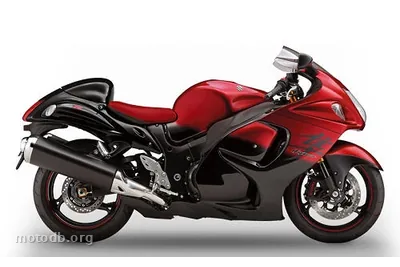
When Bologna decides to break free from regulations, it produces a motorcycle with no accountability other than to its rider. The Ducati 1299 Panigale 2015 is precisely that: a sportbike built outside of a frame, both literally and figuratively. Ducati made the deliberate choice to push its Superquadro twin beyond the 1200 cm3 limit tolerated by the Superbike championship, thus abandoning any notion of official competition for the production version. The 1299 Panigale R, however, retains an 1198 cm3 engine to satisfy the officials. The standard 1299, at 1285 cm3, cares only about what it can do on a private track or open road, without a judge of fact.
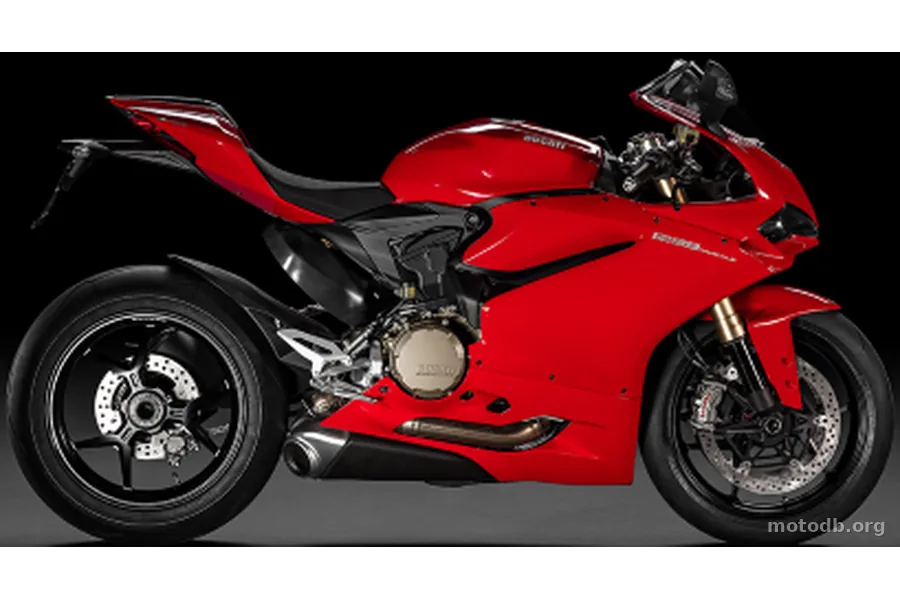
And what it can do is fairly simple to summarize: 205 horsepower at 10,500 rpm, 144.6 Nm at 8,750 rpm, all contained within 190 kg of fully fueled weight. Pistons with a diameter of 116 mm on a stroke of 60.8 mm, a compression ratio increased to 12.5:1, a bore widened by 4 mm compared to the 1199. These brutal figures do not tell the whole story. What profoundly changes with this increase in displacement is the engine’s availability. The old Superquadro reserved its best emotions for high rpm, leaving the rider waiting in line. Here, from 6,250 rpm, the motorcycle has 100 horsepower; 2,000 rpm later, we approach 170. The BMW S 1000 RR, the benchmark four-cylinder, does not reach comparable levels until around 10,000 rpm. The Italian twin does this before, lower down, with more character and a signature sound that belongs to it alone. The top speed announced at 300 km/h is not a marketing argument; it is simply the logical result of this mechanical equation.
The chassis has not been neglected. The aluminum monocoque fairing still fulfills the dual role of airbox and structural element, the asymmetrical swingarm remains massive and precise. What changes, with the Ducati 1299 Panigale technical specifications to support it, are millimeter-precise adjustments in the strictest sense: the steering head angle goes from 24.5 to 24 degrees, the swingarm pivot descends by 4 mm, the rake gains a few millimeters. On the road, these details go unnoticed. On the track, they make the difference between a motorcycle that hesitates when entering a corner and a motorcycle that throws itself into it. The 50 mm Marzocchi inverted fork, fully adjustable, works with a Sachs shock absorber at the rear. Brembo radial calipers bite down on 330 mm floating discs. The whole assembly brakes as strongly as one could reasonably hope.
What truly distinguishes this generation is the density of onboard electronics. The IMU, inertial measurement unit, calculates in real time the roll and pitch on three axes, which allows the Bosch ABS to modulate its intervention in corners rather than activating abruptly. The bidirectional quickshifter allows upshifts and downshifts without a clutch. The traction control DTC, the engine braking control EBC, the anti-wheelie DWC, the Race, Sport, and Wet modes, and a TFT screen now displaying the rake angle in real time: all this constitutes an arsenal that, until recently, was found only on factory machines. As an option, the DDA+GPS telemetry system allows debriefing each session with near-professional precision. The Ducati 1299 Panigale S, in an enhanced version, pushes this logic of homologated track tool even further.
At 20,990 euros, the Ducati 1299 Panigale price does not target the mass market. It is assumed, consistent, and perfectly in line with the brand's logic. A seat height of 830 mm and an uncompromising engine character exclude novices and hurried urban riders from the start. Circuit-hardened pilots, enthusiasts who read telemetry data in the evening after a ride, constitute the natural target of this machine. Later versions, including the Ducati 1299 Panigale 2017, will further refine this positioning. But this initial Ducati 1299 Panigale 2015 laid the foundations for a clear philosophy: ignore the regulations to better serve the rider. It is a statement of intent as much as a motorcycle.
Standard equipment
- Assistance au freinage : ABS Bosch 9MP
Practical info
- La moto est accessible aux permis : A
Reviews & comments
No reviews yet. Be the first to share your opinion!