Key performance
Technical specifications
Engine
- Displacement
- 1203 cc
- Power
- 100.0 ch @ 6600 tr/min (73.6 kW)
- Torque
- 107.9 Nm @ 6000 tr/min
- Engine type
- Bicylindre en V à 45°, 4 temps
- Cooling
- combiné air / huile
- Compression ratio
- 10 : 1
- Bore × stroke
- 88,9 x 96,8 mm
- Valves/cylinder
- 2
- Fuel system
- Injection Ø 49 mm
Chassis
- Frame
- périmétrique en aluminium, contenant le carburant
- Gearbox
- boîte à 5 rapports
- Final drive
- Courroie
- Front suspension
- Fourche téléhydraulique inversée Showa Ø 43 mm, déb : 120 mm
- Rear suspension
- Mono-amortisseur, déb : 127 mm
Brakes
- Front brakes
- Freinage
- Rear brakes
- Freinage 1 disque
- Front tyre
- 120/70-17
- Front tyre pressure
- 2.50 bar
- Rear tyre
- 180/55-17
- Rear tyre pressure
- 2.60 bar
Dimensions
- Fuel capacity
- 14.50 L
- Weight
- 209.00 kg
- Dry weight
- 179.00 kg
- New price
- 11 995 €
Overview
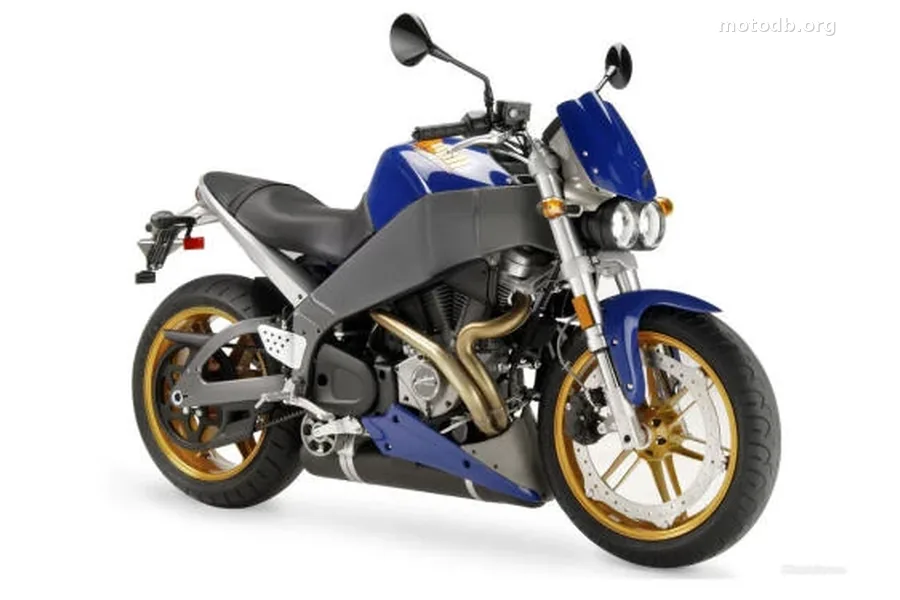
Imagine a XB-12 R from which someone ripped off the fairing with a wrench, replaced the streamlined front end with two round headlights that look at the world with a defiant air, and raised the handlebars so the rider could finally find a position worthy of the name. That is the XB-12 S Lightning. Buell didn’t reinvent the motorcycle; he simply carved directly from the raw material to deliver something more direct, more urban, more animal.
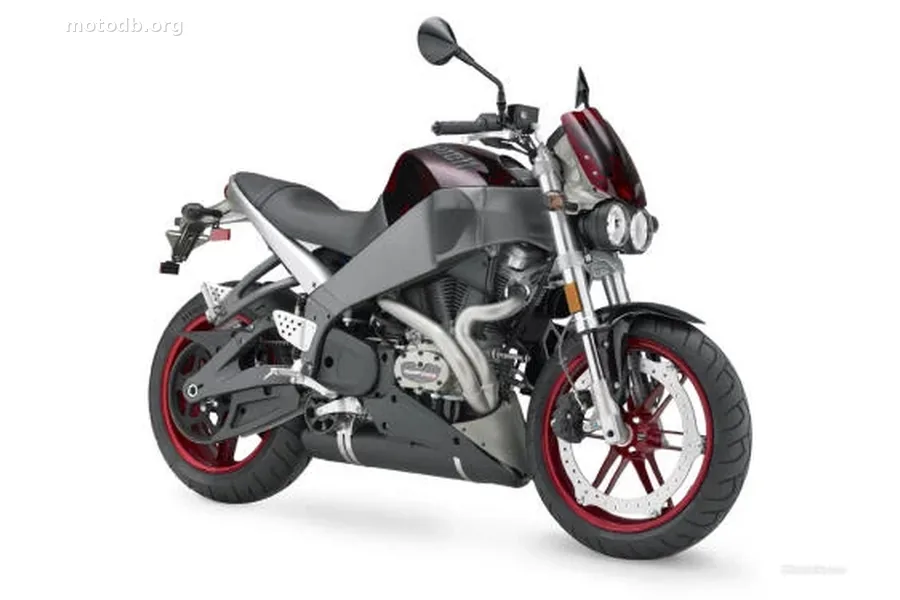
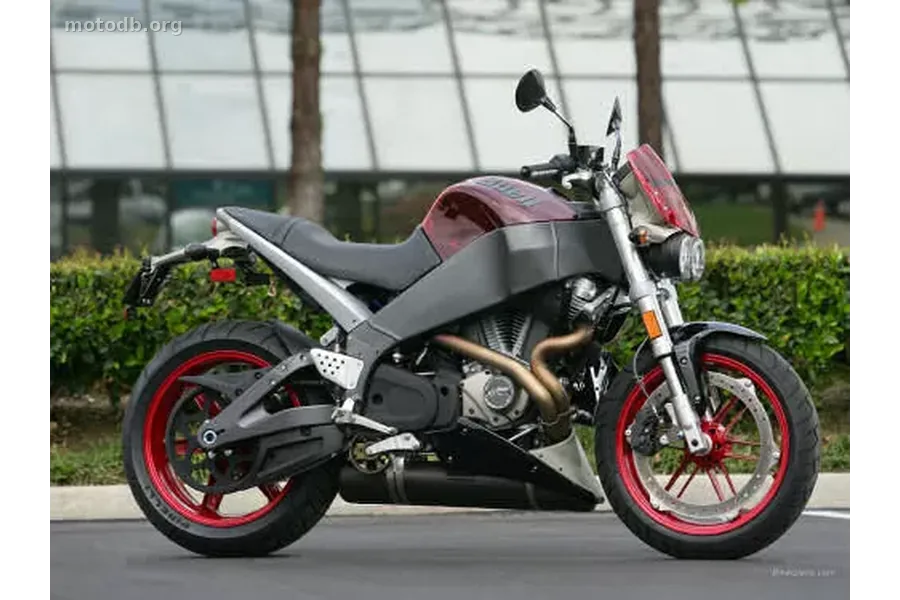
What strikes you first is the compactness. 179 kilograms dry weight, a compact frame, a silhouette that resembles both a muscular roadster and a supercharged supermoto. This machine doesn’t care about categories; it draws from both registers with a rather disconcerting nonchalance. The perimeter aluminum frame serves as a 14.5-liter fuel tank, the belt transmission almost disappears beneath the swingarm; everything is designed to concentrate the masses and lower the center of gravity. This is an engineer’s somewhat obsessive philosophy, and on this point, Erik Buell was several lengths ahead of the European competition.
The 45-degree V-twin engine with 1203 cc develops 100 horsepower at 6,600 rpm and a torque of 107.9 Nm at 6,000 rpm. On paper, these figures seem reasonable compared to a Ducati Monster S2R or a KTM Super Duke of the time. In reality, it’s the way this engine delivers its torque from low rpm that changes everything: a frank, unadorned thrust, typical of the Harley-Davidson architecture that Buell remains indebted to by almost 95%. This genetic link with Milwaukee is a double-edged sword. It gives the Lightning an inimitable character, a sound and elasticity that no Japanese four-cylinder can imitate. But it also imposes limits in terms of maximum revs and power that the chassis, for its part, would be capable of handling without batting an eye.
Because that’s precisely the paradox of this machine: the cycle part is frankly superior to what the mechanics demand. The 43 mm Showa inverted fork, the adjustable mono-shock, the 120/70 tires at the front and 180/55 at the rear on 17-inch rims, the oversized single brake in a central position on the front wheel, all contribute to producing behavior of surgical precision. In corners, the XB-12 S gives that rare impression of pivoting around an imaginary axis placed exactly where it should be, while the rest of the motorcycle takes care of the dirty work. The higher riding position, compared to the sport version XB-12 R, further amplifies this feeling by giving the rider more leverage on the front. Stability, however, never falters, even pushed to its announced 220 km/h.
At 11,995 euros, the Lightning is aimed at an experienced rider who doesn’t need a power curve catalog to have fun, who prefers character to brute performance, and who accepts living with the constraints of a boosted single-cylinder, its specific maintenance, and its resolutely American origins. This is not a motorcycle for everyone. It’s precisely for that reason that it deserves attention.
Practical info
- La moto est accessible aux permis : A
Indicators & positioning
Similar bikes
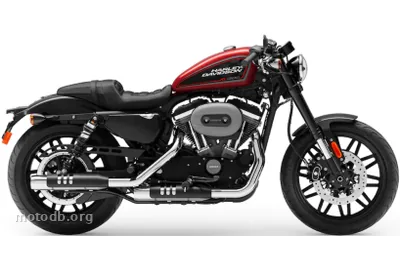
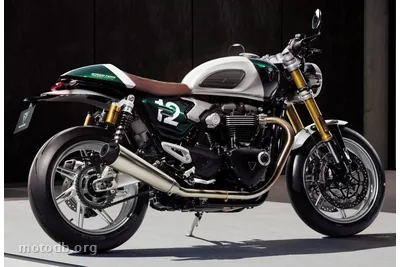
Speed Twin 1200 Café Racer Edition
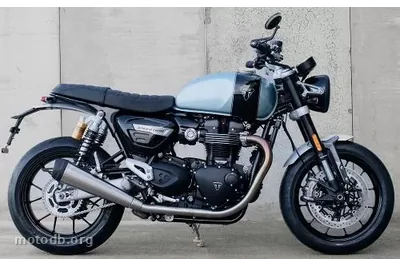
1200 Speed Twin Breitling Limited Edition
Reviews & comments
No reviews yet. Be the first to share your opinion!