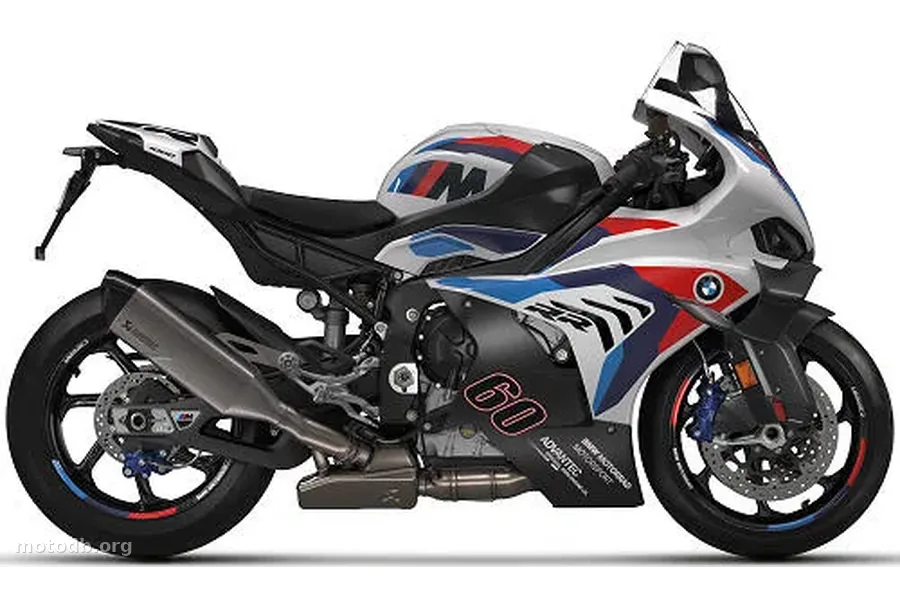
Key performance
Technical specifications
Engine
- Displacement
- 999 cc
- Power
- 218.0 ch @ 14500 tr/min (160.3 kW)
- Torque
- 113.0 Nm @ 11000 tr/min
- Engine type
- In-line four, four-stroke
- Cooling
- Liquid
- Compression ratio
- 13.5:1
- Bore × stroke
- 80.0 x 49.7 mm (3.1 x 2.0 inches)
- Valves/cylinder
- 4
- Camshafts
- 2 ACT
- Fuel system
- Injection. Electronic injection, variable intake pipe
- Valve timing
- Double Overhead Cams/Twin Cam (DOHC)
- Lubrication
- Wet sump
- Starter
- Electric
Chassis
- Frame
- Bridge-type, cast aluminum, load-bearing engine
- Gearbox
- 6-speed
- Final drive
- Chain (final drive)
- Clutch
- Multiplate clutch in oil bath, slipper clutch
- Front suspension
- Upside-down telescopic fork, diameter 45 mm, spring preload, rebound and compression stages adjustable
- Rear suspension
- Aluminum swing arm, full floater pro, compression and rebound damping adjustable, adjustable spring preload
- Front wheel travel
- 117 mm (4.6 inches)
- Rear wheel travel
- 118 mm (4.6 inches)
Brakes
- Front brakes
- Double disc. ABS. Floating discs. Four-piston calipers.
- Rear brakes
- Single disc. ABS. Floating disc. Two-piston fixed caliper.
- Front tyre
- 120/70-ZR17
- Front tyre pressure
- 2.50 bar
- Rear tyre
- 200/55-ZR17
- Rear tyre pressure
- 2.90 bar
Dimensions
- Seat height
- 832.00 mm
- Wheelbase
- 1457.00 mm
- Length
- 2085.00 mm
- Width
- 899.00 mm
- Height
- 1224.00 mm
- Fuel capacity
- 16.50 L
- Weight
- 193.00 kg
- Dry weight
- 183.00 kg
- New price
- 35 670 €
Overview
Winning the World Superbike once is a consecration. Returning to the drawing board to win again is an obsession. Munich has chosen obsession. The 2025 BMW M 1000 RR does not merely capitalize on the WSBK title; it starts from scratch with a list of modifications that would make many manufacturers blush, those supposedly bringing out a completely new motorcycle. Six additional horsepower is putting it mildly, but when talking about a 999 cc inline four-cylinder engine already producing 212 hp, each additional horsepower is earned with titanium, geometry, and nights of engineering.
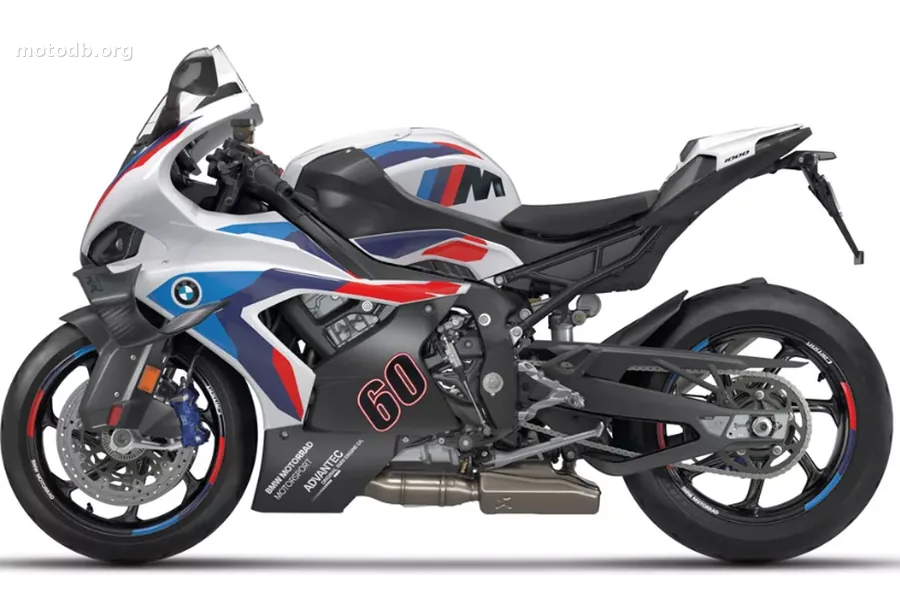
The 2025 engine therefore produces 218 hp at 14,500 rpm, with 113 Nm of torque available. To achieve this, BMW completely reworked the cylinder head: titanium valves, throttle bodies increased from 48 to 52 mm (a 17% increase in area), redesigned combustion chambers, titanium oval-section exhaust manifold. The compression ratio rises to 14.5:1. Details of this kind are found in the technical regulations of championships, not in brochures for the general public. Owning a machine constructed in this way, barely road-legal, recalls what the Honda RC30 or RC45 represented in the nineties: a privilege reserved for a few enthusiasts willing to pay the price, in this case €35,670 for the BMW M 1000 RR 2025.
The short-stroke throttle sees its angle of rotation reduced from 72 to 58 degrees. In concrete terms, the throttle opens faster for the same wrist movement. BMW has adjusted the mapping accordingly, but a skilled hand will still be needed to exploit these 218 hp in the machine's 183 kg dry weight. On the electronics side, the central innovation lies in the introduction of the lean angle sensor, giving rise to two unprecedented functions. Slide Control allows dosing of rear drift during acceleration according to a predefined angle, via DTC 2 and 3 settings. Brake Slide Assist does the same during braking, allowing controlled drift on corner entry. This is the technology from Superbike paddocks made accessible to the Sunday track rider, provided he knows how to use it. ABS Pro Slick completes the arsenal, calibrated for use with racing tires.
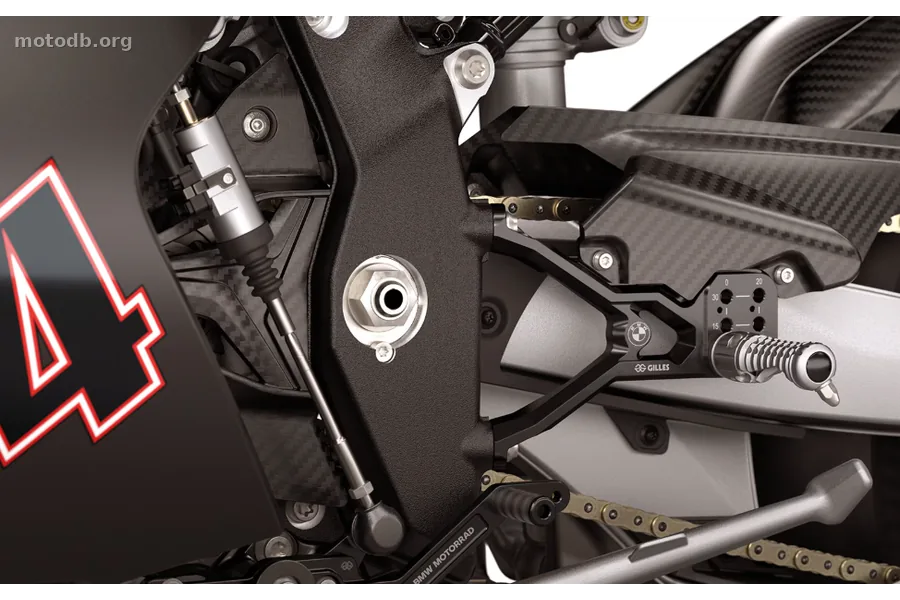
Aerodynamics follows the same logic of surgical optimization. The M 3.0 carbon fiber winglets now generate 30 kg of downforce at 300 km/h, against 22.6 kg on the previous generation. The benefit is twofold: better stability in a straight line and reduced tendency to wheelie during acceleration. The Flex Frame also receives a repositioned engine mounting point and reinforcement at the steering column head, two adjustments aimed at refining handling without touching what already worked. The 45 mm inverted fork, the four-piston calipers biting 320 mm discs, the 200 mm rear wheel on a carbon rim, all remain unchanged. You don't fix what isn't broken.
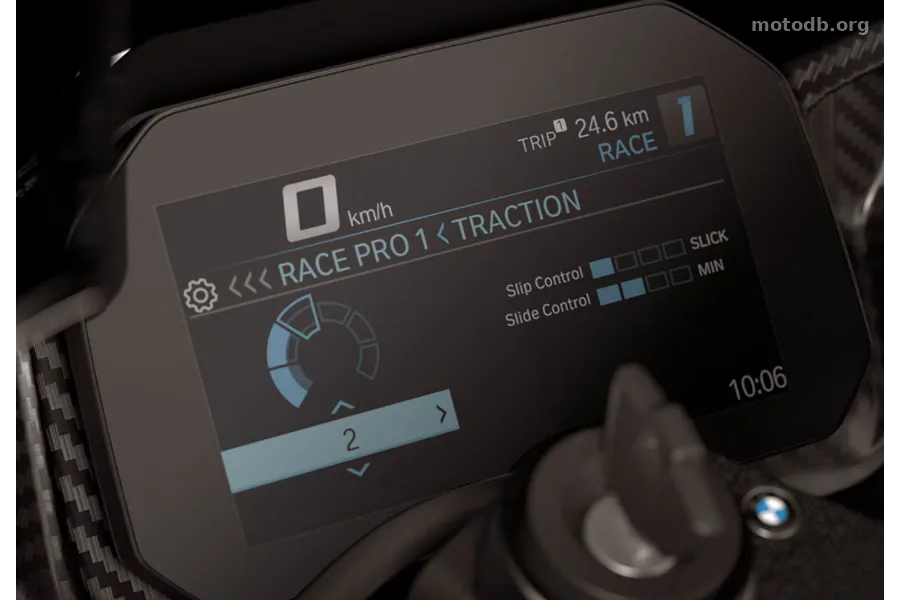
Facing a Ducati Panigale V4 R or a Honda CBR1000RR-R Fireblade SP, the BMW M 1000 RR plays in the same price bracket and the same technical register. Its advantage lies in the consistency between the road bike and the competition machine, and in the depth of the onboard electronics. The target audience is clearly the experienced track rider, one who regularly goes out for track days and perceives the €35,670 price of the BMW M 1000 RR as an investment as much as a pleasure. For exclusive road use, a well-equipped S 1000 RR will do the job at half the price. But if the question is how many horsepower the BMW M 1000 RR has, the answer is 218, and each one of them has a precise reason to be there.
Standard equipment
- Assistance au freinage : ABS Pro
- Nombre de mode de conduite : 7
- Taille de l'écran TFT couleur : 16,51 cm / 6.5 pouces
- ABS Cornering
- Jantes Carbone
- Shifter
- Indicateur de vitesse engagée
- Régulateur de vitesse
- Prise USB
- Aide au démarrage en côte (Hill Hold Control)
- Aide au départ arrêté (Launch Control)
- Contrôle de traction
- Poignées chauffantes
- ABS déconnectable
- Contrôle anti wheeling
- Carénage carbone
- Contrôle de glisse
- Embrayage anti-dribble
- Centrale inertielle
- Contrôle du frein moteur
- Limitateur de vitesse dans les stands
Practical info
- La moto est accessible aux permis : A
Reviews & comments
No reviews yet. Be the first to share your opinion!