Key performance
Technical specifications
Engine
- Displacement
- 999 cc
- Power
- 210.0 ch @ 13750 tr/min (154.5 kW)
- Torque
- 112.8 Nm @ 11000 tr/min
- Engine type
- 4 cylindres en ligne, 4 temps
- Cooling
- liquide
- Compression ratio
- 13.3 : 1
- Bore × stroke
- 80 x 49.7 mm
- Valves/cylinder
- 4
- Camshafts
- 2 ACT
- Fuel system
- Injection Ø 48 mm
Chassis
- Frame
- structure périmétrique en aluminium
- Gearbox
- boîte à 6 rapports
- Final drive
- Chaîne
- Front suspension
- Fourche téléhydraulique inversée Ø 45 mm, déb : 120 mm
- Rear suspension
- Mono-amortisseur, déb : 117 mm
Brakes
- Front brakes
- Freinage 2 disques Ø 320 mm, fixation radiale, étrier 4 pistons
- Rear brakes
- Freinage 1 disque Ø 220 mm, étrier simple piston
- Front tyre
- 120/70-17
- Front tyre pressure
- 2.50 bar
- Rear tyre
- 200/55-17
- Rear tyre pressure
- 2.90 bar
Dimensions
- Seat height
- 840.00 mm
- Fuel capacity
- 16.50 L
- Weight
- 199.00 kg
- New price
- 22 890 €
Overview
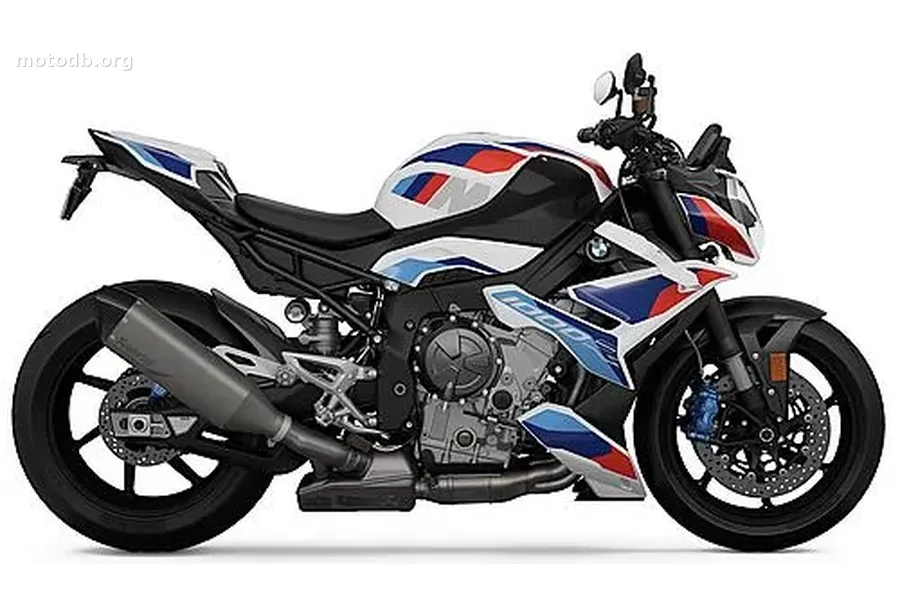
When Munich decides to build a roadster, the result resembles nothing reasonable. The 2024 BMW M 1000 R is the most radical proof of this: 210 horsepower in a 199-kilo naked bike is a declaration of war directly addressed to Bologna. The Ducati Streetfighter V4, which reigned over this segment with its enraged V4, must now contend with a Bavarian rival that doesn’t joke around.
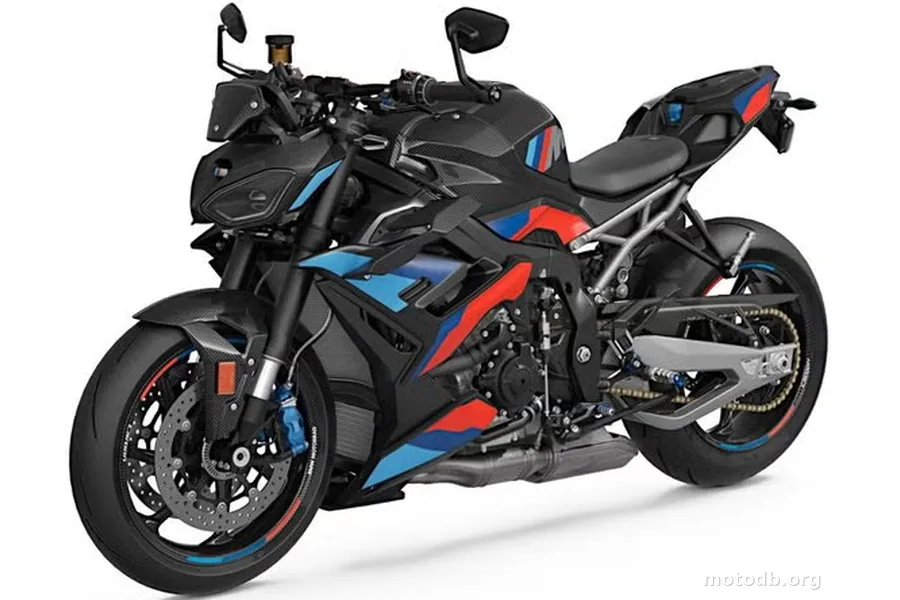
The heart of the machine is the 999 cc inline four-cylinder engine extracted directly from the M 1000 RR Superbike. BMW hasn’t cobbled together a roadster engine by sticking an M sticker on it: the engine receives ShiftCam technology, which varies the timing of the titanium valves, revs to 13,750 rpm to deliver its maximum power, and produces 112.8 Nm of torque at 11,000 rpm. The transmission has been shortened compared to the S 1000 R, with a more developed crown gear and the three shortest gears tightened. A direct consequence of all this: 280 km/h top speed, and the 200 km/h mark reached in 7.5 seconds on the stopwatch. The Kawasaki Z H2 and its mechanical supercharger can go change their clothes.
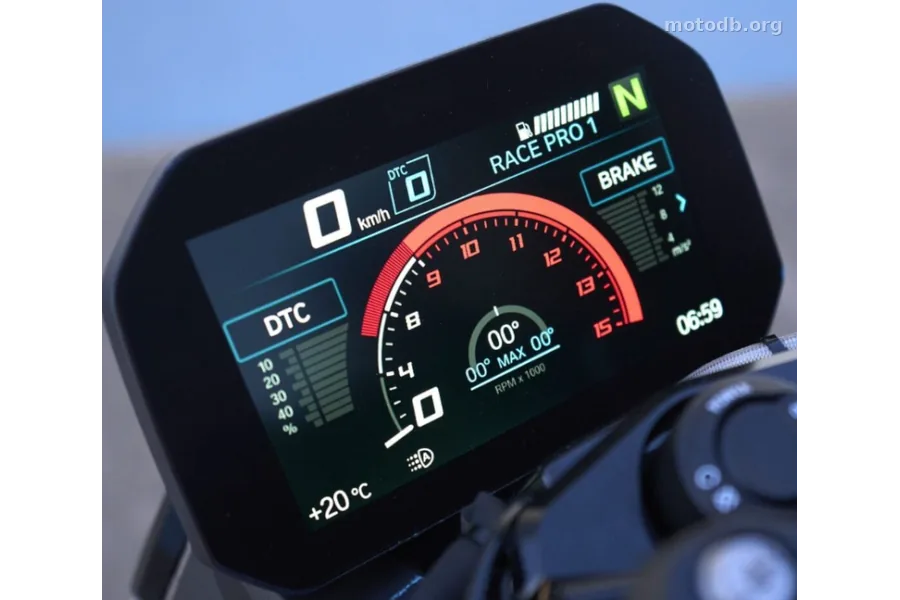
On the chassis side, the perimeter aluminum frame comes from the S 1000 RR Superbike, not the S 1000 R. This is not a detail. The 45 mm inverted fork and the single shock both benefit from the DDC pilot damping as standard, which adapts to the selected riding mode. Four basic modes on the instrument panel, Rain, Road, Dynamic and Race, are supplemented by three Race Pro profiles with individual parameterization of each electronic function. Traction control, anti-wheelie, engine braking, torque distribution: everything is adjustable. The 165 mm TFT screen displays lap times, lean angles, throttle position and history of DTC interventions. We are on the border between road bike and track tool.
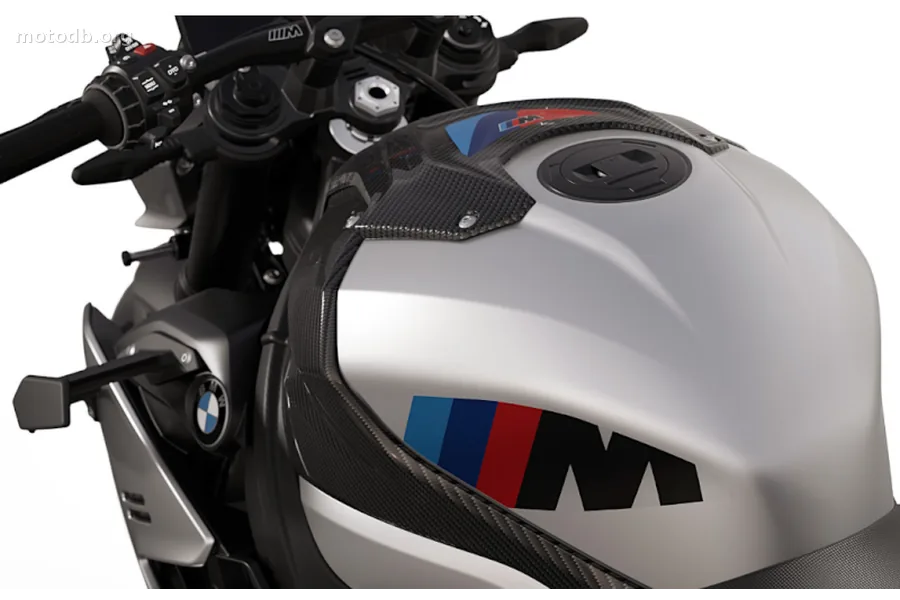
The aerodynamic appendages on the flanks are not just there to look pretty. These two-stage winglets generate 11 kilos of downforce on the front wheel at 220 km/h, which relieves the traction control and allows the horses to be released earlier on corner exits. Braking entrusted to radial four-piston Nissin calipers on 320 mm discs at the front, with a 220 mm disc at the rear, operates under cornering ABS. Two types of pads are available depending on usage, road or track endurance. The M Endurance chain completes a set designed to withstand repeated sessions.
The target audience for the BMW M 1000 R is clearly not the Sunday rider looking for a roadster to go to work. The 840 mm seat height, the aggressiveness of the riding position and the €22,890 base price paint the portrait of an experienced rider, comfortable on the track and capable of managing such potential with discernment. Without the electronics to smooth out the jolts, this machine would instantly satellite an inexperienced driver. With it, a qualified rider has a tool whose road-track versatility has no direct equivalent in the category. The test of the BMW M 1000 R reveals a motorcycle that keeps all its technical promises, at the price of a riding demand that is not found in any other production roadster. This is both its main defect and its greatest quality, depending on which side of the seat you look at it from.
Standard equipment
- Assistance au freinage : ABS Pro
- Nombre de mode de conduite : 7
- Taille de l'écran TFT couleur : 16,51 cm / 6.5 pouces
- Jantes aluminium
- Shifter
- Indicateur de vitesse engagée
- Régulateur de vitesse
- Aide au démarrage en côte (Hill Hold Control)
- Aide au départ arrêté (Launch Control)
- Démarrage sans clé
- Contrôle de traction
- Poignées chauffantes
- Suspensions réglables électroniquement
- Contrôle anti wheeling
- Jantes forgées
- Contrôle de glisse
- Embrayage anti-dribble
- Contrôle du frein moteur
- Limitateur de vitesse dans les stands
Practical info
- La moto est accessible aux permis : A
Reviews & comments
No reviews yet. Be the first to share your opinion!