Key performance
Technical specifications
Engine
- Displacement
- 1170 cc
- Power
- 105.0 ch @ 7000 tr/min (77.2 kW)
- Torque
- 112.8 Nm @ 5500 tr/min
- Engine type
- Bicylindre à plat, 4 temps
- Cooling
- par air
- Compression ratio
- 11 : 1
- Bore × stroke
- 101 x 73 mm
- Valves/cylinder
- 4
- Camshafts
- 1 ACT
- Fuel system
- Injection Ø 47 mm
Chassis
- Frame
- Treillis tubulaire en acier, moteur porteur
- Gearbox
- boîte à 6 rapports
- Final drive
- Cardan
- Front suspension
- Fourche téléhydraulique inversée Ø 45 mm, déb : 270 mm
- Rear suspension
- Mono-amortisseur et monobras Paralever, déb : 250 mm
Brakes
- Front brakes
- Freinage 1 disque Ø 305 mm, étrier 4 pistons
- Rear brakes
- Freinage 1 disque Ø 265 mm, étrier 2 pistons
- Front tyre
- 90/90-21
- Front tyre pressure
- 2.20 bar
- Rear tyre
- 140/80-17
- Rear tyre pressure
- 2.50 bar
Dimensions
- Seat height
- 920.00 mm
- Fuel capacity
- 13.00 L
- Weight
- 196.50 kg
- Dry weight
- 175.00 kg
- New price
- 17 250 €
Overview
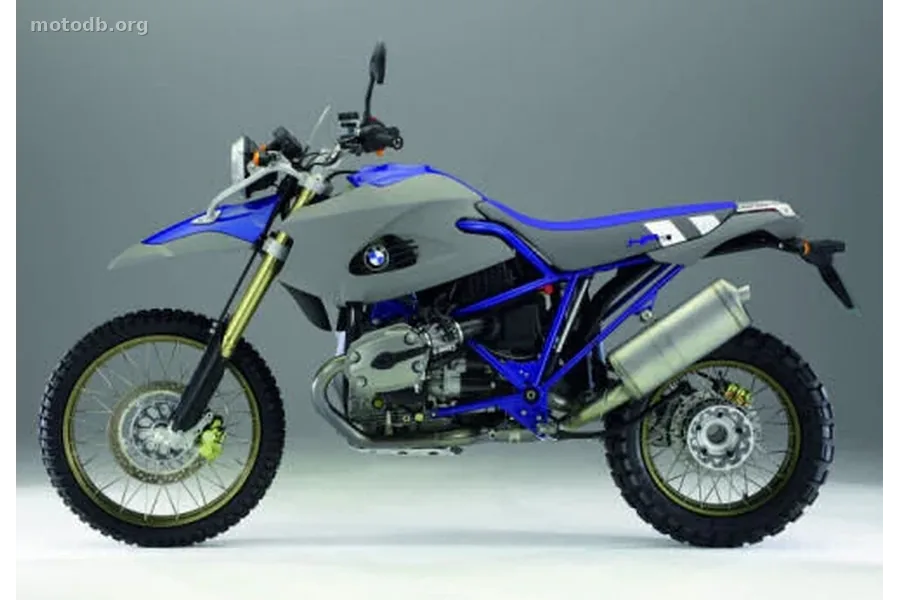
When Munich decides to color outside the lines, it doesn't look like a carefully calibrated marketing move orchestrated by a team of consultants. The HP2 1200 Enduro, born in 2005, is rather the product of a group of in-house enthusiasts who took the R 1200 GS as their starting point and carved it up with surgical precision. The result is a machine that blurs the boundaries between trail, enduro, and hardcore raid bike.
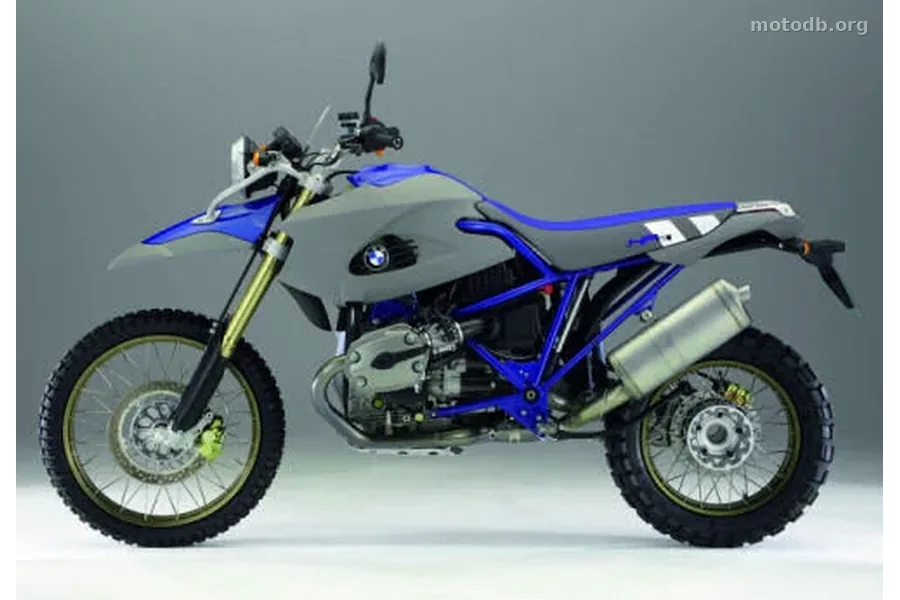
The first figure that hits you is the weight. 175 kg dry — barely more than a Japanese sportbike of the era. For a 1170 cc flat-twin, that's genuinely remarkable. Fully fueled, it nudges 196.5 kg, which remains restrained compared to a contemporary Africa Twin or KTM 950 Adventure that tip the scales considerably heavier. BMW achieved this by cutting to the bone, particularly on the powertrain: the balancing shaft was eliminated, the exhaust was shortened and shed two kilograms, and the comfort compromises of the GS were swept aside. The trade-off: forget the panniers.
The real technical break happens up front. Brand loyalists expecting to find the Telelever will have to let go of their bearings. The HP2 adopts a 45 mm inverted fork with 270 mm of travel, because the in-house system simply couldn't handle that kind of amplitude. This fork is no ordinary unit: damping varies with travel, compression naturally resists bottoming out, and the tubes receive a heavy-duty surface treatment to survive rocks and stones. At the rear, the Paralever has been lengthened by 30 mm compared to the GS, and the spring-damper unit uses a pneumatic system that weighs half as much as a conventional unit, while offering better heat resistance and finer progression.
The boxer delivers 105 horsepower at 7,000 rpm and 112.8 Nm of torque at 5,500 rpm. This is not a machine you rev to the limiter — it's a low-to-mid-range locomotive that catapults you out of ruts with disarming authority. The six-speed gearbox was reinforced to absorb off-road stresses, and the final drive remains shaft-driven, simplifying maintenance in demanding conditions. The single 305 mm front disc with a four-piston caliper may surprise those coming from all-road machines, but on a bike this light and purpose-built for adventure, the choice holds up. ABS was not available at launch, which will irritate some touring riders but won't bother enduro riders for whom it would be switched off permanently anyway.
At €17,250 at launch, the HP2 clearly isn't aimed at the general public. Its 920 mm seat height will also filter out shorter riders, even though a lowered seat was among the few accessories on offer. The target is the experienced rider who wants to tackle serious raid riding without hauling a ton of plastic and electronics behind them. Someone who knows how to read a roadbook, lay a bike down in a riverbed, and ride out again. BMW delivered the beast with a comprehensive protection kit: engine bash plate, handguards, clear screen, and drive shaft housing guard. The intent is clear, the machine is ready to go without detour.
What makes the HP2 so fascinating to revisit twenty years on is that it foreshadowed a logic BMW would systematically formalize with the GS Competition ranges and the R 1250 GS Trophy editions. Take a proven platform, strip it down, stiffen it, lighten it. The HP2 was a production prototype before the formula became profitable. It remains, for that reason, one of the most honest BMWs ever built.
Practical info
- La moto est accessible aux permis : A
Indicators & positioning
Similar bikes
Stelvio 1200 8V
XTZE 1200 Super Ténéré
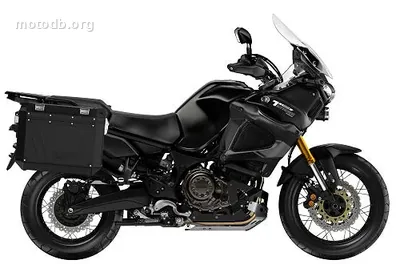
XTZE 1200 Super Ténéré Raid Edition
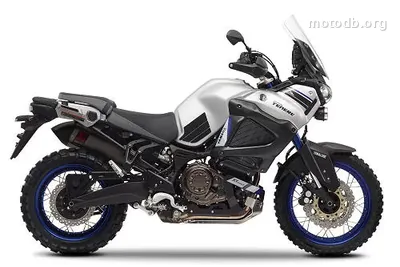
XTZE 1200 Super Ténéré Worldcrosser
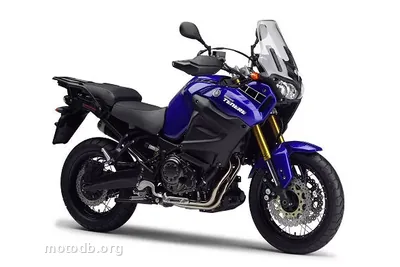
XT 1200 Z Super Ténéré 'Limited Edition'
Reviews & comments
No reviews yet. Be the first to share your opinion!